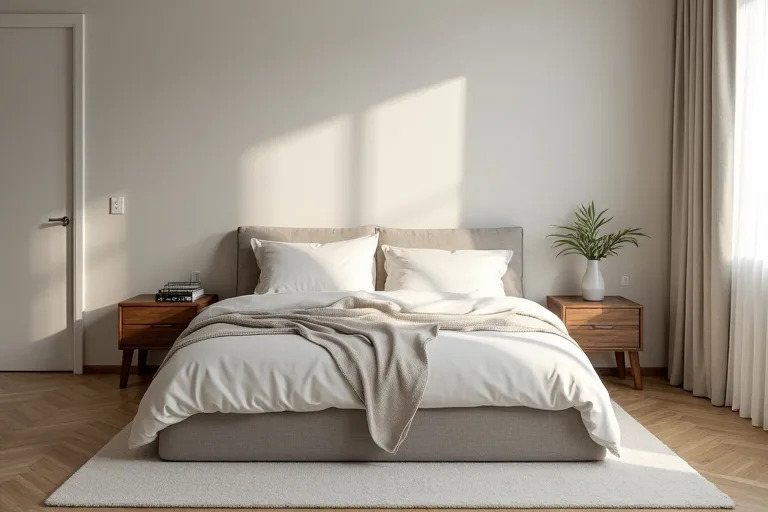
A master bedroom works best when it feels easy to use, not just pleasant to look at. The room should support sleep, getting dressed, and simple daily routines without forcing you to step around furniture or hide clutter in plain sight.
The smartest master bedroom ideas usually start with layout and storage, then move into furniture size and styling. Once those basics are clear, the room becomes much easier to arrange and much less expensive to get right the first time.
Start with layout, storage, and furniture size before choosing decor. In most master bedrooms, the calmest result comes from a clear bed placement, enough walking space, nightstands that fit the room, and storage that keeps visual clutter off surfaces and floors.
Start with the room goal and the main pressure points
Before you buy anything, decide what this room needs to do better. For one household, the problem may be clutter on dressers and bedside tables. For another, the issue may be a bed that feels too large for the room or a layout that makes the space awkward to walk through.
That decision matters because a master bedroom should solve a specific daily problem. If the room feels crowded, the fix is often not new decor. It is usually a better bed position, fewer oversized pieces, and a more disciplined approach to what gets stored where.
Try to identify the few things that make the room feel busiest. Common pressure points include bulky nightstands, loose laundry storage, too many visible accessories, and furniture placed without a clear path around the bed. Once those are named, the layout choices become much simpler.
For a room-planning pass, the room layout planner is a useful place to test bed placement, furniture spacing, and storage zones before you commit to a purchase. If you want to see more room-specific advice first, the bedroom ideas hub is a sensible next stop.

If the room feels messy even after tidying, the real issue is often not decoration. It is usually one of three things: the furniture is too large, the storage is too visible, or the bed placement is making the circulation awkward.
Choose storage that reduces visual clutter
Storage is one of the most important parts of master bedroom planning because it shapes how calm the room feels every day. A bedroom can look finished and still feel busy if surfaces collect small items and the floor has no clear landing place for everything that does not belong out in the open.
The best storage choices are the ones you barely notice. Closed drawers, simple baskets, matching bedside pieces, and storage that uses underused space all help the room feel more settled. The goal is not to hide everything. The goal is to make the everyday mess easier to put away.
Under-bed storage is often the most practical hidden option, especially when the room is not large or when wardrobe space is limited. Low-profile containers can hold off-season clothing, spare bedding, or items you do not need daily. If you want a simple product search starting point, look at under bed storage containers with wheels. A moving room that needs more structure can also benefit from a planning tool like the room layout planner, which helps you check where storage can fit without blocking movement.
- Keep daily-use items close to the bed or wardrobe.
- Move seasonal and backup items into hidden storage.
- Reduce open surface area if the room tends to collect clutter.
- Match storage scale to the size of the room so it does not dominate the floor plan.
Size the bed, nightstands, and lighting as one set
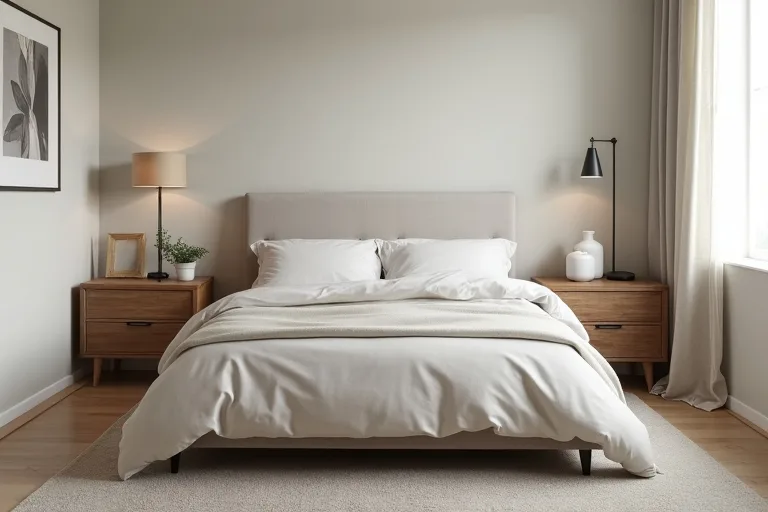
Many bedroom decisions go wrong because each piece is chosen in isolation. A bed may be the right size for sleeping but too large for the room flow. Nightstands may look good online but end up either too wide for the available wall space or too small to be useful.
It helps to think of the bed, nightstands, and lighting as one system. The bed anchors the room. The nightstands need enough space to function without crowding the bed. Lighting should support reading and evening routines without adding visual clutter. When these three elements fit together, the room tends to feel quieter and more intentional.
If you are comparing bedside options, a simple nightstands set of 2 bedroom can be a practical starting point for symmetry and planning consistency. If you are unsure how much room each side can really take, work it out first in the room layout planner so you are not guessing from product photos alone.
Helpful rule of thumb: if the room feels tight, choose fewer pieces with cleaner lines rather than adding more decorative furniture. A calm master bedroom usually comes from enough space around the bed, not from filling every wall.
Finish with calm styling that supports the layout
Once the room functions well, styling should make the plan feel finished rather than busier. A restrained color palette, soft bedding, and a few practical accessories are usually enough. The point is to support sleep and daily use, not to create another layer of decisions.
Neutral bedding, warm wood accents, and simple textiles work well because they soften the room without competing with the furniture plan. If the bedroom already has a strong layout, you do not need many decorative objects. In fact, too many small items often make the room look less restful than one or two useful pieces would.
If you want help turning a rough room idea into a structured plan, the Room Makeover Planner, Home Layout Budget Spreadsheet (Digital Download) can be useful for mapping decisions before buying. It is especially helpful if you want to track layout, room changes, and budget in one place.
When the room is nearly finished, step back and check whether the surfaces feel light, the paths feel open, and the storage is doing its job without drawing attention to itself. That is usually the point where the room starts to feel restful rather than just arranged.
Best next step
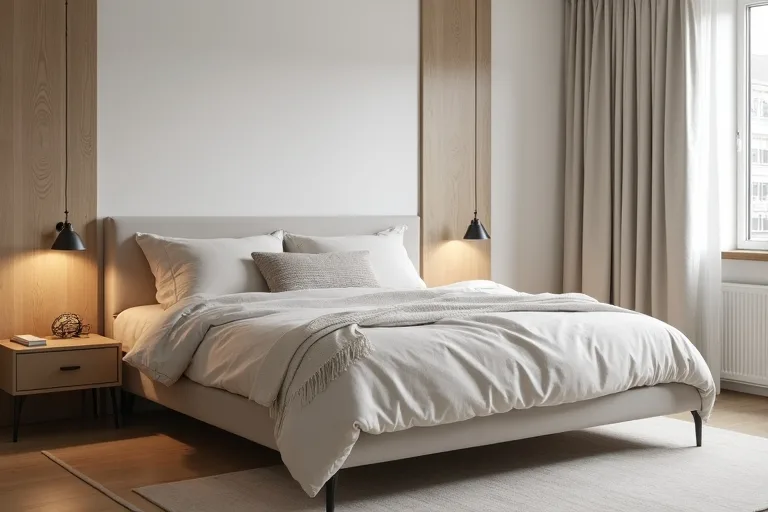
If you want to make the room easier to plan before you buy anything, start by testing bed placement, storage zones, and furniture sizing in one place. That is usually faster than comparing products first, and it helps you avoid pieces that look right but do not fit the room well.
- Buying furniture before checking the room layout.
- Choosing nightstands that are too large for the space beside the bed.
- Using too much open storage in a room that already feels busy.
- Ignoring under-bed space when the room needs hidden storage.
- Adding decor before the layout and storage are solved.
The calmest master bedroom ideas start with the practical parts: layout, storage, and furniture sizing. Once those are working, styling becomes much easier, the room feels more open, and you can make decisions with less guesswork and less clutter.
Helpful next tools and planners
If you want to make the decision easier before you buy
These are the most useful starting points if you are still planning the room and want support with layout, hidden storage, and keeping the process organized.
FAQ
What should I plan first in a master bedroom?
Start with the layout, storage needs, and bed size. Those choices affect how calm the room feels and whether the furniture can actually work day to day.
How do I make a master bedroom feel less cluttered?
Reduce visible storage, use closed pieces where possible, and keep bedside and dresser surfaces simple. Hidden storage usually helps more than adding decorative objects.
Are matching nightstands always the best choice?
Not always, but they do create a tidy look and make planning easier. If the room is small, the main priority is fit and function rather than perfect symmetry.
What is the best next step if I am still unsure about the layout?
Use a room planning tool before buying. It is the quickest way to check bed placement, traffic flow, and whether the storage you want will actually fit.
Three sensible next steps
Some links in this article may be affiliate links. Read more in the Affiliate Disclosure.