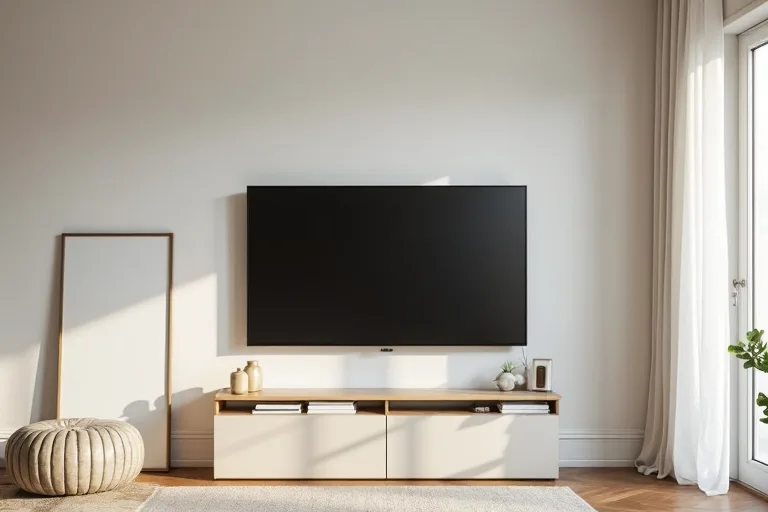
A TV wall gets crowded fast. One framed print can look calm in a plan and awkward on the wall if the scale, spacing, or mount height is off.
Before you buy art, mirrors, or decorative pieces, it helps to map the wall in the same order you will actually use it: screen size, viewing distance, furniture placement, and only then styling.
Check size, height, viewing distance, and wall balance first. If the TV setup is wrong, art and decor will not fix it. A clear plan for the screen, console, and open wall space will tell you whether the room needs a full motion TV wall mount, a simple art group, or very little decor at all.
Start with the screen, not the decor
The most common TV wall mistake is shopping for styling before confirming the viewing setup. A wall with the wrong mount height or an off-center screen can make even expensive decor look accidental.
Begin with the TV itself: how wide it is, how far the seating sits from it, and whether the screen needs to angle toward the sofa. If the answer is yes, a full motion TV wall mount may do more for the room than any decorative piece. It can help the screen line up with the seating zone and give you more freedom with the rest of the wall.
Once the screen is placed properly, you can see what the wall still needs. Some rooms want a little softness around the TV. Others are already busy enough without extra objects competing for attention.
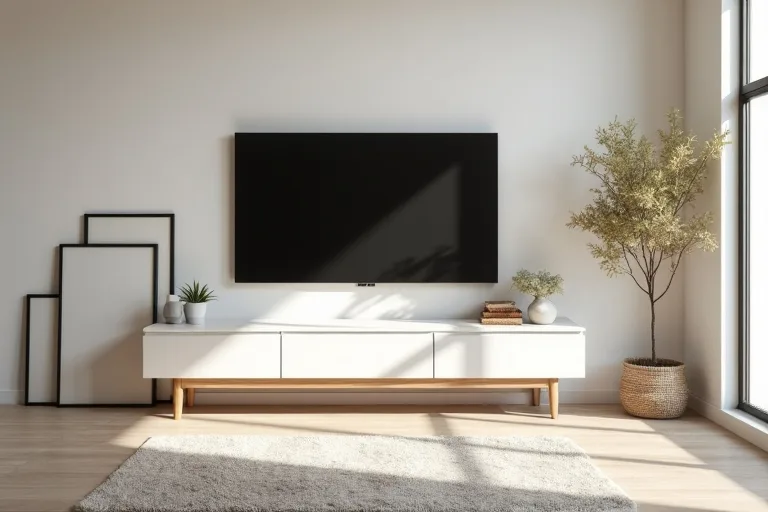
If you are unsure where to start, use the TV size and distance calculator first. It helps you confirm whether your screen placement makes sense before you decide on art, mirrors, or decorative objects. That one step usually makes the rest of the wall easier to read.
Check wall width, furniture placement, and clearances
A TV wall works best when the furniture zone and the screen zone are measured together. A console that is too wide, a sofa that sits too close, or a wall that is too narrow for the pieces you want will make the styling feel crowded.
Use a simple order of decisions:
- Measure the full wall width, including any doors, windows, or built-ins nearby.
- Confirm where the sofa or main seating will sit in relation to the screen.
- Check how much space the console, speakers, or storage pieces need.
- Leave enough open wall around the TV so the whole composition can breathe.
This is where wall decor becomes a layout decision, not just a style choice. A mirror can help a darker room feel brighter, but it can also create glare or visual noise if it lands too close to the screen. A large art set may balance a wall, but only if the proportions fit the furniture below it.
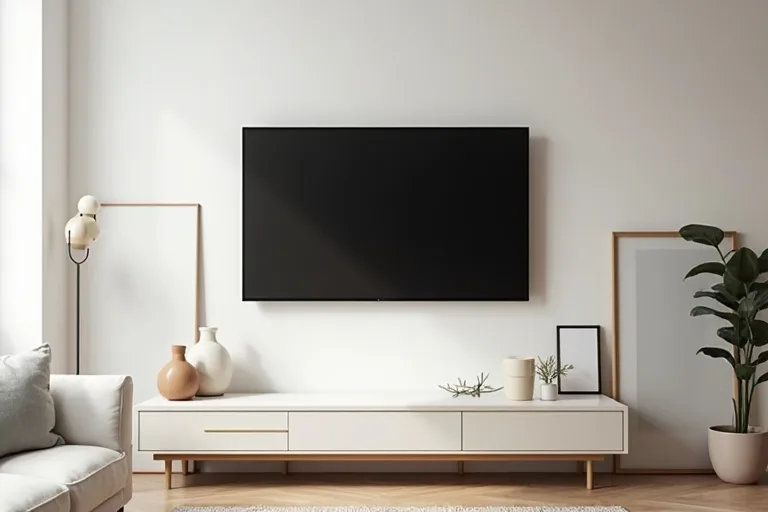
Decide what should sit beside the TV
Once the wall layout is clear, decide what role the surrounding decor should play. The goal is not to fill every blank area. It is to support the screen and the room at the same time.
In many living rooms, the cleanest answer is a restrained group of pieces rather than several competing ones. A neutral framed wall art set for living room can be a better fit than a bold single print if you want the TV wall to feel finished without becoming the focal point. Neutral art works well when the room already has texture, pattern, or a lot of visual activity.
If you like mirrors, keep them intentional. A mirror can help reflect light, but it should earn its place. If it starts competing with the TV, the room usually feels less relaxed, not more styled. The same applies to shelves, sculptural objects, and oversized decor. Each piece should answer a purpose: soften the wall, balance the screen, or connect the TV area to the rest of the room.
A good test is to ask whether the decor improves the room when the TV is on and when it is off. If it only looks good in one state, it may not be the right choice for that wall.
Choose one styling direction and stop there
The easiest way to avoid overbuying is to choose one clear direction. A TV wall usually works best when it follows one of three paths: quiet and minimal, softly balanced, or slightly framed with symmetry.
Minimal walls keep most attention on the screen and furniture. Balanced walls use art or a mirror to soften the open space around the TV. Symmetrical walls use matching objects or paired pieces to create order, which can be useful when the console and screen are centered on a broad wall.
Before you purchase anything, map the wall on paper or in a layout tool. That way you can see whether the wall needs one piece, a small group, or no extra decor at all. If the room is still changing, a planning sheet can be more useful than a shopping cart. For a broader room map, the room layout planner is a sensible next step, especially if you are also working out furniture placement and traffic flow.
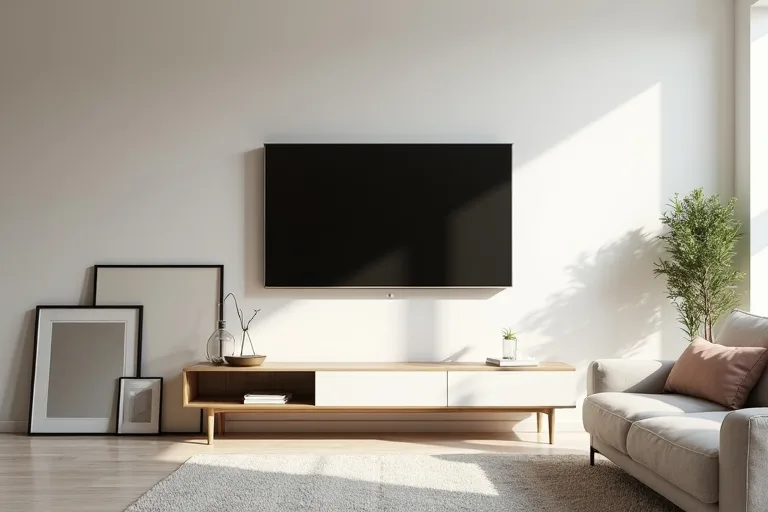
Best next step
Before you buy anything for the wall, confirm the screen size and viewing distance, then map the room around it. That order saves money and usually leads to a calmer result.
- Buying art before measuring the wall and confirming the TV placement.
- Choosing a mirror that creates glare or competes with the screen.
- Filling every empty area instead of leaving some negative space.
- Using decor to hide a layout problem that should be solved with the mount or furniture arrangement.
- Skipping the room plan and hoping the pieces will work themselves out later.
The smartest TV wall choices come from planning, not impulse. Measure the screen, check viewing distance, confirm the furniture layout, and only then decide whether the wall needs art, a mirror, or very little decor. If the setup still feels uncertain, start with the calculator, then map the wall before buying.
Helpful next tools and planners
If you want to make the decision easier before you buy
A small amount of planning usually goes further than more decor. These options can help you check the wall, compare styling choices, and keep the room coherent before you spend.
FAQ
Should I buy art or a mirror for a TV wall first?
Not before you confirm the TV height, viewing distance, and wall balance. Those decisions should come first because they determine whether art or a mirror will actually fit the room.
Is a full motion mount worth it for a TV wall?
It can be, especially if the seating angle is not perfectly centered. A full motion mount gives you more flexibility and can make the rest of the wall easier to style.
How do I know if my TV wall needs decor at all?
If the wall already feels balanced with the screen, console, and furniture, you may not need much. Sometimes the best choice is leaving the wall quieter.
What is the safest way to start planning a TV wall?
Use a size and distance tool first, then map the room. That sequence helps you avoid buying pieces that look good separately but do not work together.
Three sensible next steps
Some links in this article may be affiliate links. Read more in the Affiliate Disclosure.