
When a patio feels too hot to stay on for long, the problem is usually not the furniture. It is the lack of a clear shade plan. A little cover can turn a space you only use on mild days into one that works for breakfast, reading, or quiet evening seating.
The best patio shade ideas do more than block sun. They help define where people sit, where they walk, and how the space functions during the day. That is why the right answer depends on the area you want to cool, not just on what looks nice in a photo.
The best patio shade idea is the one that cools the main seating or dining zone without blocking movement or making the space feel cramped. For many patios, that means starting with a well-sized umbrella, then considering sails, pergolas, or curtains only if the layout and budget call for them.
Start with the zone that needs shade most
Before comparing products, identify the one part of the patio that feels hardest to use in direct sun. For some homes that is the dining table. For others it is the sofa or conversation area. Shade works best when it supports the way you already use the space.
If your patio has both eating and lounging areas, decide which one needs comfort first. A shaded dining spot makes lunches and weekend meals easier to keep using. A shaded seating area may matter more if you want the space to feel calm in the afternoon or early evening.
In a small patio, the goal is usually coverage without clutter. A single umbrella can often do more for comfort than a larger, more complex structure if the footprint is tight and the furniture arrangement is simple.
For a broader view of how your shade choice fits the rest of the space, it helps to think about the patio as a layout problem, not just a decor one. The right shade should support the plan, not fight it.
Explore the Outdoor Living hub if you want to think through the patio as a whole before buying.
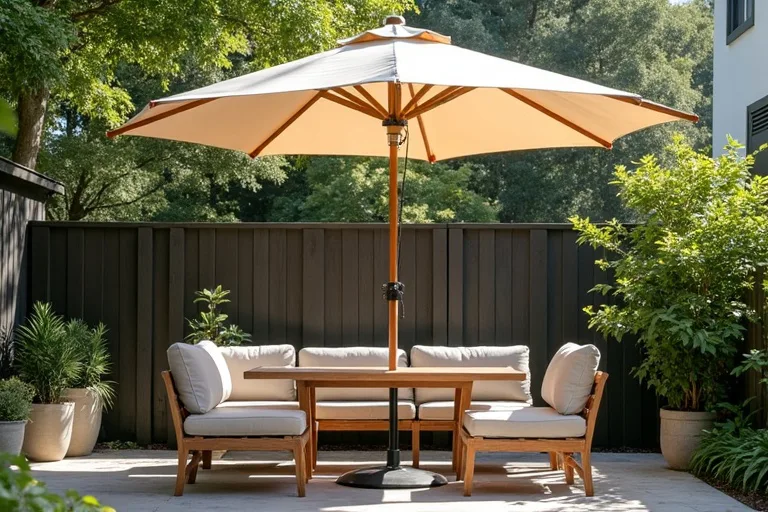
If you are unsure where to start, stand in the patio at the time of day when it feels hottest and ask one question: which seat or surface needs relief first? That answer usually tells you whether you need shade for dining, lounging, or the full patio.
Compare the shade options in plain terms
Different patio shade ideas solve different problems. The easiest way to choose is to match the structure to the amount of coverage you need, the amount of flexibility you want, and how permanent the solution should feel.
A few common options are worth comparing side by side:
- Umbrellas are the most flexible choice. They are useful when you want a shaded zone that can move with the furniture or be adjusted through the day.
- Shade sails can work well when you want coverage over a fixed area and do not mind planning anchor points carefully.
- Pergolas feel more built-in and can help define an outdoor room, especially when the patio is large enough to support a stronger structure.
- Curtains or side panels are helpful for softening low sun and adding a sense of enclosure, but they usually work best as a layer rather than the only source of shade.
The right answer is often a simple one. A 9 ft patio umbrella with base can be enough for a compact dining set or a small conversation area, especially when you want shade without a lot of setup.
If you already know your patio will be used for sitting, not just passing through, pairing shade with a comfortable furniture layout matters. A 4 piece outdoor patio conversation set can help define the zone once the shade is in place.

Get the placement, height, and coverage right
Shade only feels useful when it lands in the right place. That usually means covering the part of the patio where people actually sit or eat, while still leaving comfortable clearance for walking and pulling out chairs.
Three placement checks make the biggest difference:
First, make sure the shade covers the seat backs or table area where the sun hits most directly. Second, check that it does not force furniture too close together. Third, look at how the shade changes through the day, since morning and late-afternoon sun can fall differently.
Height also matters. A shade structure that sits too low can make the space feel compressed, while one that is too high may leave the useful part of the patio exposed. The goal is balance: enough overhead comfort without turning the area into a dark enclosed corner.
If you are still planning the layout, the easiest next step is to draw the furniture footprint and leave room for movement before you commit to any fixed structure. That is also where a layout tool can save you from buying the wrong size.
For a more structured planning approach, try the Room Layout Planner before you order anything.
Measure the space you want shaded, then compare that to the umbrella canopy or structure footprint. If the shade covers the seating zone but still leaves clear walkways around it, you are probably close to the right fit.
If you like to map the patio before spending, the Room Makeover Planner, Home Layout Budget Spreadsheet (Digital Download) can help you track dimensions and keep the decision grounded in the plan.
Choose the simplest setup that suits your patio size
Small, medium, and larger patios usually need different shade logic. A small patio benefits from one clear solution that does not crowd the floor. A medium patio may support a shade layer over the main seating zone. A larger patio can handle a stronger structure or more than one shaded area, but only if the layout stays easy to read.
On a smaller space, portability usually wins. In a medium-sized patio, a fixed or semi-fixed shade solution can make the area feel more intentional. On a larger patio, the question is less about whether shade is possible and more about where it should go so the space still feels organized.
Whatever the size, it helps to think in zones. The shaded area should support the way you want to use the patio, whether that is breakfast, reading, conversation, or a mix of all three.
When the shade and furniture work together, the patio starts to feel like a room instead of an afterthought. That is the real design win: more comfort, less glare, and a layout that is easier to use.

Best next step
Measure the seating or dining zone first, then check how much coverage you actually need before buying a shade solution. If you want the patio to feel calmer and easier to use, start with the layout, then choose the shade that fits it best.
- Choosing shade before deciding which patio zone needs it most.
- Buying a structure that blocks movement or crowds the seating area.
- Ignoring how sun changes during the day.
- Using a large shade solution when a simpler umbrella would do the job.
- Forgetting to measure the dining or seating footprint before ordering.
The best patio shade idea is not the most dramatic one. It is the one that cools the space you use most, fits the patio size, and leaves the layout easy to live with. Start with the seating or dining zone, measure carefully, and choose the simplest solution that gives you comfortable coverage.
Helpful next tools and planners
If you want to make the decision easier before you buy
A good shade setup is usually part planning and part shopping. These tools and products can help you confirm the layout, keep the budget under control, and choose a setup that suits the patio instead of overwhelming it.
FAQ
What is the easiest patio shade solution to start with?
A patio umbrella is usually the simplest place to begin because it gives you flexible shade without a major build or complex installation.
How do I know if I need shade over the dining area or the seating area?
Start with the zone that gets the most direct sun during the time of day you use the patio most. That is usually the spot that needs comfort first.
Is a permanent shade structure better than a movable one?
Not always. Permanent structures can define the patio well, but movable options are often better if you are still testing the layout or want flexibility.
What should I measure before buying patio shade?
Measure the footprint of the seating or dining zone, the clearance needed for walking, and the space available for the base or mounting points.
Three sensible next steps
Some links in this article may be affiliate links. Read more in the Affiliate Disclosure.