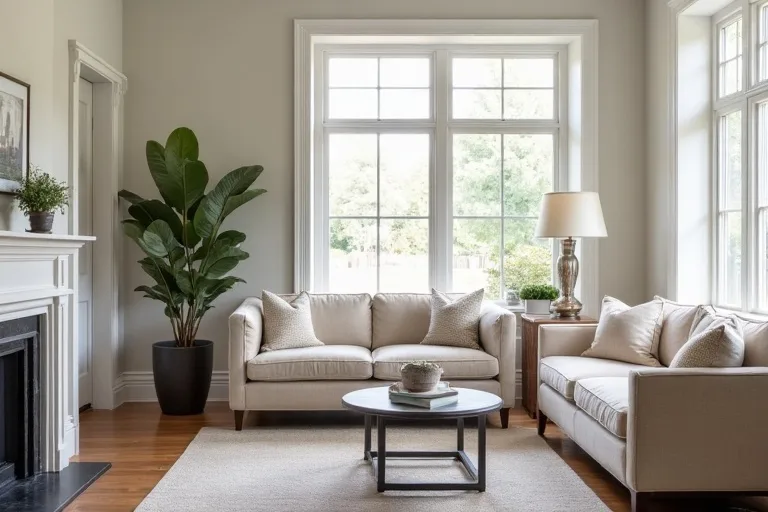
Transitional style works well when you want a room that feels current but not cold, classic but not heavy. It is one of the easiest looks to live with because it gives you enough structure to make decisions without locking you into a strict theme.
The challenge is that transitional interiors can turn bland fast if every choice plays it too safe. The goal is not to remove personality. It is to keep the room balanced so the furniture, finishes, and layout all support real use.
Use a balanced mix of classic and modern pieces, keep the palette neutral, and choose furniture that fits the room’s layout and daily use. Transitional style should feel calm and practical first, with texture and shape doing more work than bold color or ornament.
What transitional style really means
Transitional interior design sits between traditional and modern. That does not mean you need to split the room exactly in half. It simply means the space avoids the formality of traditional decorating and the sharper edge of a fully modern room.
In practice, that often looks like a clean-lined sofa with softer arms, a wood table with simple detailing, or a classic shape updated in a quieter finish. The room feels edited, but not sparse. Comfortable, but not overstuffed.
This is why transitional style is such a useful option for everyday homes. It gives you room to work with pieces you already own, especially if your furniture does not all come from one store or one decade.
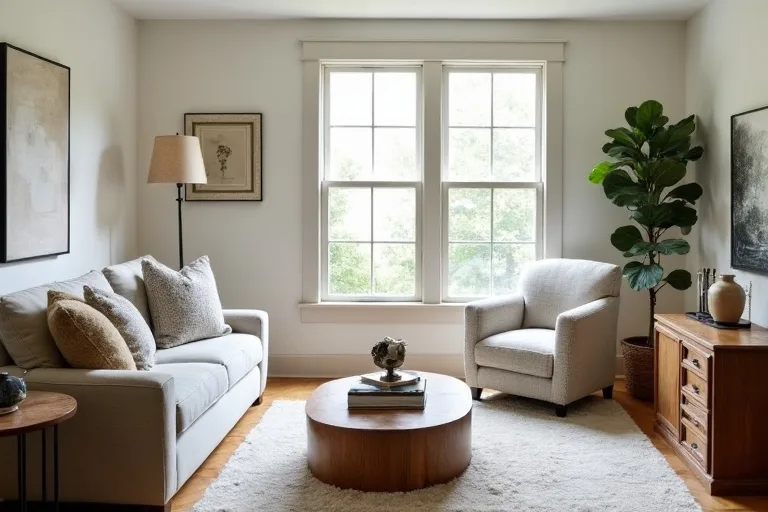
If you are deciding whether the style fits your home, the Home Style Quiz is a sensible place to start. It can help you tell whether your room is leaning transitional, modern, or something closer to traditional before you commit to new purchases.
The real decision is not whether your room looks perfectly transitional. It is whether the mix of old and new supports the way you live. If the room needs easier movement, better seating, or fewer visual distractions, start with layout and scale before you think about decor.
The color, material, and shape rules that keep it balanced
Transitional style relies on restraint, but restraint does not mean flat. The easiest way to build the look is to keep the palette quiet, mix a few different materials, and avoid shapes that are too ornate or too severe.
Neutral colors usually do the heavy lifting. Think soft white, warm beige, muted gray, taupe, and deeper grounding tones in wood or black accents. You can add contrast, but it works best when it is controlled rather than high-drama.
Materials matter as much as color. Transitional rooms often feel right when they combine something soft with something harder: linen or boucle with wood, matte ceramics with metal, upholstered seating with a simple glass or wood table. That mix keeps the room from feeling too formal or too polished.
- Choose a base palette that stays calm in daylight and evening light.
- Repeat 2 to 3 main materials instead of introducing too many finishes.
- Use shapes that feel familiar and slightly softened, not overly ornate or overly angular.
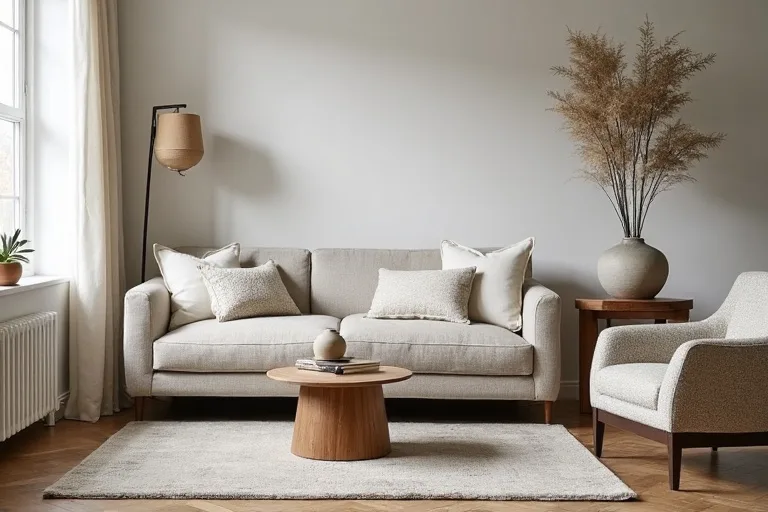
A small styling finish can go a long way here. A ceramic vase set neutral home decor is an easy way to add shape and texture without introducing clutter, especially on a console, shelf, or dining sideboard.
Furniture and layout choices that still work every day
Transitional style only works if the room is comfortable to use. A beautiful sofa that is too deep for the room, or a chair that crowds the walkway, quickly breaks the effect. The look depends on balance, but the room still has to function.
That is why scale matters. Choose furniture that matches the size of the room instead of filling space for the sake of fullness. In a living room, the seating should support conversation and movement. In a bedroom, the layout should leave room to walk around the bed without squeezing past furniture.
If you are planning a living room, a boucle chair is one of the easiest transitional pieces to use well because it adds softness without looking fussy. A boucle accent chair for living room or bedroom can work as a reading seat, a corner fill-in, or a quiet contrast piece next to a cleaner sofa.
The safest way to make the room work is to plan the layout before you buy anything new. If the proportions feel uncertain, the Room Layout Planner can help you map furniture placement, walking space, and focal points before you spend on pieces that may not fit.
How to finish the room without overstyling it
Finishing touches matter in transitional interiors, but they should feel collected rather than decorated all at once. The best rooms usually have a few repeating textures, a small amount of contrast, and enough open space to let the eye rest.
Start with the basics: curtains that are simple and well sized, a rug that anchors the seating or bed, and lighting that adds warmth without visual noise. Then add only a few objects that bring softness, like a lamp with a clean silhouette, a ceramic vase, or a textured throw.
This is also where people often overdo it. Transitional style can slide into generic if every accessory is beige and every surface is full. Keep some breathing room. A table can be styled. It does not need to be crowded.
If you want a room planning tool that keeps the process practical, the Home Planning System Bundle, Room Makeover, Small Space, Budget Tool (Digital Download) can help you organize the steps before buying. It is especially useful if you are making decisions for a small space or trying to stay within a budget.
Best next step
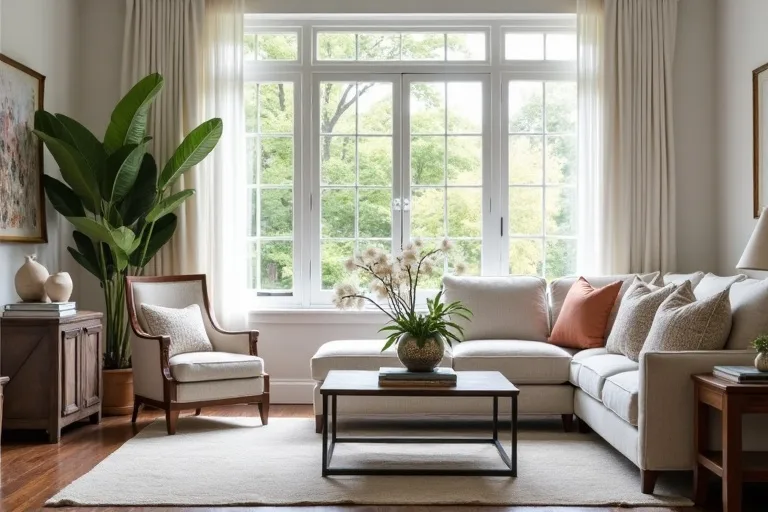
If you like transitional style, the next question is whether it fits your room, your existing furniture, and the way the space needs to work day to day. Before buying new pieces, confirm the style direction and the layout.
- Making everything neutral but forgetting texture, which leaves the room flat.
- Mixing too many finishes, which makes the style lose its calm balance.
- Choosing furniture for looks only and ignoring circulation or daily use.
- Using overly ornate or overly minimal pieces that push the room away from the middle.
- Styling every surface, which makes a transitional room feel staged instead of livable.
Transitional interior design is easiest to get right when you treat it as a planning choice, not just a decorating style. Keep the palette neutral, mix classic and modern shapes, and let furniture scale and room flow lead the process. When the layout works and the materials are balanced, the style feels calm, practical, and comfortable to live with.
Helpful next tools and planners
If you want to make the decision easier before you buy
Use one planning step and one finishing step together: first confirm the style and layout, then add only the pieces that improve comfort and balance.
FAQ
How is transitional style different from modern style?
Modern style usually leans cleaner, sharper, and more minimal. Transitional style keeps some of that simplicity but softens it with classic shapes, warmer textures, and a more comfortable overall feel.
Can transitional style work in a small room?
Yes. It often works very well in small rooms because the look depends on balance and restraint rather than heavy decoration. The key is to keep the furniture scale appropriate and avoid crowding the space.
What colors work best in a transitional room?
Neutral colors usually work best, especially warm white, beige, soft gray, taupe, and natural wood tones. You can add contrast with black accents or deeper earthy colors if the room still feels calm.
What should I buy first if I want a transitional look?
Start with the furniture layout and the largest pieces, especially the sofa, bed, or main seating. After that, add one or two texture-based finishing pieces instead of trying to style the whole room at once.
Three sensible next steps
Some links in this article may be affiliate links. Read more in the Affiliate Disclosure.