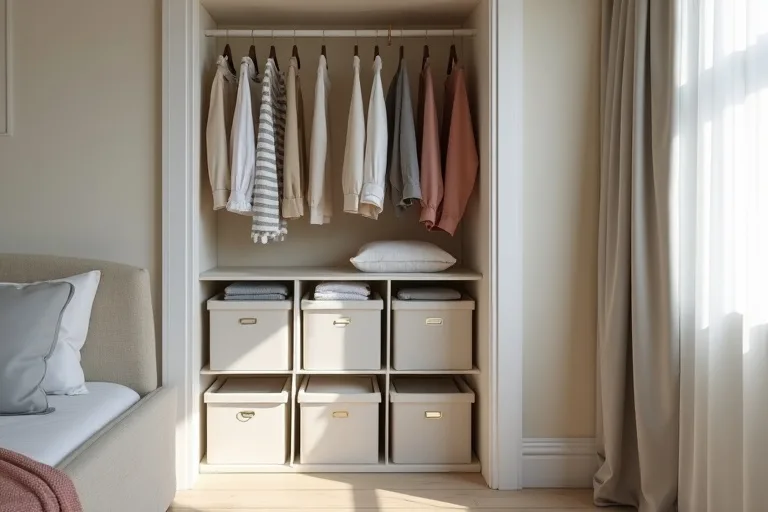
Closet organization should make a room feel easier to use, not busier to look at. But many closet setups get more stressful after a storage refresh because the system adds visual noise instead of reducing it.
The good news is that the fix is usually simpler than people expect. In most cases, a calmer closet comes from fewer categories, clearer placement, and the right storage type for the space you actually have.
The biggest mistake is adding storage without a clear system, which makes the closet look fuller and harder to use.
Why a closet can look fuller after organizing
A closet often feels messier after organizing when the storage itself becomes the problem. Extra bins, mixed container sizes, and loose stacks can make the eye work harder even if the closet is technically more sorted.
That is why the first question is not how much you can fit inside the closet. It is what kind of storage helps the space read as calm at a glance.
If every shelf holds a different box, basket, or pile, the closet stops feeling like one system. It starts looking like several small decisions happening at once.
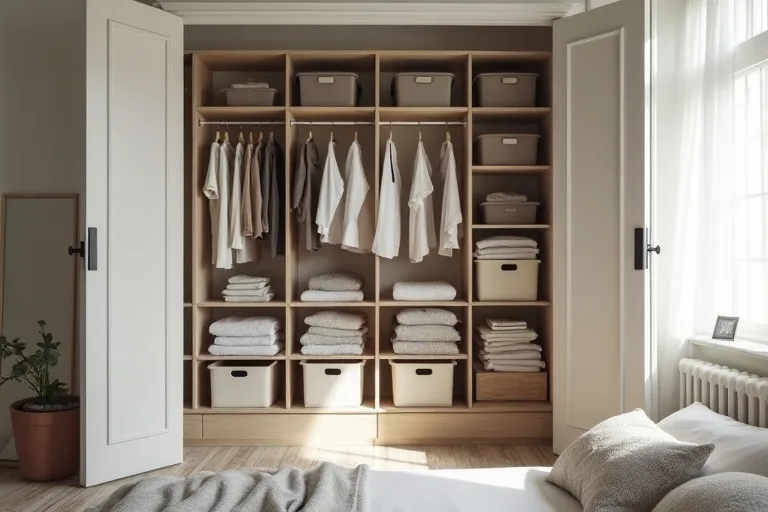
If you stand back and the closet looks busy before you even open a drawer or bin, the layout may need simplification more than more containers. A cleaner system usually starts with fewer visible categories, repeated storage sizes, and enough open space to show where things belong.
The mistakes that create visual clutter
Most clutter problems in closets come from a handful of avoidable habits. Once you notice them, the fix becomes much clearer.
- Using too many container styles. Different colors, heights, and materials can make even a tidy closet look crowded.
- Grouping by container instead of category. When items are stored because they fit a bin, not because they belong together, the system breaks down quickly.
- Overfilling every shelf. A packed shelf looks efficient, but it leaves no visual pause and makes items harder to remove and return.
- Labeling too much or too little. Too many labels can feel fussy, while no labels can make shared storage confusing.
- Keeping rarely used items at eye level. The closet feels more cluttered when everyday space is given to things you do not reach for often.
One simple way to reduce the visual mess is to repeat the same storage shape where possible. That is where cube-style storage can help, especially in small closets that need a straightforward layout instead of a complicated one.
How to choose storage by closet size
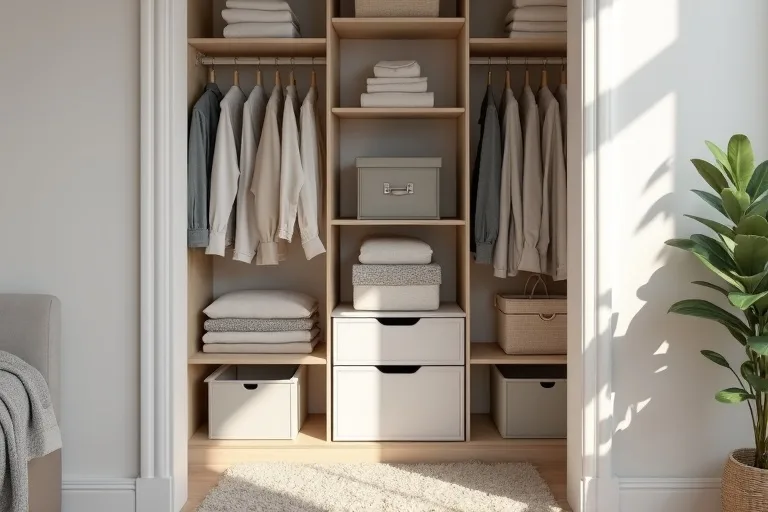
The right storage choice depends on how much open structure the closet already has. A small closet usually does better with simple, repeatable pieces. A larger reach-in closet can handle a bit more flexibility, but it still needs limits.
For a closet that needs one clear framework, an 8 cube storage organizer can work well when you want visible zones for folded clothes, accessories, or off-season items. The benefit is not that it holds everything. The benefit is that it gives the closet a repeatable structure.
If you use cube storage, pair it with matching containers such as fabric storage bins set for cube organizer so the look stays consistent. That matters in a closet, because inconsistent storage tends to read as clutter even when everything is in place.
If your closet is very narrow or already full, it may be better to choose fewer bins and leave more open space. A storage system should fit the room, not force the room to work harder.
- Buying bins before measuring shelf depth and door clearance
- Using a cube organizer where the closet leaves no walking or opening room
- Mixing opaque and open storage without a plan
- Filling every cube with no empty space for daily access
- Choosing containers for looks first and function second
A simple reset that makes the closet easier to maintain
Once the storage is right-sized, the closet becomes much easier to keep under control. The goal is not a perfect system. It is one that is quick to reset on a normal weekday.
Start by grouping items into broad categories: daily clothes, occasional wear, accessories, and overflow storage. Then give the easiest-to-reach space to the items you use most often.
From there, keep the number of visible storage types low. If one shelf holds folded clothing, use the same bin style there instead of switching to a different shape for the next shelf. Repetition creates calm.
If you are still unsure whether a storage piece will fit properly, a layout planner is a better first step than a guess. That is especially true in small rooms where one oversized purchase can crowd out the rest of the system.
Best next step
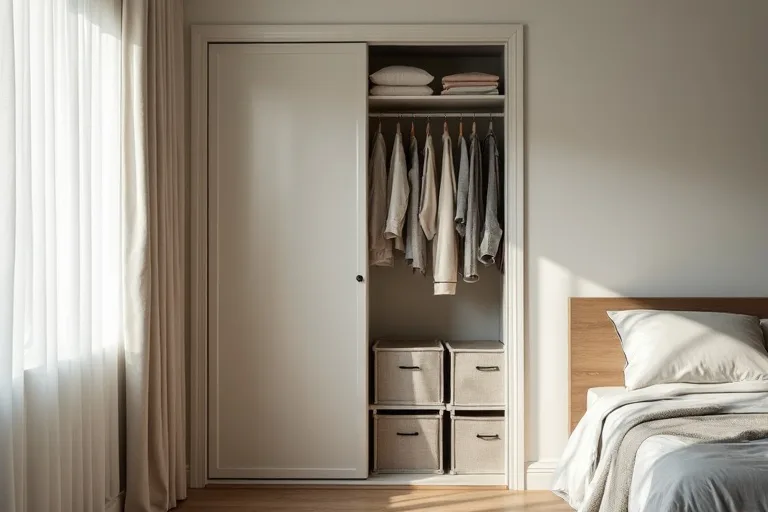
If you are deciding between bins, cube storage, or a simpler layout, check the closet dimensions first. The right storage choice is usually the one that fits the space cleanly and still leaves room to use the closet comfortably.
- Buying more storage before deciding what the closet needs to do
- Using mismatched bins that make the shelf line look uneven
- Overstuffing cube organizers until they lose their structure
- Storing daily-use items too high, too low, or too far back
- Adding labels, baskets, and boxes without removing unnecessary items first
A closet looks calmer when the storage matches the space and the categories are easy to understand at a glance. If your setup feels visually messy, the fix is usually not more organizing products. It is a simpler layout, fewer container types, and a storage choice that fits the closet size without crowding it.
Helpful next tools and planners
If you want to make the decision easier before you buy
These tools and planning options can help you check fit, choose a cleaner layout, and avoid buying storage that looks good but works poorly in the space.
Use this to confirm what will actually fit before you order bins, organizers, or furniture.
A practical option when you want one repeatable framework for folded items and small storage zones.
A simple digital planning aid for checking room flow before making storage purchases.
FAQ
How do I make a closet look less cluttered without buying much?
Use fewer container types, remove anything you do not use regularly, and group items by category instead of by whatever fits into a bin.
Are cube organizers good for closets?
They can be, if the closet has enough room for the organizer to sit cleanly without blocking access or making the space feel packed.
Should every closet bin be labeled?
No. Label only where it helps another person, or where the category is not obvious. Too many labels can add visual noise.
What should I buy first for a small closet?
Measure the space and decide on the layout first. Then choose one storage type that fits the dimensions instead of mixing several systems at once.
Three sensible next steps
Some links in this article may be affiliate links. Read more in the Affiliate Disclosure.