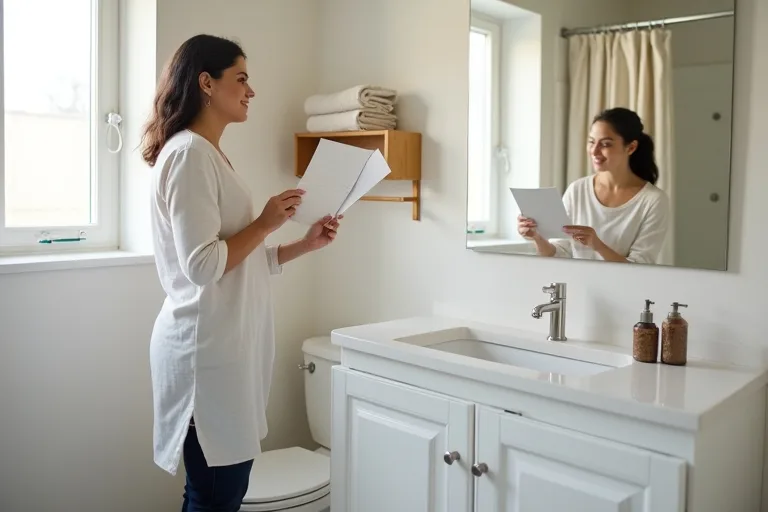
Bathroom paint colors can look simple until you are standing in the room trying to match tile, trim, vanity, lighting, and moisture concerns all at once. That is usually when a calm decision turns into guesswork.
The easiest way to avoid that is to check the room first, then choose the color. A bathroom does not need the most exciting paint color in the house. It needs the one that works with the light, the fixtures, and the way you use the space every day.
Check light, fixtures, finishes, and samples first, then choose the paint color. In a bathroom, the room conditions matter more than the paint chip.
Check the room’s light and surface conditions
Bathroom paint colors shift more than people expect because bathrooms often have mixed light. A pale shade can feel crisp in daylight and dull under an overhead fixture. A warmer neutral may look soft in the morning and more yellow at night. Before you decide on a color, notice how the room behaves at different times of day.
Start by looking at the walls, ceiling, and any surfaces that throw color back into the room. White tile can make a paint color feel cleaner. Cream tile can soften the same color. A small room with limited natural light usually needs a shade that can hold its own without turning flat.
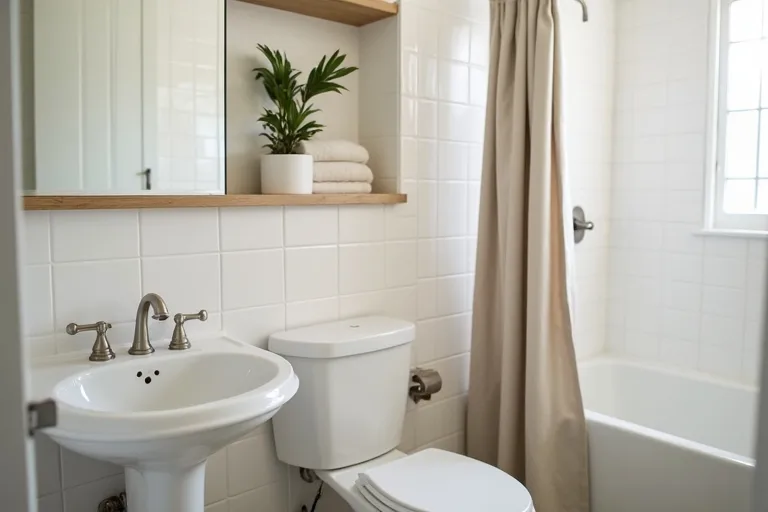
If your bathroom has one strong light source, check what the wall color looks like when the light is on and when it is off. If you want a more precise estimate of how much paint you will need, use the Styling Homes paint calculator before you buy.
The question is not only, Do I like this color? It is also, Does this color still look calm in my bathroom’s real light? That is the decision that saves repainting later.
Review the fixed finishes you already have
Paint is flexible. Tile, flooring, vanity finishes, mirror frames, and hardware are not. That is why bathroom paint colors should be chosen after you look at the permanent or semi-permanent parts of the room. If those finishes already lean cool, a cool gray-blue may feel natural. If they lean warm, a softer greige, sand, or muted white may fit better.
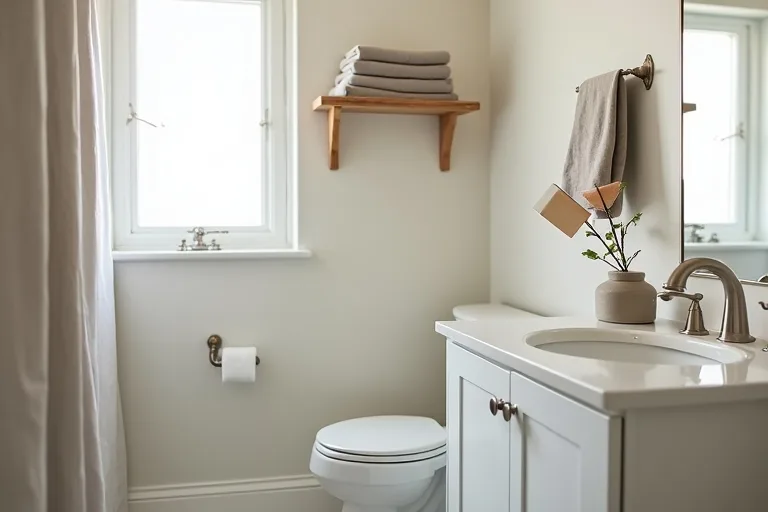
Do not ignore the small details. Brushed metal fixtures, an oak vanity, and a white shower curtain can all influence how the wall color feels. Even storage pieces matter, especially in smaller bathrooms where every object is visible.
If the room feels crowded, simple soft texture can help the space feel more settled without adding visual noise. A neutral fabric shower curtain set can support a calmer palette better than a busy pattern, and an over toilet storage shelf bathroom can make the room feel more ordered before you ever open a paint can.
For a broader sense of style direction, it helps to compare your room with the Styling Homes design styles guide. You do not need a full makeover to make a better paint choice. You just need the color to match the room you already have.
Test samples against the full room, not just the wall
Paint samples are useful only when you see them in context. A chip held under bright store lighting tells you very little about how the color will behave in your bathroom. Put samples on more than one wall if you can, especially if one wall gets daylight and another sits in shadow.
When you test, look at the sample next to the vanity, trim, flooring, and any tile edge that will stay in view. Then check it again in the evening. The goal is to see whether the color stays balanced through the day, not just whether it looked good for five minutes.
- Choose two or three likely colors.
- Paint sample patches on separate walls.
- Check them in morning light and artificial light.
- Stand back and compare them next to the fixed finishes.
- Keep the color that looks calm in the whole room, not just on its own.
Best next step
Before you buy paint, confirm coverage and quantity so you can plan the project with fewer surprises. The simplest next step is to use the paint calculator, then explore a style direction that fits the rest of the room.
Choose the right finish and buy with confidence
In bathrooms, finish matters almost as much as color. You usually want a paint that can handle moisture and be wiped clean without looking overly shiny. Too flat can be harder to maintain. Too glossy can make imperfections and lighting problems more noticeable.
Think of the finish as part of the room’s function. A bathroom that gets heavy daily use needs a different practical balance than a guest bath that is used less often. If you are also planning other updates, a simple budgeting planner can help you keep the whole refresh grounded. The Room Makeover Planner, Home Layout Budget Spreadsheet (Digital Download) is a useful place to organize choices before you commit to paint and accessories.
When you are ready to buy, make the final decision by checking three things together: the color, the finish, and the amount you need. That is the real buying checklist. If all three line up, you are ready.

- Choosing a color from a tiny sample without testing it in the room.
- Ignoring the undertone of tile, flooring, or vanity finishes.
- Forgetting to compare the color under both daylight and artificial light.
- Picking a finish that looks nice in theory but is hard to clean in practice.
- Adding too many decorative elements before the paint decision is settled.
The calmest bathroom paint color choice is usually the one that fits the room you already have. Check the light, the fixed finishes, the samples, and the finish before you buy. If the color feels balanced in real conditions, it is probably the right one.
Helpful next tools and planners
If you want to make the decision easier before you buy
These options are useful when you want a more organized bathroom refresh without turning it into a bigger project than it needs to be.
FAQ
What bathroom paint colors work best in a small bathroom?
Usually the best choice is a color that feels light but not brittle. Soft whites, muted neutrals, and gentle warm or cool tones tend to work well if they fit the room’s light and finishes.
Should bathroom paint be lighter than the tiles?
Not always. The better rule is to make sure the paint and tiles feel related. A lighter wall color can work well, but a slightly deeper shade can also look calm if the undertones match.
How many paint samples should I test?
Two or three is often enough. More than that can make the decision harder. It is usually better to compare a few strong options in the room than to test too many at once.
What finish is best for bathroom walls?
Choose a finish that balances moisture resistance and cleanup with a look that still feels comfortable in the room. The right answer depends on how much use the bathroom gets and how much light it receives.
Three sensible next steps
Some links in this article may be affiliate links. Read more in the Affiliate Disclosure.