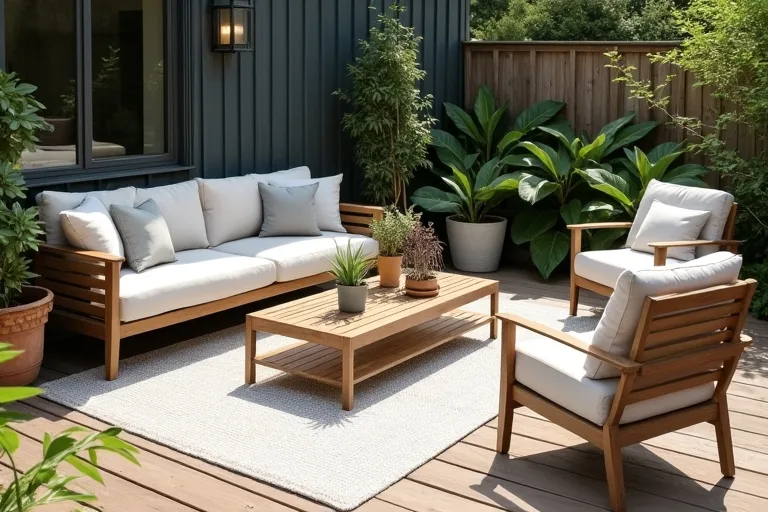
Outdoor rugs do more than add color. Used well, they define the seating zone, make furniture feel connected, and stop a patio or deck from looking like a few pieces placed at random.
The easiest way to choose one is not by pattern first, but by the area you want to anchor. Once the seating group is clear, rug size, placement, and material decisions become much simpler.
Choose a rug large enough to anchor the main seating group and define the zone. If the rug is too small, the area looks unfinished; if it is too large, it can overwhelm the space. Start with the furniture layout, then size the rug around the conversation area.
Why outdoor rugs matter for scale and flow
Outdoor spaces often feel scattered because the furniture floats visually against hard surfaces like concrete, pavers, or decking. A rug gives the seating area a clear boundary, which helps the room feel calmer and easier to read.
That is especially useful when the patio has more than one purpose. A rug can separate dining from lounging, or a compact seating zone from a walkway, without needing walls or heavy dividers. It also adds softness underfoot, which can make a simple setup feel more finished without adding clutter.
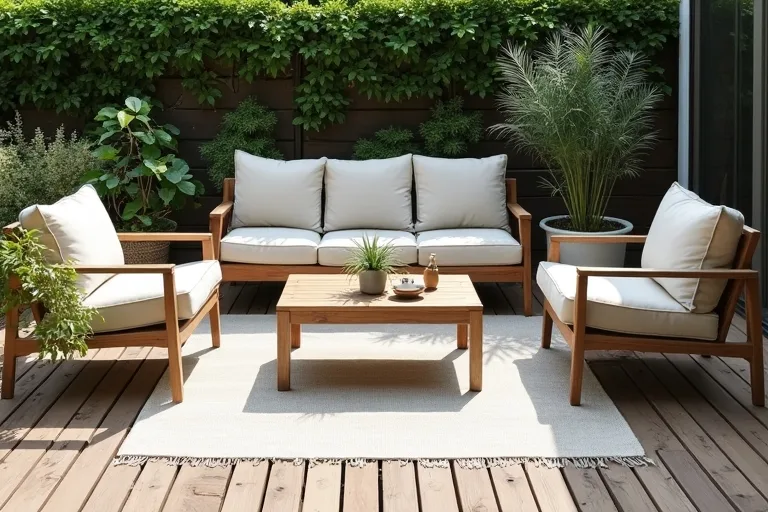
For scale, think of the rug as part of the layout, not decoration. A small rug under a few chair legs can make the furniture feel oddly disconnected. A better-sized rug pulls the group together so the coffee table, sofa, and chairs read as one intentional zone.
The real decision is not which pattern looks nicest online. It is whether the rug is big enough to connect the main seating pieces while still leaving enough floor visible around the edges to keep the space balanced.
How to size the rug around the seating group
Before shopping, map the furniture footprint. You do not need a perfect drawing, but you do need to know where the front legs, table, and walking space sit in relation to one another. That is what keeps the rug from feeling too small or awkwardly placed.
A simple order of operations helps:
- Measure the full seating zone, not just the coffee table.
- Note how many pieces need to touch or partially sit on the rug.
- Leave a comfortable border of visible floor around the setup.
- Check that doors, drawers, and pathways can still open cleanly.
If you are working with a compact patio, a rug that sits under the front legs of the sofa and chairs often gives better structure than one that only holds the table. On larger decks, a bigger rug can help prevent the conversation area from looking like separate items spread across a hard surface.
When you want a quicker sizing check, use the Styling Homes rug size calculator before you buy. It is a practical way to confirm the scale before you commit.
Best placements for patios, decks, and balconies
The right placement depends on how the outdoor area is used. The goal is always the same: define the main function first, then let the rug support it.
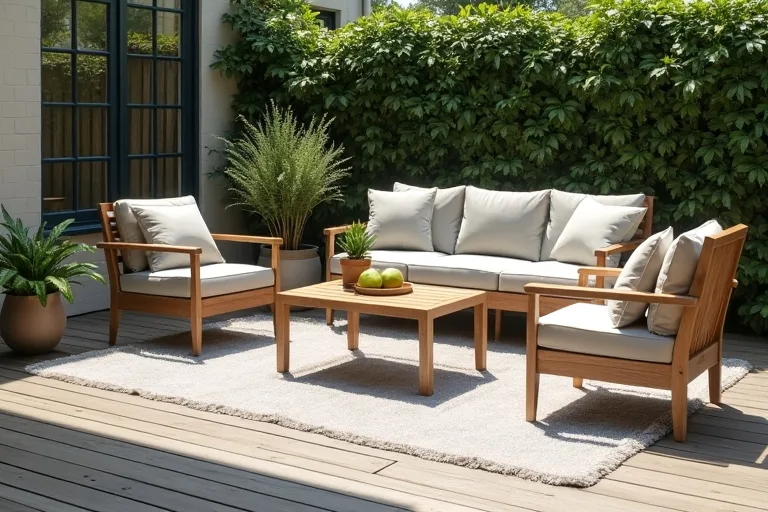
On a patio, place the rug so the sofa and chairs are grouped around the coffee table, with at least the front legs of the larger pieces on the rug. This creates a stronger anchor than centering the rug only under the table.
On a deck, a rug can help soften long, narrow boards and reduce the feeling of length. If the deck is divided into zones, use the rug to give the seating area its own identity and keep the rest of the space open.
On a balcony, scale matters even more. A smaller rug can still work if it reaches under the seating pieces and leaves clear paths to doors and railings. In very tight layouts, a well-sized rug is often enough to make the area feel organized without adding more furniture.
If you are unsure which layout style suits the rest of your home, the Design Styles hub can help you keep the outdoor look consistent with the interior. That matters most when the patio is visible from inside the house.
Materials, pattern, and finishing details that make it feel complete
Outdoor rugs need to handle more than indoor rugs do, so the practical side matters. A waterproof or weather-resistant rug is usually the safer choice for exposed areas, especially where morning dew, spills, or damp weather are part of daily life.
Pattern and texture should support the layout rather than compete with it. If the furniture is simple, a subtle stripe, weave, or small-scale pattern can add depth without making the area feel busy. If the cushions already bring in strong color, a quieter rug usually works better and keeps the seating zone calm.
Small finishing choices matter too. Coordinated side tables, a centered coffee table, and simple lighting can make the rug feel intentional instead of accidental. For evening use, waterproof outdoor string lights can help the seating area feel complete without requiring a lot of extra decor.
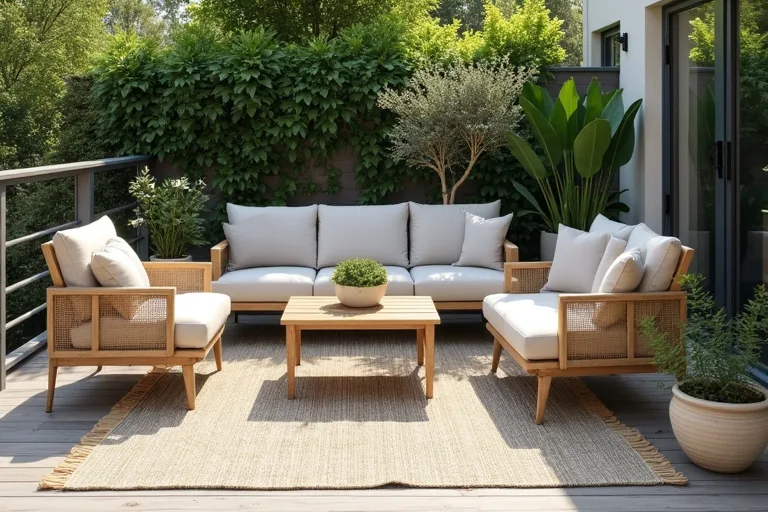
If you want a straightforward product starting point, a waterproof outdoor rug 5×7 can be a useful benchmark for smaller seating areas, while outdoor string lights waterproof can help the zone feel finished after dark. If you are planning a broader outdoor refresh, the Room Makeover Planner, Home Layout Budget Spreadsheet can help you keep the layout and spending decisions in one place.
Best next step
Measure the seating zone before you shop, then use a rug-size calculator or layout planner to confirm the rug will anchor the furniture without crowding the space. That one step usually prevents the most common buying mistake.
- Choosing the rug after the furniture instead of sizing both together.
- Buying a rug that only fits under the coffee table and not the seating group.
- Ignoring door swings, walkways, and access around the edge of the rug.
- Using a bold pattern when the layout already feels busy.
- Picking a rug that is not suitable for outdoor moisture or exposure.
The best outdoor rug is the one that gives the seating area a clear boundary, enough scale, and a calm visual anchor. If you measure the furniture zone first, the rest of the choice becomes much easier: size, placement, material, and pattern all fall into place.
Helpful next tools and planners
If you want to make the decision easier before you buy
These are the most practical next steps if you are still comparing sizes or trying to keep the outdoor layout organized.
FAQ
How big should an outdoor rug be under a seating area?
It should be large enough to connect the main furniture pieces, usually at least the front legs of the sofa and chairs, so the area feels anchored rather than floating.
Can I use a small rug on a patio?
Yes, but only if it still supports the seating group. A rug that is too small for the furniture usually makes the setup look less intentional.
What is the best material for an outdoor rug?
Look for weather-resistant or waterproof materials that are easy to clean and suited to the amount of exposure your space gets.
Should the outdoor rug match the furniture?
It does not need to match exactly. It should support the overall layout and color balance, with the furniture and rug working as one calm zone.
Three sensible next steps
Some links in this article may be affiliate links. Read more in the Affiliate Disclosure.