
Bathroom lighting is easier to get right when you slow down before you shop. The best choice is not always the prettiest fixture on the shelf. It is the one that fits the room, supports the mirror, and gives you enough light where you actually use it.
This checklist keeps the decision practical. Start with the room’s layout and the way you use the space, then narrow down the fixture style, bulb type, and budget. If you want to avoid buying the wrong thing twice, that order matters.
Check size, brightness, placement, and safety first.
Start with the bathroom’s main lighting problem
Before you compare finishes or styles, identify what the room is missing. Some bathrooms feel dim because the ceiling light is too weak. Others have decent overhead light but the mirror area is shadowed. A small bathroom may need one clear all-purpose solution, while a larger one usually works better with separate lighting for the vanity, shower, and general room use.
Look at the room at the times you use it most. Morning grooming, evening cleanup, and nighttime visits can all need different light levels. Once you know the main problem, it becomes much easier to decide whether you need a single fixture update or a layered plan.
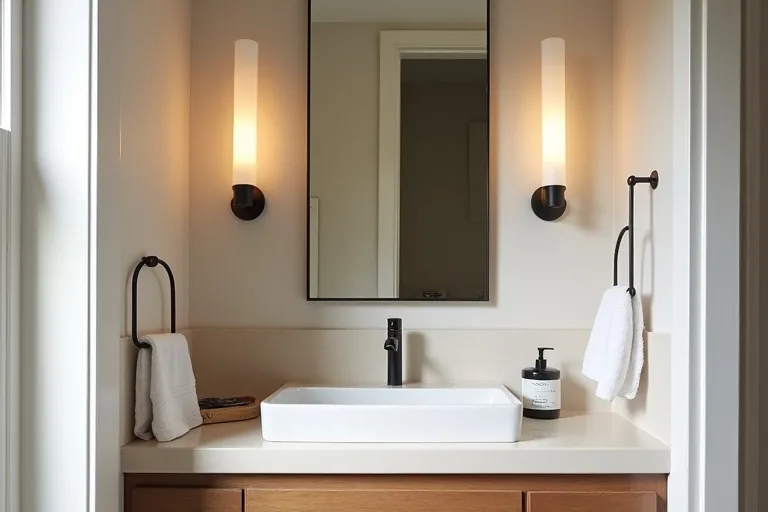
If the bathroom already has clutter on the counter, start by clearing it. A rustproof shower caddy organizer can move bottles out of the way so you can better judge how light falls across the sink, mirror, and surrounding surfaces.
The real decision is not “Which light looks best?” It is “What does this room need to feel usable at the mirror, in the shower, and at night without adding glare or shadows?”
Check size, mirror placement, and ceiling height
Lighting in a bathroom works best when it fits the room’s proportions. A fixture that looks balanced in a large primary bath can feel oversized in a compact hall bath. Likewise, a vanity light may look tidy on paper but still cast awkward shadows if it sits too high, too low, or too far to one side.
Use the room itself to guide the choice:
- Measure the vanity width and the wall space around the mirror.
- Note the ceiling height and whether the room feels open or compact.
- Check where existing wiring already sits before choosing a new fixture.
- Look at how much wall space is available for sconces or a wider vanity bar.
If you are also updating finishes, it can help to keep the room visually calm. A brushed nickel bathroom faucet can be a useful reference point for matching metal tones if you want the lighting to feel coordinated rather than busy.
Choose the right light layers and bulb details
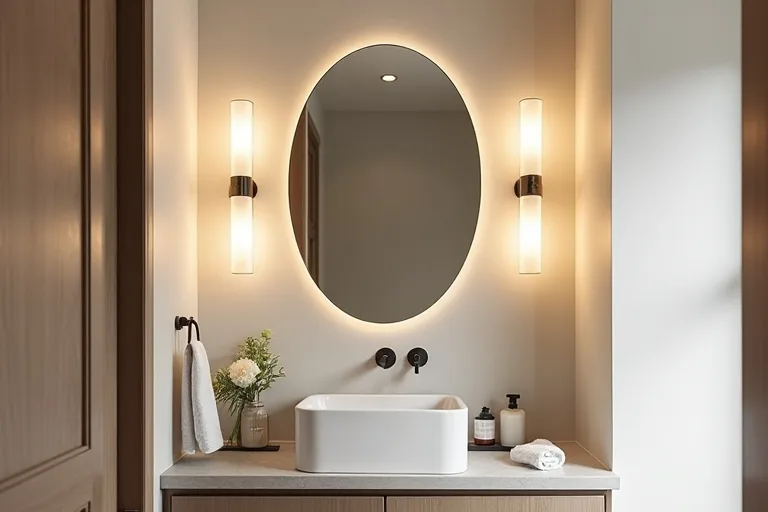
The clearest bathroom lighting usually comes from layers, not one strong fixture doing everything. Ambient lighting gives the room an even base. Task lighting helps at the mirror. Accent lighting is optional, but it can soften a plain room if the layout allows it. You do not need all three in every bathroom, but it helps to know what each one is supposed to do before buying.
Use this order when narrowing options:
- Decide whether the room needs general light first or mirror light first.
- Choose fixture type based on where the shadows fall.
- Select bulb brightness and color temperature for the feel you want.
- Check whether the bulb can be replaced easily or is built in.
Bulb choice matters more than many people expect. A warm bulb can feel calmer, while a cooler bulb can make grooming easier in a room with limited daylight. If the bathroom already gets strong natural light, you may need less brightness than you think. The goal is clean, even light without making the room feel harsh.
Review safety, maintenance, and the final buy list
Bathrooms need lighting that can handle moisture and regular cleaning. Before you buy, check whether the fixture is appropriate for the room’s damp conditions and whether the finish will be easy to maintain. A design that collects dust or shows water spots quickly may look fine at first but become annoying in everyday use.
It also helps to match your lighting purchase to your budget in advance. If you are planning more than one change, use a simple budget tool before you order anything. The Bathroom Remodel Cost Estimator is a practical next step when you want to see how lighting fits alongside other updates.
For readers who want a more structured way to plan the whole room, the Room Makeover Planner, Home Layout Budget Spreadsheet (Digital Download) can help keep lighting decisions tied to the rest of the update instead of turning into separate impulse buys.
Best next step
If you are still deciding between fixture styles, placement, and budget, use a planning tool before you buy. That way you can see whether you need one upgraded light or a fuller bathroom update.
- Choosing a fixture before checking where the shadows land at the mirror.
- Ignoring ceiling height and vanity width, which can throw off scale.
- Buying bulbs last and ending up with the wrong brightness or color temperature.
- Mixing too many finishes in a small bathroom, which can make the room feel cluttered.
- Skipping moisture and maintenance checks, then replacing the fixture sooner than expected.
The smartest bathroom lighting buy is the one that fits the room first. Start with the problem you are trying to solve, then check layout, brightness, bulb choice, and moisture safety before you spend. When the plan is clear, the fixture choice becomes much easier.
Helpful next tools and planners
If you want to make the decision easier before you buy
A little planning can remove clutter from the process and keep lighting purchases tied to the room’s actual needs. These options are useful when you want a clearer layout, a cleaner budget, or a simple way to keep track of decisions.
FAQ
What is the best bathroom lighting setup for a small room?
Keep it simple: one strong general light and one clear task light at the mirror usually works better than several decorative fixtures that add clutter without solving the shadows.
Should bathroom lights be warm or cool?
Either can work, but the best choice depends on the room and how you use it. Warmer light feels softer, while cooler light can help with grooming and make the room feel brighter.
Do I need sconces on both sides of the mirror?
Not always. Side sconces often reduce shadows well, but a well-placed bar light or overhead vanity fixture may be enough in a smaller bathroom.
What should I check before buying a fixture?
Confirm the room size, mirror position, ceiling height, bulb requirements, and moisture suitability so the fixture works for the space instead of just filling it.
Three sensible next steps
Some links in this article may be affiliate links. Read more in the Affiliate Disclosure.