
If your bathroom feels dim, uneven, or harder to use than it should be, lighting is often the reason. The choice is usually not between a perfect makeover and doing nothing; it is between a small, sensible update and a more complete lighting plan.
The calmer way to decide is to start with function. Good task light, less clutter around the sink, and a cleaner layout usually make the biggest difference first. Once those basics are in place, you can see whether the room really needs more layers.
Start with better task lighting and clutter-free basics, then add layers only if the room still feels dim or uneven. In many bathrooms, that means improving the mirror area, reducing visual clutter, and checking how light falls at the vanity before spending on a larger upgrade.
What budget bathroom lighting can realistically fix
Budget lighting updates work best when the room already functions well but feels a little flat, shadowed, or dated. The goal is not to create a completely new lighting scheme. It is to make the bathroom easier to use without opening up the whole room for renovation.
In practical terms, that often means focusing on the mirror area, choosing bulbs with a clearer and more even output, and removing anything that blocks light or crowds the sink zone. Small changes can improve daily routines more than a decorative fixture ever will.
A good budget approach also pairs well with low-cost organization. A rustproof shower caddy organizer can clear bottles from the tub edge or shower floor, which helps the room feel brighter and calmer because surfaces are less visually busy.
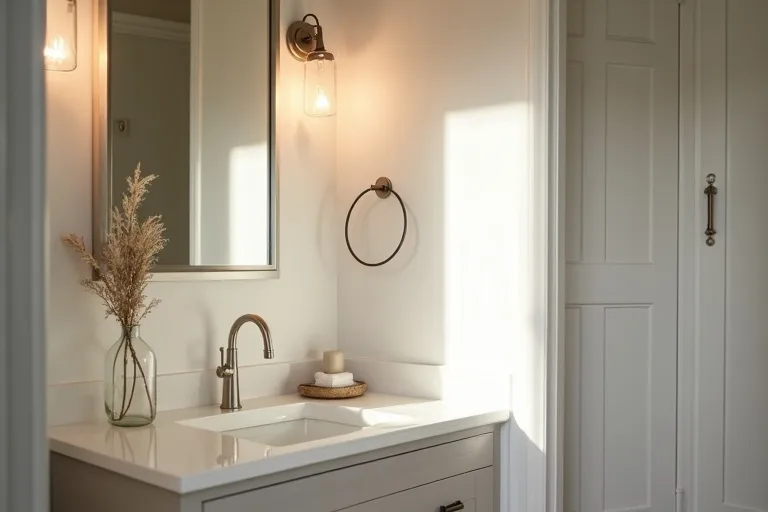
If your main problem is one shadowy mirror, a dark corner, or too much clutter around the sink, a budget update is usually enough. If the room has multiple light problems at once, a fuller plan may be worth the extra effort.
What a layered lighting upgrade adds
A layered lighting upgrade combines ambient, task, and accent lighting so the bathroom feels more even and easier to use throughout the day. That does not mean the room has to look dramatic. It simply means light is doing more than one job.
Ambient lighting gives the room its overall brightness. Task lighting supports the mirror and sink, where you need clarity for shaving, skincare, or makeup. Accent lighting is optional, but it can help soften harsh shadows or highlight architectural features when the layout allows it.
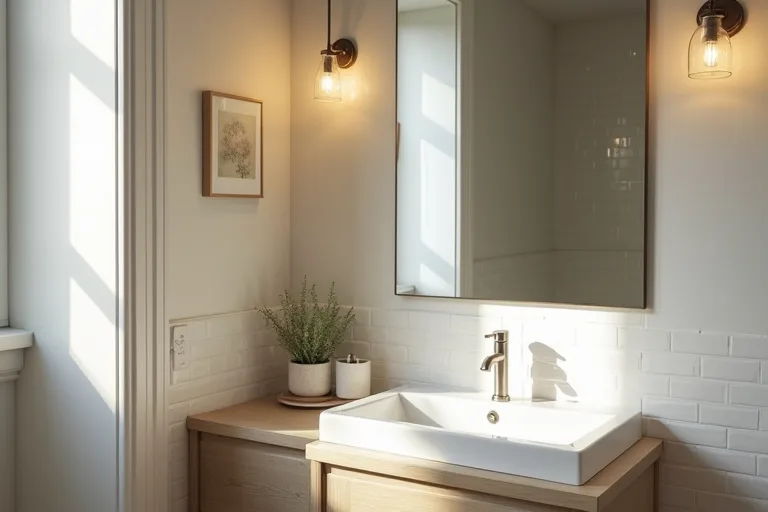
A layered approach is most useful when the bathroom has one or more of these issues:
- The mirror area looks washed out or casts shadows on the face.
- The room feels bright in one spot but dark near the shower or corners.
- One overhead light creates glare instead of comfortable light.
- The bathroom is used at different times of day and needs more flexibility.
For some rooms, a small fixture change is enough. For others, the problem is not the bulb or shade at all; it is the way the room is planned. If you are still making broader decisions about the space, the Bathroom Ideas hub is a useful place to step back and look at the room as a whole.
Cost, effort, and impact: how to compare the two paths
The cleanest comparison is not just what each option costs. It is what problem it solves, how much disruption it creates, and how much improvement you actually feel after the work is done.
Budget updates are usually best when you want a quick win with minimal planning. Layered upgrades make more sense when the room has design, layout, or visibility problems that continue after the first fix. That is why many homeowners start small and only build further if the result still feels incomplete.
The comparison below is useful because it keeps the decision practical.
Budget update: lower effort, fewer changes, best for solving one clear lighting problem.
Layered upgrade: more planning, more coordination, best for bathrooms with uneven brightness, glare, or mixed-use needs.
Best default: improve the vanity first, then decide whether the rest of the room still needs more light layers.
If you are already planning a broader refresh, it helps to keep the full budget in view before you choose fixtures. The remodel budget planning page can help you set a realistic ceiling, and the bathroom remodel cost estimator is a better next step if you want to compare lighting against other bathroom priorities.
How to decide what your bathroom actually needs
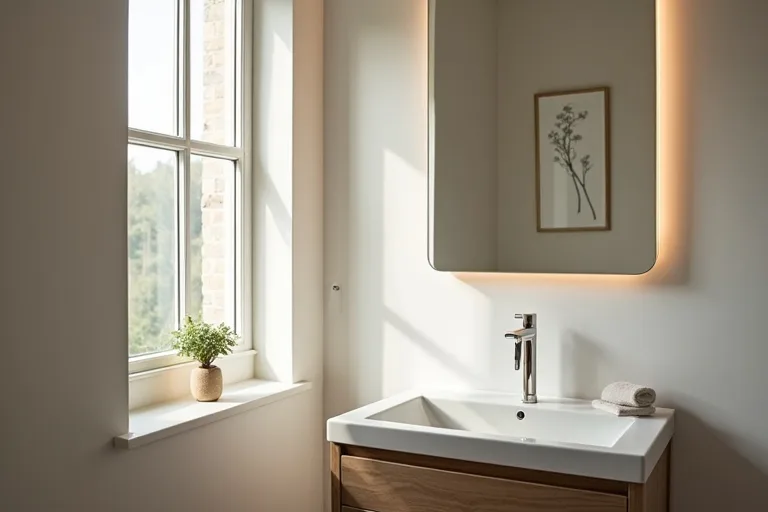
The best choice depends on how the bathroom is built and used. A small guest bath may only need a cleaner, brighter vanity light. A family bathroom with limited daylight may need more layers so the room works in the morning and at night without feeling harsh.
A brushed nickel finish can be a practical choice when you want something calm and easy to coordinate, which is why a brushed nickel bathroom faucet may fit a broader update if you are replacing several pieces at once. Keep the decision tied to the room plan, though, not to a single product.
Use this simple checklist:
- Identify the main problem: shadows, glare, or general dimness.
- Check whether the sink area has clear task light.
- Look at clutter around the vanity and shower edges.
- Decide whether the room needs one better fixture or several lighting layers.
- Confirm your budget before shopping.
For the planning side, the most useful next step is often a layout or budget tool before any purchase. If you want a simple way to organize the room and keep spending under control, the Room Makeover Planner, Home Layout Budget Spreadsheet (Digital Download) can help you compare options before you commit.
Best next step
Before you buy a new fixture, decide how much room you really have in the budget and whether the lighting problem is part of a larger bathroom plan. That keeps the upgrade focused and prevents small decisions from turning into avoidable extras.
- Choosing a decorative fixture before checking whether the vanity still has enough task light.
- Relying on one overhead light and calling the room finished.
- Ignoring shadows caused by mirror placement or wall clutter.
- Spending on multiple upgrades before setting a realistic budget.
- Treating lighting as separate from layout, storage, and daily use.
If your bathroom has one clear lighting issue, start small and fix that first. If it still feels uneven after the basics, then a layered lighting upgrade is worth considering. The calmest path is to plan the budget, check the layout, and only then decide what to buy.
Helpful next tools and planners
If you want to make the decision easier before you buy
These links are most useful when you are still deciding how much to change, what to budget, and how to keep the bathroom functional while you upgrade.
FAQ
Do I need layered lighting in a small bathroom?
Not always. If the room already has enough brightness and the vanity area is clear, a better task light may be enough.
What should I improve first on a tight budget?
Start with the mirror or vanity area, because that is where poor lighting is most noticeable during daily routines.
How do I know if the bathroom needs more than one light source?
If the room feels bright in one spot but dark in corners, or if glare and shadows keep showing up, a layered approach is usually more helpful.
Should I shop for fixtures before planning the budget?
No. It is easier to make a calm decision when you know how much of the room you want to change and what that change needs to solve.
Three sensible next steps
Some links in this article may be affiliate links. Read more in the Affiliate Disclosure.