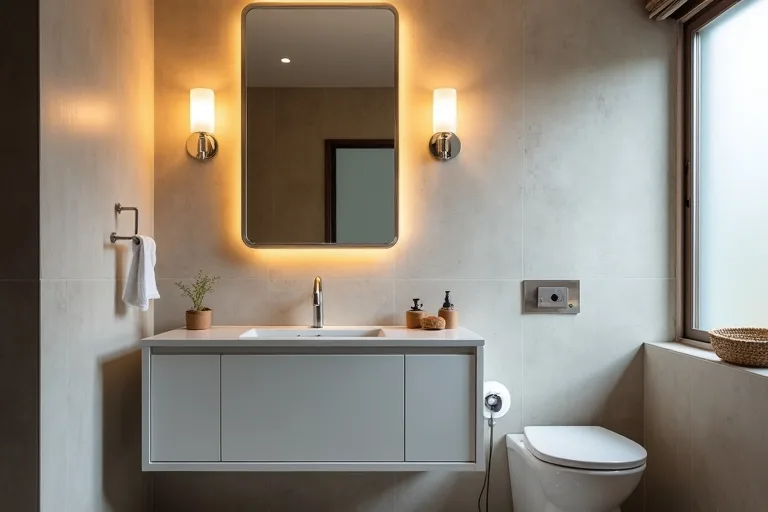
Bathroom lighting does more than help you get ready in the morning. It shapes how the room feels, how clearly you can see at the mirror, and whether the space feels calm or harsh at the end of the day.
The easiest way to improve it is not by buying the brightest fixture you can find. It is by planning light in layers so the room feels warm enough to live with and focused enough to function well.
Use layered lighting: ambient, task, and accent light. That gives you a bathroom that feels softer overall while still providing clear light where you actually need it.
Start with the lighting problem, not the fixture
Most bathroom lighting problems come from trying to solve everything with one central ceiling light. That often creates a room that is either too dim in the corners or too bright directly overhead, with shadows around the mirror.
A better starting point is to ask what feels off in the room. Do you need the bathroom to feel warmer in the evening? Do you need clearer light for shaving or makeup? Is the room small and visually flat? Once you know the real problem, the lighting plan becomes much easier to shape.
In practical terms, bathroom lighting usually works best when it does three jobs at once. It should spread general light through the room, give you focused light at the vanity, and add a softer layer that keeps the space from feeling severe.

If the bathroom only looks good when every light is on at full strength, the lighting is probably too dependent on one source. The real decision is usually whether you need better layering, better placement, or both.
Use layers instead of one bright ceiling light
Layered lighting is the most reliable way to make a bathroom feel more usable and less stark. It also gives you more control across different times of day.
The three layers are simple:
- Ambient light for overall brightness and safe movement through the room.
- Task light for the mirror, sink, and grooming routine.
- Accent light for softness and depth, such as under-vanity lighting or a gentle wall wash.
This does not mean the room needs a lot of fixtures. It means the fixtures should do different jobs. A bathroom with one strong ceiling fitting can feel flat. A bathroom with a ceiling light, mirrored task lighting, and a small decorative glow usually feels calmer and more finished.
If your bathroom is part of a wider update, it can help to think about lighting alongside the full room budget rather than as a last-minute add-on. That way, wiring changes, fixture choices, and finish upgrades stay aligned. A planning tool such as the bathroom remodel cost estimator can make those tradeoffs much clearer before you start buying.

Place vanity and mirror lighting where it actually helps
Mirror lighting is where many bathrooms go wrong. Light from only above the mirror can cast shadows under the eyes and chin, which makes grooming tasks harder and can be unflattering.
The most useful approach is to light the face from both sides when possible, or from a fixture that spreads light evenly across the mirror area. Wall sconces beside the mirror often work well because they reduce shadowing and give the sink zone a more balanced feel. If side mounting is not possible, choose a fixture that offers wide, even output rather than a narrow beam.
For a small bathroom, this matters even more. The vanity zone can become the main visual focal point, so getting that light right has a bigger effect on the whole room.
It also helps to keep the sink area clear. A tidy countertop makes the light feel stronger and calmer. A simple rustproof shower caddy organizer can free up shelf and shower space so clutter does not compete with the lighting. If you are refreshing the vanity area as part of the same update, a brushed nickel bathroom faucet can also tie the fixture finish into the rest of the room without making the space feel busy.
Choose warmth, controls, and low-ceiling fixes with the room in mind
The right bulb temperature changes the feel of the bathroom more than many people expect. Cooler light can be useful when you need clarity, but in a room that already feels hard or echoey, it can become clinical. A warmer look usually feels better for everyday living, especially in bathrooms with limited natural light.
Controls matter too. Dimmers and separate switches allow the bathroom to work in different modes: bright for cleaning or getting ready, softer for early mornings and evenings. If your bathroom has multiple zones, such as a shower area and vanity area, separating them can make the room easier to use without keeping every light on all the time.
Low ceilings need a careful approach. Flush or semi-flush fixtures, wall-mounted sconces, and under-vanity glow can add depth without crowding the room. The goal is to avoid a ceiling that feels visually heavy while still giving the room enough light to function well.

Best next step
If you are rethinking bathroom lighting as part of a larger update, plan the lighting with the rest of the room budget before you buy fixtures. That helps you choose what needs wiring, what can stay simple, and where you can keep costs under control.
- Relying on one bright ceiling fixture for the whole room.
- Placing all light above the mirror, which creates shadows on the face.
- Choosing a bulb tone that feels too cold for a room meant to feel calm.
- Skipping dimmers or separate switches when the room needs different lighting modes.
- Adding decorative fixtures without checking whether the vanity and shower areas are still clearly lit.
Good bathroom lighting is not about making the room brighter everywhere. It is about making the room clearer, warmer, and easier to use. Start with layered light, make the vanity zone practical, and plan the controls before you shop. That gives you a bathroom that feels better at every hour of the day.
Helpful next tools and planners
If you want to make the decision easier before you buy
A small amount of planning can prevent expensive guesswork. These options are useful if you want to reduce clutter, map the room, or keep the remodel budget organized before choosing fixtures.
FAQ
What is the best lighting setup for a bathroom?
Layered lighting is usually the best setup: ambient light for the room, task light at the mirror, and a softer accent layer for depth and comfort.
Should bathroom mirror lights go above or beside the mirror?
Beside the mirror is often better because it reduces facial shadows. If that is not possible, choose a fixture that spreads light evenly across the mirror area.
What color temperature feels best in a bathroom?
A warmer tone usually feels more comfortable in everyday use, while a cooler tone can help with detail work. The best choice depends on how much natural light the room already gets.
Do small bathrooms need different lighting?
Yes. Small bathrooms benefit from simpler but more careful layering, especially around the vanity and any low ceilings, so the room feels open without becoming harsh.
Three sensible next steps
Some links in this article may be affiliate links. Read more in the Affiliate Disclosure.