
Bathroom mirrors are easy to treat as a finishing touch, but the wrong size or placement can change how the whole vanity zone feels and works. A mirror that is too small, too high, or awkwardly lined up with the sink can make a room look unbalanced and slow down daily routines.
The good news is that most mirror mistakes are easy to avoid once you think about the vanity, faucet, lighting, and who uses the space each day. That makes this less about decor preference and more about a simple layout decision.
The biggest mistakes are choosing the wrong size, mounting it too high or low, and ignoring vanity width and lighting. If the mirror does not relate cleanly to the sink and wall space, the bathroom often feels off even when the style is right.
Why mirror proportion matters before style does
When a bathroom feels slightly off, the mirror is often part of the problem. It sits at the visual center of the vanity zone, so its size and placement affect the way the sink, faucet, backsplash, and wall lights read together. If the mirror is too narrow, the vanity can look wider than it really is. If it is too large, the wall can start to feel crowded.
That is why mirror planning should start with proportion, not shape trends. A round mirror, a rectangular mirror, or a framed piece can all work well, but only if the mirror relates sensibly to the width of the vanity and the clear wall area around it.
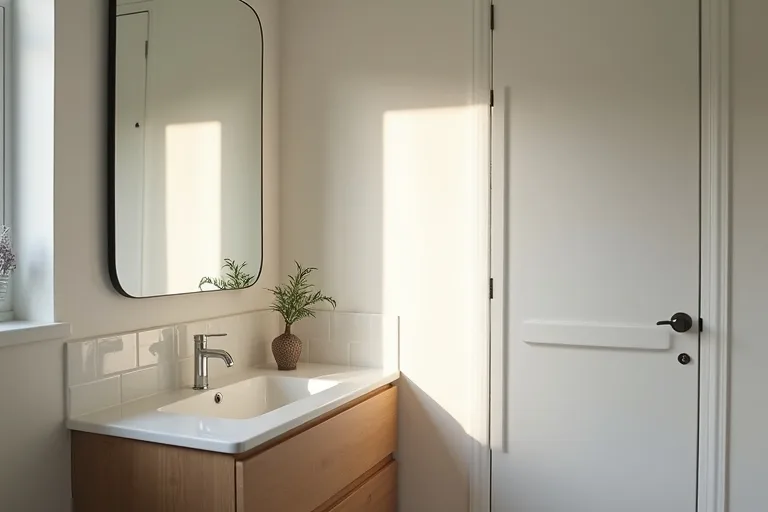
Stand back and look at the whole vanity wall, not just the mirror opening. Ask whether the mirror should visually balance the faucet, keep clear of wall lights, and leave enough breathing room at the edges. If the answer is unclear, measure before you buy anything.
Sizing the mirror to the vanity and sink
The most common sizing mistake is choosing a mirror based on what looks good in a showroom rather than what fits the wall. In a real bathroom, the vanity width usually sets the range. A mirror that sits comfortably within that zone tends to feel calmer and more intentional than one that reaches too far across the wall or stops short of the sink area.
It also helps to think about the faucet and backsplash together. A mirror should not compete with them for attention. When the sink hardware is strong or the backsplash line is bold, a simpler mirror shape often keeps the room feeling organized.
- Measure the vanity width first.
- Note the space available above the backsplash or countertop.
- Check where the faucet and wall lights sit.
- Choose a mirror size that leaves visual margin on both sides.
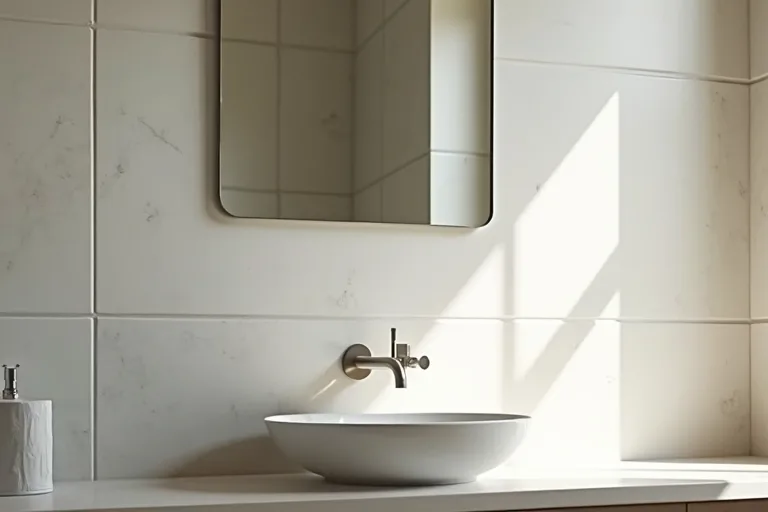
For a renovation-minded update, a brushed nickel bathroom faucet can be a useful reference point because it helps you judge how much visual weight the rest of the vanity zone already carries. If the faucet is prominent, a mirror with a cleaner profile often works better.
Height, shape, and lighting need to work together
Mirror placement is not only about height from the counter. It is also about who uses the bathroom, how the light lands on the face, and whether the mirror edges line up cleanly with nearby features. A mirror mounted too high can feel disconnected from the sink. Too low, and it may crowd the faucet or shorten the visual space above the vanity.
Shape matters for the same reason. A tall rectangle can help a compact room feel more structured, while a round mirror can soften a boxy layout. The right choice depends on what the room needs most: more vertical balance, more softness, or more clearance around a wall light.
When there is not enough natural light or the vanity is used for detailed grooming, a lighted vanity mirror for bathroom counter may be the better answer than a standard mirror alone. It can reduce the pressure on overhead lighting and make the mirror zone more comfortable for everyday use.
A simple checklist before you buy
If you want to avoid the usual mistakes, measure first and shop second. That keeps the decision grounded in the actual room rather than a product photo. A few careful measurements can save you from ending up with a mirror that feels right in theory but wrong once it is installed.
Use this quick checklist before ordering:
- Measure the vanity width and the open wall space above it.
- Check the position of the faucet, backsplash, and any wall lights.
- Decide whether the mirror should be the main feature or stay visually quiet.
- Confirm that the mirror height works for the people who use the bathroom most often.
- Think about whether the mirror is part of a small update or the start of a larger vanity refresh.
If you are planning more than one change, a simple organizer can help you avoid buying pieces in the wrong order. A Room Makeover Planner, Home Layout Budget Spreadsheet (Digital Download) is a practical way to track measurements, priorities, and costs before you commit.
Best next step
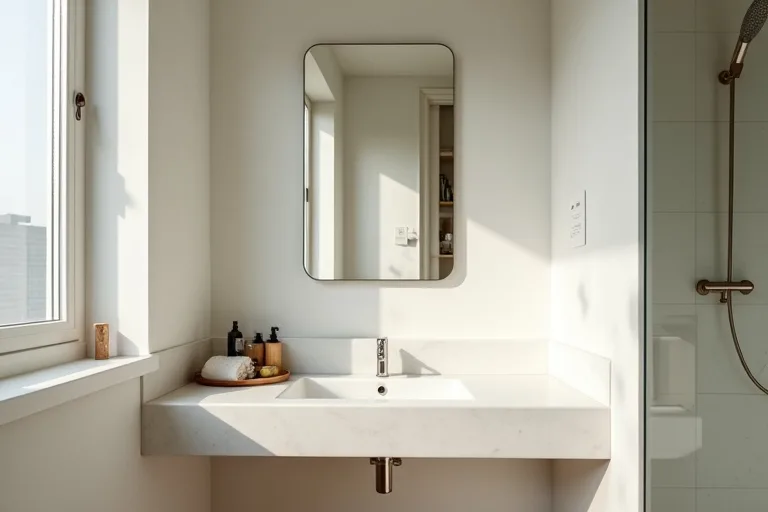
Before choosing a mirror, measure the vanity width, the open wall space, and the lighting around the sink. If you want a clearer decision, use a planning tool to compare the mirror update against the rest of the vanity zone and see whether this is a small change or part of a larger refresh.
- Choosing a mirror that is visibly too small for the vanity wall.
- Mounting it too high above the sink, which breaks the connection to the vanity zone.
- Ignoring the faucet height and backsplash line when setting the final position.
- Using a shape that clashes with wall lights or makes the wall feel crowded.
- Buying the mirror before measuring the room’s usable wall space.
- Thinking about style first and daily use second.
The best bathroom mirror is the one that fits the vanity, supports the lighting, and makes daily use easier. If the mirror is the right size and sits in the right place, the whole bathroom feels more settled. If you are unsure, measure the wall, compare the mirror against the vanity zone, and then decide whether the update stays simple or belongs in a broader remodel plan.
Helpful next tools and planners
If you want to make the decision easier before you buy
These options are useful when you are still working out sizing, budget, or whether the mirror should be part of a larger bathroom update.
FAQ
How wide should a bathroom mirror be compared with the vanity?
There is no single rule that works for every room, but the mirror should usually feel visually related to the vanity rather than floating too small or overwhelming the wall. The vanity width and the available wall space are better guides than a trend.
Should a bathroom mirror line up with the faucet?
Yes, in most cases the mirror should make sense with the faucet and sink position. It does not need to be exact in every room, but the relationship between the three should look intentional.
Is a lighted mirror better than wall sconces?
It depends on the room and how it is used. A lighted mirror can be helpful when the vanity needs more direct light or when wall space is limited, while sconces can still work well if they fit the layout.
What is the easiest way to avoid buying the wrong mirror?
Measure the vanity, the open wall area, and the lighting positions before you shop. If the room is part of a bigger update, map it out with a planning or budget tool first.
Three sensible next steps
Some links in this article may be affiliate links. Read more in the Affiliate Disclosure.