
Bathroom mirror choices look simple until you are standing in front of a vanity trying to decide what actually works. The right mirror changes how the room feels, but more importantly, it changes how the room functions.
This guide keeps the decision practical. Instead of starting with trends, it starts with size, lighting, and placement so you can choose a mirror that fits the way your bathroom is used every day.
Choose a mirror that matches your vanity width, supports good lighting, and suits how you use the bathroom every day.
Start with size and proportion
The easiest way to narrow bathroom mirror ideas is to look at the vanity first. The mirror should feel connected to the sink area, not oversized, undersized, or floating without purpose. A well-proportioned mirror makes the whole vanity zone feel calmer and more finished.
If your bathroom has a single sink, a rectangular mirror is often the most straightforward choice because it lines up neatly with the basin and faucet. If the vanity is wide, a larger mirror can help the room feel more open. If the vanity is narrow or compact, keeping the mirror visually contained usually looks better than forcing a statement piece into a small footprint.
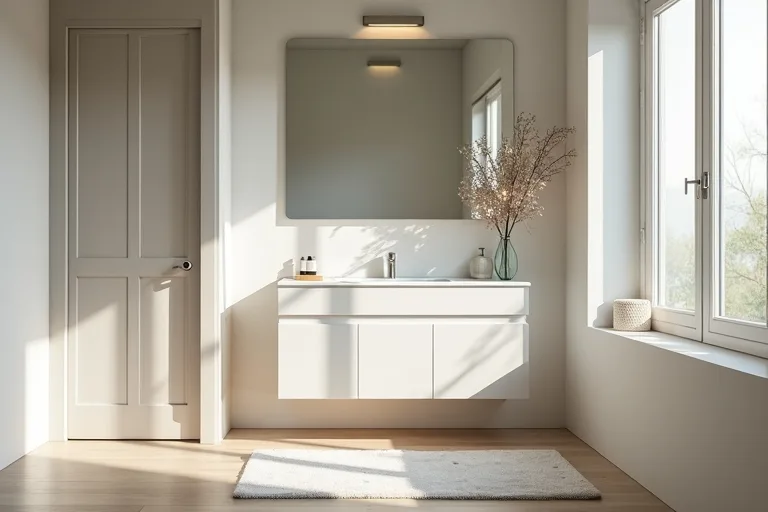
Think about what the mirror needs to do. If it is mainly for daily grooming, the visible reflection matters more than decoration. If the room is small, the mirror also needs to help bounce light and keep the vanity zone from feeling cramped. In that case, a simpler shape often performs better than something heavily detailed.
The real decision is not just which mirror looks best on its own. It is which one fits the vanity width, leaves room for the lighting, and makes the sink area easier to use every morning.
Choose a shape and frame that suit the room
Shape changes the feel of the bathroom, but it should still support the room plan. A rectangular mirror is usually the safest choice for a clean, orderly layout. Round and oval mirrors soften hard edges and work well when the vanity is simple or when the bathroom already has a lot of straight lines from tile, cabinetry, or shelving.
Framed mirrors add visual weight and can help the mirror feel anchored above the vanity. Frameless mirrors are quieter and often better when the bathroom already has enough finish detail. Lighted mirrors can be useful when the room needs better task lighting, but they work best when they are chosen for function rather than novelty.
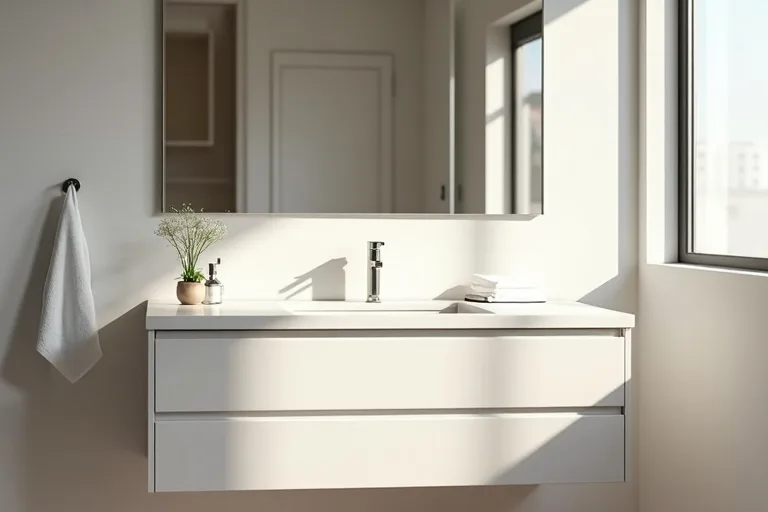
Here is a simple way to decide:
- Use a rectangular mirror when you want structure and easy alignment with the vanity.
- Use a round or oval mirror when the room feels too boxy or needs a softer focal point.
- Use a framed mirror when the vanity area needs more definition.
- Use a frameless or lighted mirror when you want a cleaner look or more practical brightness.
Get placement and lighting right
Even a good mirror can feel wrong if it is hung too high, too low, or too close to the light fittings. The goal is to keep the mirror connected to the sink area while still giving enough visual breathing room above the faucet and around the edges.
Lighting matters just as much as placement. A mirror only helps if it reflects usable light, not glare or shadow. If the vanity is underlit, the bathroom can feel dim even when the mirror itself is stylish. In that case, upgrading the lighting may improve the space more than buying a different shape of mirror.
For daily use, check how the mirror works at the times you actually get ready. Morning light, overhead light, and side lighting all affect whether the reflection is clear and comfortable. If you are shopping for a vanity-zone upgrade, this is the point where a lighted mirror can make sense, especially in bathrooms that do not get much natural light.
Match the mirror to the bathroom layout
The best bathroom mirror ideas are the ones that respond to the layout you already have. In a small bathroom, a cleaner mirror choice can keep the room from feeling visually cluttered. In a double vanity, mirror alignment becomes more important because each sink area needs its own balance. In a shared family bathroom, ease of use usually matters more than decorative detail.
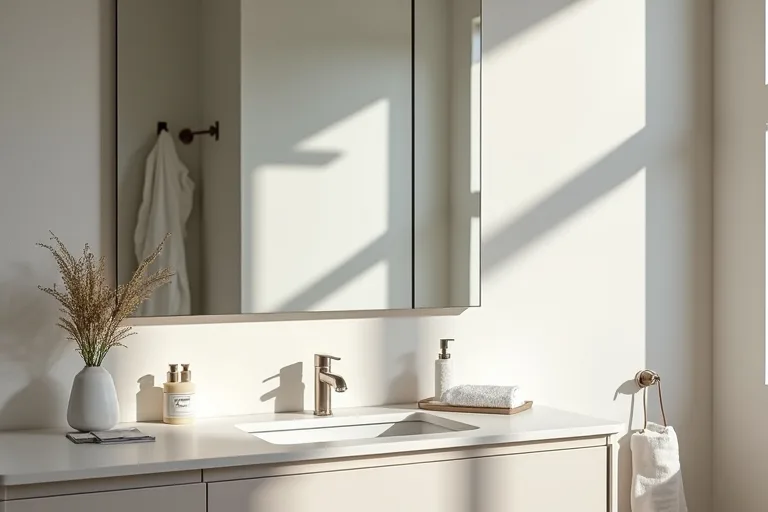
If you are working through a remodel, it helps to compare the mirror decision with the rest of the budget before you buy. That is especially true if you are choosing between a mirror update, new faucet, or better lighting. A brushed nickel bathroom faucet can be a useful finishing piece when the vanity zone needs a coordinated feel, but the mirror should still come first because it affects both function and proportion.
If you are planning more than a quick refresh, a simple room budget sheet can keep the project grounded. It is easier to choose finishes when you know whether this is a styling update or part of a larger bathroom remodel.
Best next step
Before you shop, check your mirror width against the vanity and review the bathroom lighting. If you are still planning the room, start with the layout and budget first so the mirror choice fits the bigger picture.
- Choosing a mirror before checking vanity width and sink placement.
- Picking a shape that looks good alone but feels wrong in the room.
- Ignoring lighting and ending up with a reflection that is too dim or too harsh.
- Using too much decorative detail in a small bathroom.
- Forgetting that the mirror must work for daily routines, not just style photos.
The best bathroom mirror is the one that fits your vanity, supports better light, and feels easy to use every day. Start with proportion, then choose the shape and frame style that suit the room, and only then move on to finish details.
Helpful next tools and planners
If you want to make the decision easier before you buy
A few practical tools can help you compare mirror size, vanity fit, and budget before you commit to new pieces. Keep the focus on the bathroom plan first, then shop with more confidence.
FAQ
How do I know what size bathroom mirror to buy?
Start with the vanity width and aim for a mirror that feels visually balanced above the sink area. The mirror should suit the size of the furniture below it instead of overpowering it.
Is a round mirror or rectangular mirror better for a bathroom?
Neither is always better. Rectangular mirrors usually feel more structured, while round and oval mirrors soften a room that has a lot of straight lines.
Do I need a lighted mirror in a bathroom?
Not always. A lighted mirror is most useful when the bathroom is underlit or when task lighting is not strong enough for daily routines.
Should I choose the mirror before the faucet?
It is usually smarter to decide the mirror and vanity relationship first, then check that the faucet height, lighting, and spacing still work together.
Three sensible next steps
Some links in this article may be affiliate links. Read more in the Affiliate Disclosure.