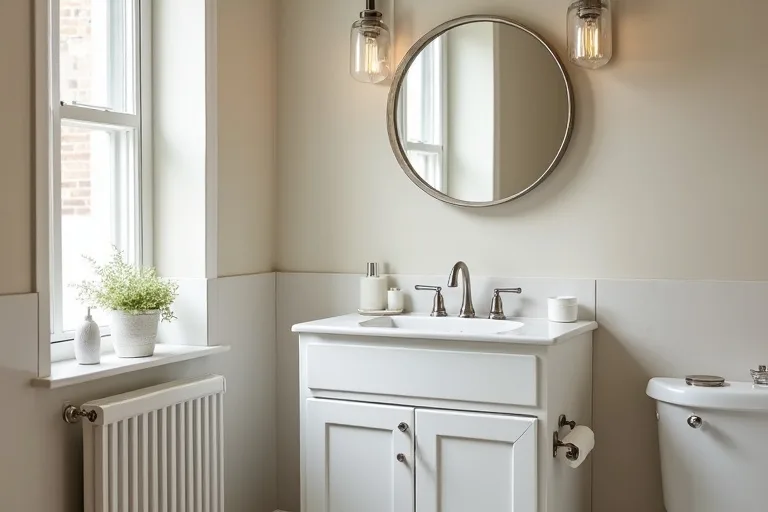
If your bathroom needs a refresh, the mirror is often the first thing people notice. That makes it an appealing place to start, especially when you want a change without turning the whole room into a project.
But not every bathroom update deserves the same spend. Sometimes a new mirror gives you the clean reset you need. Other times, a more visible fixture change makes the vanity area feel better every day.
Choose the mirror if you want the fastest low-cost refresh; choose the fixture upgrade if you want a more noticeable daily impact. In a small or tired vanity zone, the right decision usually depends on what feels most dated first: the frame and reflection, or the sink area, lighting, and hardware around it.
What a budget mirror update really changes
A budget mirror update is usually the smallest visual change with the least disruption. Swapping an old frame, simplifying a busy shape, or choosing a cleaner mirror style can make the vanity area feel less cluttered almost immediately.
This works best when the rest of the bathroom is already serviceable. If the sink, faucet, wall finish, and lighting are still fine, the mirror can act like a reset button instead of a full renovation trigger.
It is also the easiest place to improve proportion. A mirror that is too small, too ornate, or visually heavy can make a compact bathroom feel more cramped than it really is.
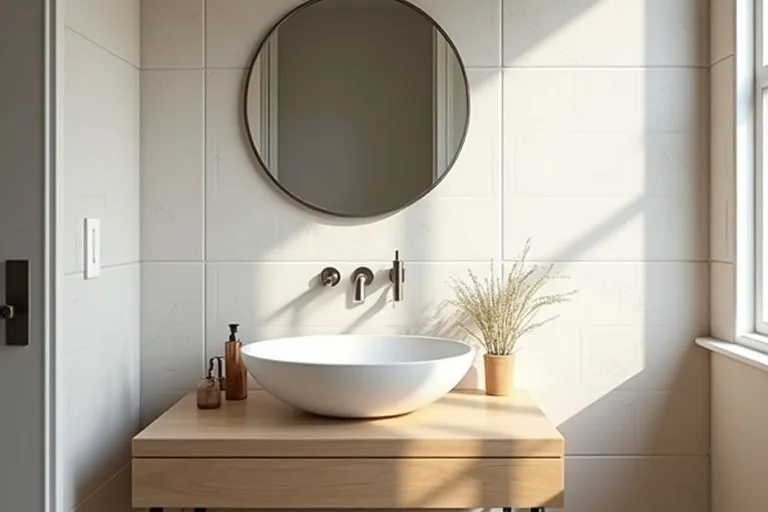
If the mirror is the main thing bothering you, a small update is usually enough. If the sink area, tapware, and light above it all feel tired at once, the room may need a more noticeable fixture change to feel resolved.
When a fixture upgrade feels more worthwhile
A more noticeable fixture upgrade changes how the vanity zone works, not just how it looks. That might mean replacing the faucet, improving the lighting, or choosing a lighted vanity mirror for bathroom counter use if the space needs better task lighting.
The difference is that these updates are felt every day. You notice them when washing up, getting ready, cleaning around the sink, or using the bathroom in lower light.
If you are deciding between a mirror-only refresh and a stronger upgrade, it helps to look at the parts you use most:
- Does the current lighting make the mirror hard to use?
- Does the faucet look dated beside the rest of the room?
- Do the mirror, sink, and hardware feel mismatched?
- Would one better-made fixture improve the whole vanity zone at once?

How to decide based on the vanity zone
The best choice is rarely about the mirror alone. It is about how the vanity zone reads as a group: mirror, light, faucet, counter, and sink.
If one piece is out of step, the room can still feel off even after you spend money. That is why a calm budget decision is usually better than buying the most obvious item first.
A simple order of thinking helps:
1. Fix the most distracting visual problem first.
2. Check whether the mirror or fixture is doing the most work.
3. Spend where the change will affect daily use, not just photos.
4. Keep the finish choices consistent so the vanity zone feels deliberate.
For many homeowners, a brushed nickel bathroom faucet is a useful middle-ground upgrade because it can tie together a cleaner mirror and a more settled sink area without pushing the project into a full remodel.
A simple budget-first order of upgrades
If you are trying to stay sensible, start with the least expensive change that solves the biggest problem. In a bathroom, that often means asking whether the mirror can be improved before you move on to the faucet, lighting, or other visible fixtures.
This order keeps the room from becoming a chain reaction of purchases. It also makes it easier to stop once the vanity zone feels balanced enough.
A useful rule is to compare the mirror update against the next more visible step before you buy anything. If the mirror fixes the visual imbalance, stop there. If it only improves the room slightly, a fixture upgrade may be the better use of the budget.

Best next step
Before you commit to a mirror or fixture purchase, compare the cost and impact in one place. A simple budget check can show whether the smarter move is a low-cost mirror refresh, a more noticeable upgrade, or a staged plan that lets you improve the vanity zone in order.
- Buying a new mirror without checking whether the lighting is the real problem.
- Upgrading one fixture while leaving the rest of the vanity zone visually disconnected.
- Choosing a decorative mirror that is too large or too small for the wall.
- Spending on finishes before deciding how much of the bathroom you actually want to change.
- Ignoring the daily use of the space and focusing only on the look.
Start with the mirror if you want a quick, low-cost refresh. Move to a fixture upgrade if the vanity zone still feels unresolved or awkward to use. The smartest choice is the one that improves the room you live with every day, not just the one you see for a moment.
Helpful next tools and planners
If you want to make the decision easier before you buy
These are useful if you are comparing a mirror refresh with a more noticeable vanity-zone upgrade and want to keep the project under control.
FAQ
Is a bathroom mirror update worth it on a tight budget?
Yes, if the mirror is the main thing making the vanity feel dated or visually heavy. It is one of the fastest ways to refresh the room without changing the whole bathroom.
When should I choose a fixture upgrade instead of a new mirror?
Choose the fixture upgrade when the lighting, faucet, or sink area is what actually feels dated. That change usually has a stronger daily impact than a mirror swap alone.
Can I mix a budget mirror with a better faucet?
Yes. That is often a sensible middle path, especially if you want the vanity zone to feel more coordinated without committing to a full remodel.
What should I check before buying anything?
Look at the mirror size, the lighting, the faucet finish, and how the vanity zone works as a whole. If one part is clearly out of balance, start there instead of shopping for more pieces.
Three sensible next steps
Some links in this article may be affiliate links. Read more in the Affiliate Disclosure.