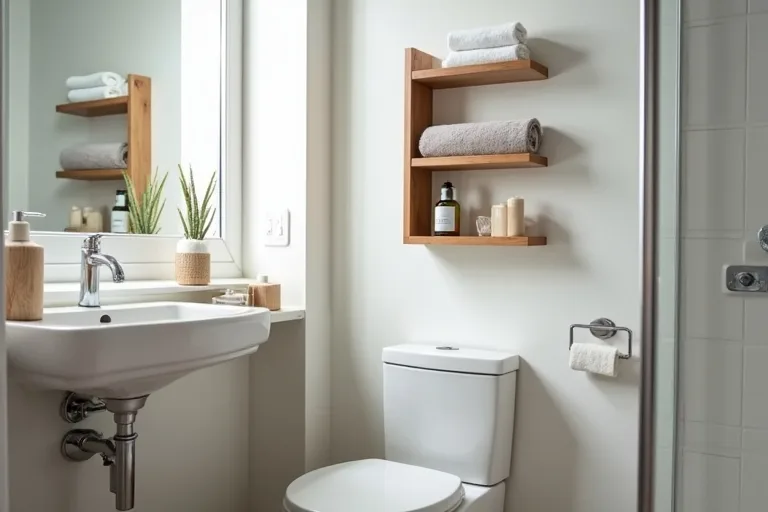
Bathroom shelving seems simple until you bring it home and realize it blocks a door, sits too close to the sink, or holds the wrong things. The smartest choice is usually not the prettiest one on the product page. It is the one that fits your wall space, your routine, and the amount of moisture in the room.
If you are planning a storage update, start with the room itself. A quick check of space, clearance, and daily use will help you avoid buying furniture or decor that looks good online but does not actually work in your bathroom.
Check your wall space, clearance, moisture exposure, and storage needs before buying any bathroom shelf.
Measure the space before you shop
Bathroom shelving works best when the measurements come first. In a small bathroom, even a narrow shelf can become a problem if it sits too close to a doorway, towel bar, mirror, or toilet lid. Before you compare styles, look at the real wall area you can use without interrupting movement.
Measure the width, height, and depth of the space where the shelf might go. Then check what opens nearby: doors, drawers, cabinets, and shower screens all need room. If the shelf is going above the toilet or next to the vanity, make sure it will not feel visually heavy or awkward to reach.

This is also the point to think about balance. A taller shelf can make sense in a tight bathroom because it uses vertical space instead of floor area, but it should not make the room feel crowded at eye level. The goal is useful storage, not a wall that feels overfilled.
If you are unsure whether a shelf belongs in the room, compare the wall opening to the items you need to store. A shelf that is technically the right size can still be the wrong choice if it blocks movement, crowds the vanity, or only works for decor instead of everyday use.
Match the shelf type to what you need to store
Not every bathroom shelf needs to do the same job. Some are meant for folded towels, some for toiletries, and some simply help free up counter space. Choosing the right type is easier when you decide what will live there before you buy.
Use this simple order of thinking:
- List the items you use every day, such as soap, skincare, or toothbrush supplies.
- List the items you want nearby but not on display, such as extra tissue, spare towels, or backup products.
- Decide whether the shelf should hold open storage, closed baskets, or a mix of both.
- Check whether the shelf needs to be decorative, fully practical, or both.
If your bathroom is very tight, vertical storage often makes the most sense. An over toilet storage shelf bathroom setup can help you use the wall area above the toilet without taking floor space, while a rustproof shower caddy organizer is useful when the main need is keeping daily shower items contained and easy to reach.

For a more complete room plan, it can also help to sketch the storage zones before buying anything. That keeps you from overbuying decor pieces when what you really need is one efficient shelf and a clearer layout.
Check moisture, cleaning, and daily access
Bathroom shelving needs to stand up to real use. Moisture, steam, and frequent wiping all matter more here than in most other rooms. A shelf that looks good but is hard to clean will usually become cluttered faster, especially in a busy family bathroom or a small en suite.
Before you commit, ask a few practical questions:
Will the shelf sit near the shower or sink where it gets splashed? Will the finish be easy to wipe down? Will open shelves collect dust or toothpaste marks too quickly? If the answer is yes, you may want a simpler design with fewer ledges and less detail.
Daily access matters just as much as durability. The best bathroom storage is easy to reach without moving too many things around. If you have to take three items off a shelf just to grab one, it is probably in the wrong spot.
For readers who like to plan before they spend, a layout tool can help make these choices clearer. A simple room plan also shows whether a shelf should be wall-mounted, freestanding, or replaced by a smaller storage solution that works better with the room flow.
Use vertical storage without crowding the room
Vertical storage is one of the most effective ways to improve a small bathroom, but it only works if the room can still breathe. The right shelf should make the space feel calmer, not busier.

When you are deciding between shelving options, think about what the room is missing. If the counters are cluttered, a wall shelf may be enough. If towels keep landing on surfaces, a taller unit with dedicated storage may be better. If the room already feels visually full, a more minimal shelf or single rail may be the smarter choice.
That is why this decision is best made alongside the rest of the room plan. A shelf should support the layout, not compete with it. If you are working on a small bathroom or a layout that feels difficult to solve, the small spaces storage hub is a useful place to compare practical ideas, while the main bathroom ideas hub can help you stay focused on the bigger planning picture.
Best next step
If you are still deciding what kind of shelving your bathroom actually needs, map the space before you shop. A room plan or cost check will make it easier to choose the right shelf size, avoid wasted purchases, and stay realistic about what fits your budget.
- Buying a shelf before measuring wall width, height, and clearance.
- Choosing decor-first shelving when the room actually needs storage-first solutions.
- Ignoring moisture resistance in areas that get steamed or splashed often.
- Filling every open shelf, which makes a small bathroom feel busier than it needs to.
- Using vertical storage without checking whether the room still feels easy to move through.
The best bathroom shelving choice is the one that fits the room before it fits the style. Measure carefully, decide what needs to be stored, check moisture and cleaning needs, and use vertical storage only where it improves the layout. If the room plan is clear, the shelving decision becomes much easier.
Helpful next tools and planners
If you want to make the decision easier before you buy
A good shelf choice often comes from planning, not browsing. These options can help you compare layout, storage needs, and budget before you commit to a purchase.
FAQ
What type of bathroom shelving works best in a small bathroom?
Wall-mounted or vertical shelving usually works best because it saves floor space and can use areas above the toilet or beside the vanity.
Should bathroom shelves be open or closed?
Open shelves are easier to access and can feel lighter visually, while closed storage hides clutter better. Many bathrooms work best with a mix of both.
How do I know if a shelf is in the wrong place?
If it blocks a door, crowds the sink, makes cleaning harder, or feels awkward to reach, it is probably in the wrong spot.
Do I need a plan before buying bathroom shelving?
Yes, even a simple plan helps. Knowing your measurements, storage needs, and moisture exposure makes it much easier to choose something that will actually work.
Three sensible next steps
Some links in this article may be affiliate links. Read more in the Affiliate Disclosure.