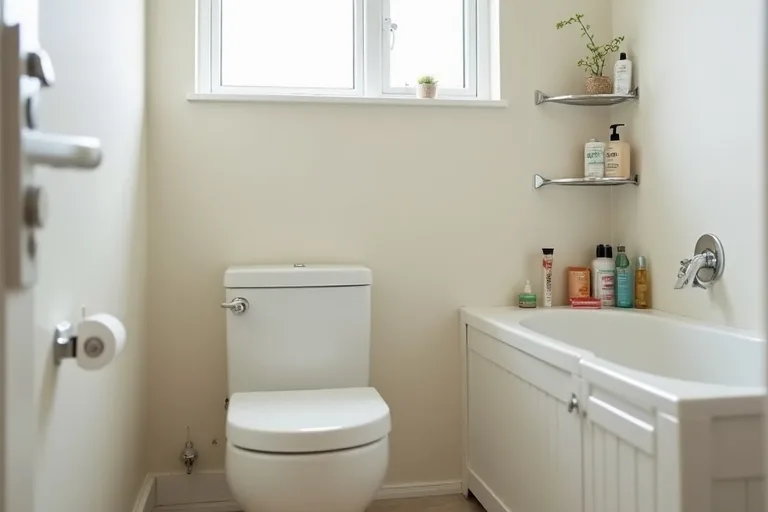
Small bathrooms often feel full before they feel finished. The problem is usually not a lack of style. It is a lack of usable vertical storage, clear placement, and enough room for the things you reach for every day.
If you are deciding between a simple shelving update and a bigger refresh, the right choice comes down to what is actually going wrong in the room. Sometimes one shelf solves the issue. Sometimes the layout itself needs a rethink.
Choose budget shelving if you mainly need more vertical storage; choose a bigger refresh if the layout or built-in storage is the real problem.
What budget shelving can solve in a tight bathroom
Budget shelving works best when the bathroom already functions well enough, but the surfaces are crowded. If your counter is full, towels have no landing place, or the shower holds too many bottles, vertical storage can make the room calmer without changing the footprint.
Simple wall shelves, over-toilet storage, and compact shower organisers are useful because they move items up and off the floor. That can make a small room feel easier to clean and easier to use. The goal is not to add more things to the bathroom. It is to give the items you already own a proper place.
A compact setup can be especially helpful in rental bathrooms, shared bathrooms, or guest baths where you want a cleaner look without investing in a full remodel.
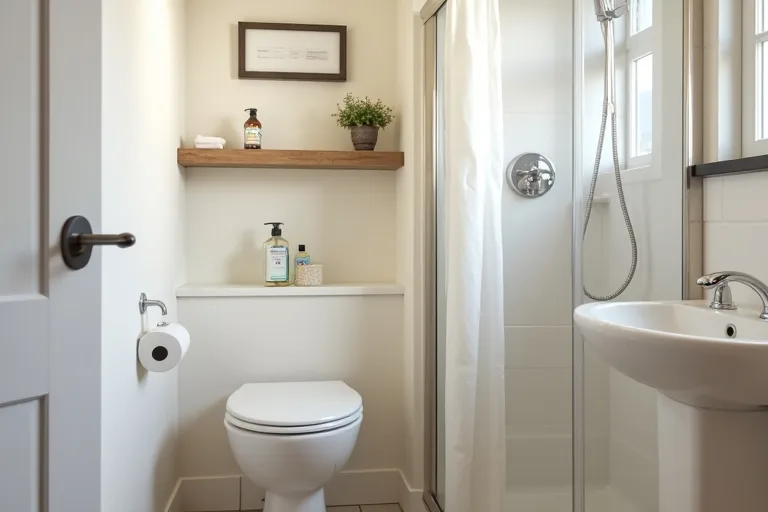
If the bathroom feels cramped because items do not have a home, shelving may be enough. If the bathroom feels cramped because the room layout itself is awkward, shelving will only help a little. That is the real decision: storage problem or layout problem.
The best low-cost shelving options and where they work
When you want a budget-friendly update, the most useful solutions are usually the ones that fit around existing fixtures. In many bathrooms, the best gains come from using dead space above the toilet, inside the shower corner, or on a clear wall near the sink.
These are the options that tend to make the most sense:
- Over-toilet shelving: good for towels, extra toilet paper, and closed baskets.
- Wall-mounted shelves: useful above the towel rail, beside the mirror, or over a narrow vanity.
- Rustproof shower caddies: helpful for keeping bottles off the shower floor and reducing clutter in the corners.
The main thing to watch is proportion. A shelf that is too deep can make a small bathroom feel busier. A shelf that is too narrow may look neat but fail to hold anything useful. Aim for storage that feels modest, not oversized.
For a simple starting point, many readers begin with an over toilet storage shelf bathroom or a rustproof shower caddy organizer because both can improve order without changing the room structure.
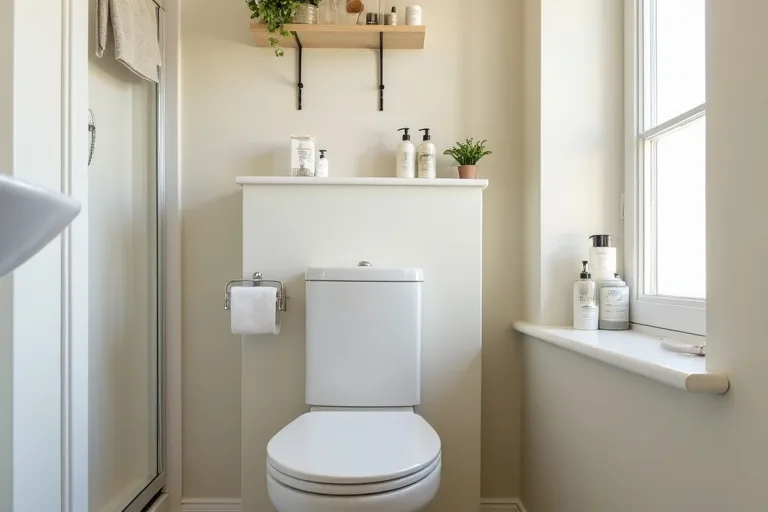
When a bigger refresh makes more sense than more shelving
Sometimes the problem is not a lack of shelves. It is that the bathroom has outgrown its layout. If the vanity is too small, the storage is poorly placed, or the shower and doorway compete for space, adding more shelving can feel like a patch rather than a solution.
A bigger refresh becomes more sensible when:
- you need better traffic flow, not just more storage,
- the room has awkward dead zones that are hard to use,
- built-in storage is missing or badly positioned,
- you are already planning to replace fixtures, paint, or flooring.
In that situation, a more complete update can create room for storage that works with the layout instead of fighting it. Even small changes, such as a better vanity depth or a clearer wall plan, can make the room feel much easier to live with.
If you are not sure whether the change is still a shelving project or has become a remodel, use your real room measurements before you spend. That keeps the decision grounded in layout, not frustration.
How to choose the right path for your bathroom, budget, and planning style
The easiest way to decide is to look at three things at the same time: storage need, room shape, and spending comfort. If the bathroom already works and only looks messy, shelving is usually the smarter first move. If the room feels awkward every day, a bigger refresh may save time and money in the long run.
Use this simple filter:
- Choose budget shelving if you need faster order, low disruption, and a small spend.
- Choose a bigger refresh if you want to improve how the room functions, not just how it looks.
- Choose both in stages if you want a temporary fix now and a larger plan later.
If you like to plan before you buy, a room layout or budget tool can make the decision calmer. A simple spreadsheet helps you compare what a shelving update costs against a larger bathroom refresh, including the pieces you might otherwise forget.
For readers who want to map the numbers and layout properly, the Styling Homes tools hub and the Bathroom Remodel Cost Estimator are a useful next step. If you want a more visual planning aid, the Room Makeover Planner, Home Layout Budget Spreadsheet (Digital Download) can help you compare storage options, room use, and spending before you commit.
Best next step
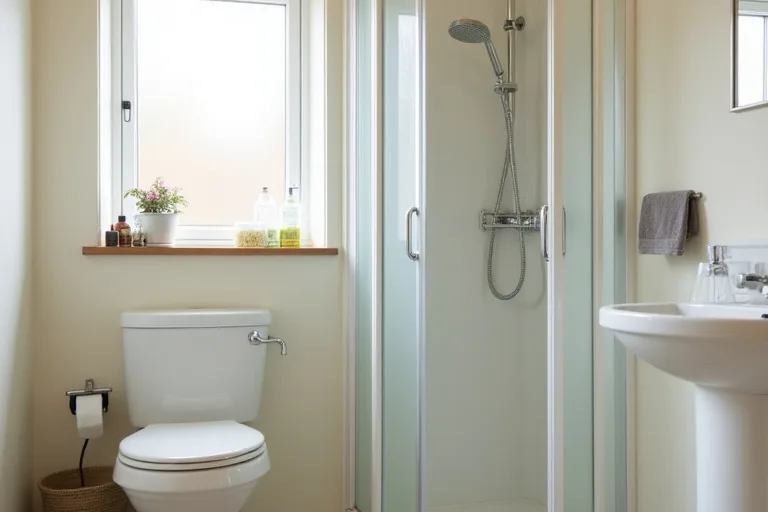
If you are still deciding between a simple shelving update and a wider bathroom refresh, start with the numbers and the layout. That usually makes the next move obvious.
- Buying shelves before measuring the wall, the toilet clearance, or the shower zone.
- Using deep storage where the room really needs slimmer vertical storage.
- Choosing materials that will not hold up well in damp conditions.
- Adding more baskets and shelves when the layout is the real issue.
- Forgetting that a clear path matters as much as extra storage.
Bathroom shelving on a budget is the right answer when the room mainly needs better vertical storage. A bigger refresh makes more sense when the problem is flow, not clutter. If you are unsure, measure the room, compare the storage gaps, and then decide whether a small update will solve the real issue or whether the space needs a more complete rethink.
Helpful next tools and planners
If you want to make the decision easier before you buy
These are practical starting points for tighter bathrooms, storage planning, and cost comparison. Use them only if they help you clarify the room before spending.
FAQ
Is bathroom shelving enough for a very small bathroom?
Often, yes. If the room functions well and only feels cluttered, vertical shelving can make a noticeable difference without changing the layout.
What is the safest place to add storage first?
The safest starting point is usually unused vertical space, such as above the toilet or on a clear wall that does not block movement.
When should I stop adding shelves and consider a remodel?
When storage is no longer the main issue and the room feels awkward to use, it is time to look at layout changes instead of adding more pieces.
How do I keep bathroom shelves from looking crowded?
Use fewer items, keep shelf depth modest, and group everyday essentials into containers or baskets so the space stays easy to read.
Three sensible next steps
Some links in this article may be affiliate links. Read more in the Affiliate Disclosure.