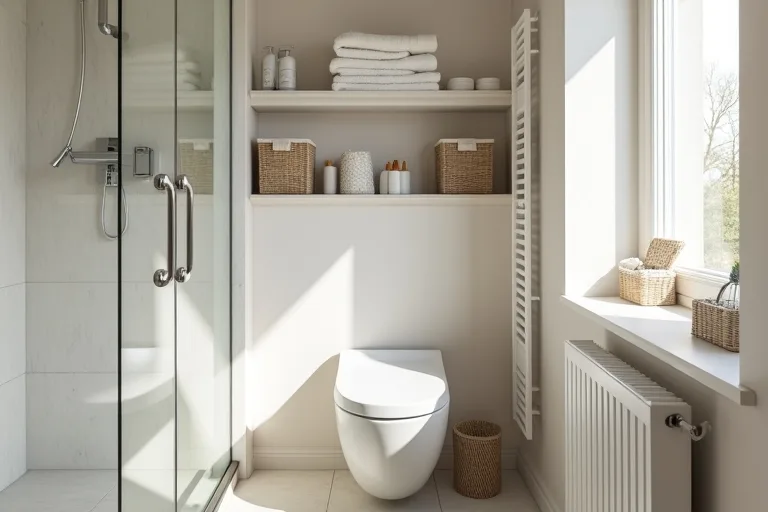
Bathroom shelving can do more than store toiletries. In a small or awkward bathroom, the right shelf placement can make the room feel calmer, more deliberate, and less cluttered at a glance.
The key is not adding more storage everywhere. It is choosing vertical shelving that fits the wall space you actually have, then keeping the layout aligned with the room’s proportions so the bathroom still feels open.
Use vertical shelving to add storage without crowding the floor, and keep shelf placement aligned with the room’s proportions. In most smaller bathrooms, that means using wall space above the toilet, beside the vanity, or inside the shower for items you reach often, while keeping the rest of the room visually quiet.
Why shelving changes how a bathroom feels
In a bathroom, open wall space can either look calm or unfinished depending on how the rest of the room is organized. A well-placed shelf helps the eye understand where storage belongs, which makes the room feel more balanced even if the square footage has not changed.
This matters most in smaller rooms, where floor space is limited and every item left on a counter makes the room feel busier. Shelving lets you move useful things upward, where they are still easy to reach but no longer competing with the sink, the shower, or the door swing.
When you think about shelving as part of room planning rather than decoration, the decision becomes clearer. You are not trying to fill a blank wall. You are trying to improve flow, storage, and visual weight at the same time.
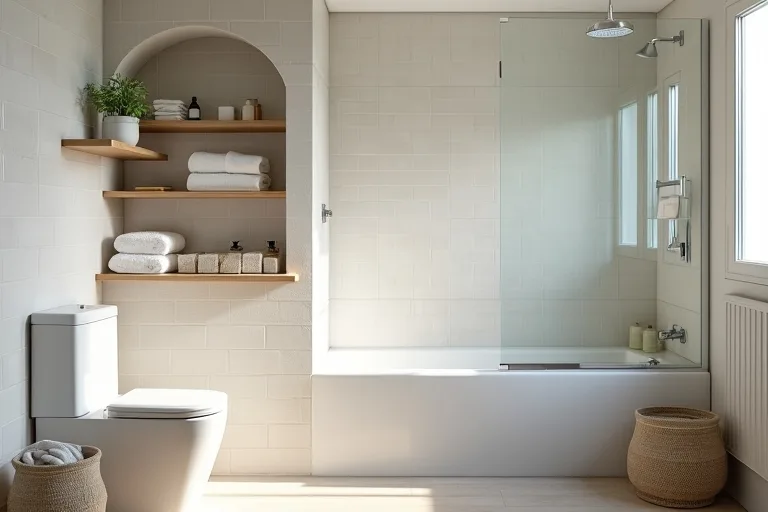
Before you buy anything, look at the bathroom as three zones: the counter, the shower, and the unused wall area. If one zone is overcrowded while another is empty, shelving should solve that imbalance rather than add more visual clutter.
How to choose the right type of shelf
The best shelf depends on where the pressure point is in the room. If the bathroom feels short on storage near the toilet, an over-toilet shelf can use wall height efficiently. If the shower area is the problem, a rust-resistant caddy keeps bottles contained without landing them on the floor or ledge. If the room needs a softer overall solution, simple wall shelves can hold folded towels, backup tissue, or a few edited containers.
Here is the easiest way to compare the main options:
- Over-toilet shelf: best when you need storage high on the wall and want to free up floor space.
- Wall shelf: best when you want a cleaner look and only need a modest amount of visible storage.
- Shower caddy: best when the shower is cluttered and you need everyday items in one contained spot.
If you are not sure which direction to take, start with the item that solves the most obvious mess first. That usually gives you the biggest improvement with the least effort.
How to size and place shelving properly
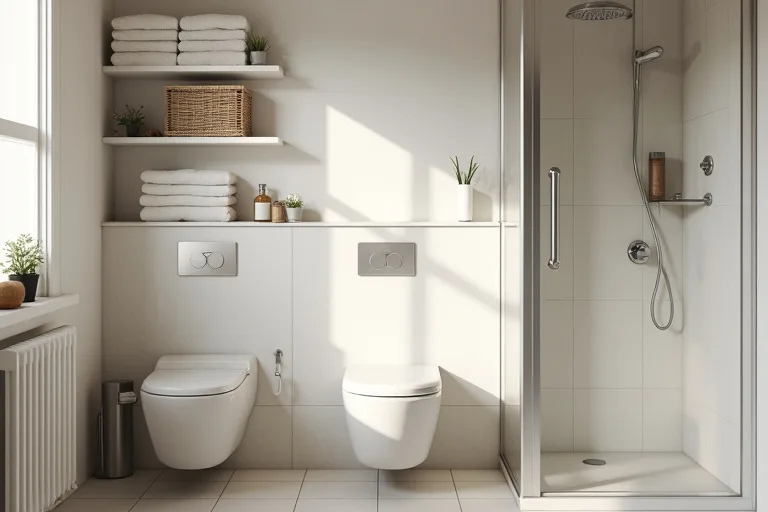
A shelf only looks balanced when it matches the room around it. Too wide, and it can feel heavy. Too small, and it looks accidental. The best placement usually follows the existing structure of the room: above the toilet, beside a mirror, over a towel gap, or in another area where the wall already has a clear purpose.
Use this simple order of decisions before you buy:
- Measure the wall area you want the shelf to occupy.
- Check what has to remain clear underneath, including taps, towel hooks, or door movement.
- Decide whether you need one strong storage point or several smaller ones.
- Choose a shelf depth that suits the items you will actually store, not just the items you might store later.
For a tighter bathroom, vertical storage often works better than a low, wide piece because it leaves the floor visually open. That helps the room feel less crowded, especially if the rest of the room already has a lot of visual activity from tile, fittings, or patterned accessories.
If you are choosing between two shelf sizes, pick the one that leaves a little breathing room around the fixture or wall edge. Bathrooms tend to feel more finished when storage looks intentional rather than squeezed in.
How to keep open shelving practical
Open shelving works best when it carries only the things that belong there. That usually means folded towels, a basket for backups, a soap refill, or a few daily items you use often. If every shelf becomes a holding area for random bottles, the room quickly goes back to feeling crowded.
A good rule is to separate display from function. In a bathroom, that may mean using one shelf for everyday access and another for backup storage in baskets or boxes. It keeps the room usable without turning the shelves into a visual list of everything you own.
Materials matter too. In a humid space, it is safer to choose finishes and hardware that can cope with moisture, especially around the shower. Even a well-sized shelf can look unfinished if it starts to age badly or show rust early.
Best next step
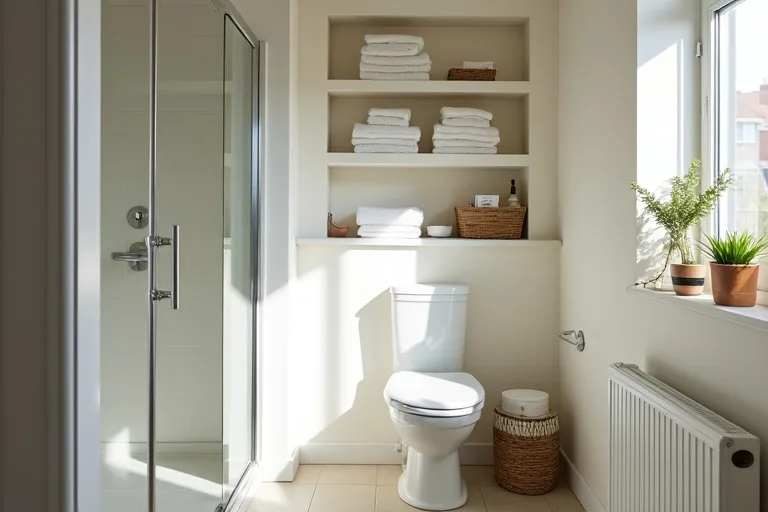
Measure the wall space first, then compare the shelf type against the way your bathroom actually functions. If the room feels tight, use a layout-minded step before buying so you can see whether over-toilet storage, a wall shelf, or shower storage will solve the problem most cleanly.
- Choosing a shelf before measuring the wall and fixture clearance.
- Using storage that is too wide for the room and makes the bathroom feel busier.
- Leaving open shelves overloaded with mixed items instead of a few practical categories.
- Ignoring moisture resistance in a humid zone like the shower area.
- Adding shelving to every empty wall instead of solving the main storage problem first.
The best bathroom shelving ideas are the ones that improve the room’s balance as well as its storage. Start with the empty wall space, choose a vertical solution that suits the fixture layout, and keep the shelves edited so the bathroom feels calmer rather than fuller.
Helpful next tools and planners
If you want to make the decision easier before you buy
Use a planning step first if you are unsure which shelf will fit the room best. A simple layout or budget check can save you from buying storage that looks fine online but does not suit the space at home.
FAQ
How do I choose bathroom shelving for a small space?
Start by measuring the wall area you can actually use, then choose the shelf type that solves the main storage problem without blocking movement or making the room feel crowded.
Is an over-toilet shelf a good idea?
It can be, especially when you need vertical storage and the wall above the toilet is otherwise unused. It works best when it fits the width of the fixture and does not feel oversized.
What should I put on open bathroom shelves?
Keep it practical: folded towels, a basket for backups, a soap refill, or a few daily items. The more edited the shelf looks, the more finished the room feels.
How can I tell if shelving will make my bathroom feel busier?
If the shelf adds bulk to an already crowded wall, or if it forces too many items into view, it will likely make the room feel busier. A smaller, better-placed shelf usually works better than a bigger one.
Three sensible next steps
Some links in this article may be affiliate links. Read more in the Affiliate Disclosure.