
Bathroom vanity choices look simple until the room starts to feel tight, awkward, or harder to use than it should. A vanity can be the right style and still be the wrong decision if it crowds circulation, blocks a drawer, or leaves the sink and mirror out of proportion.
The safest approach is to treat the vanity as a layout decision first. Once the size, clearances, storage needs, and fixture fit are clear, the styling becomes much easier and the room usually feels calmer too.
The biggest vanity mistakes are choosing the wrong size, ignoring clearance, and mismatching storage to how the bathroom is used. A vanity should fit the room, leave space to move comfortably, and support the way you actually get ready every day.
Start with vanity size and room flow
The most common proportion problem is starting with the look of the vanity instead of the room it has to live in. A piece that feels reasonable in a showroom can still overpower a small bathroom, make a medium room feel congested, or leave an awkward amount of empty floor around it.
Width and depth matter for different reasons. Width affects how visually heavy the vanity feels, while depth affects how much walking space you have left in front of it. If the vanity projects too far into the room, even a good design can begin to feel like an obstacle rather than a useful surface.
This is especially important in compact bathrooms, where a wall-mounted vanity, a slimmer profile, or a slightly narrower cabinet can improve the whole room without sacrificing practicality. In a larger bathroom, the issue can go the other way: a vanity that is too small may look lost, underuse the wall, and leave the sink zone feeling unfinished.
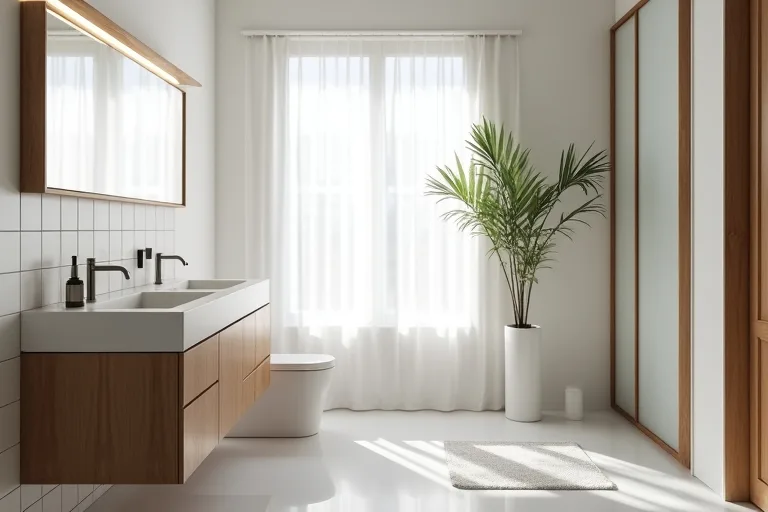
Before you buy, compare the vanity size against the room width, the depth of nearby fixtures, and the walkway you need to keep open. If the vanity solves storage but makes the room harder to pass through, it is the wrong fit even if it looks good on paper.
Check clearances around doors, drawers, and traffic
Many vanity problems show up only after installation. A drawer may hit a door, a cabinet door may not open fully, or two people may not be able to share the room without bumping into each other. These are not decorative issues; they are layout issues that affect every day use.
It helps to think in movement paths. The vanity should not block the main entry, pinch the route to the shower or toilet, or force you to stand sideways just to reach the sink. If the bathroom is used by more than one person, the flow needs to stay simple even during busy mornings.
When you are planning, check the swing of every door and the opening range of every drawer. A vanity that technically fits the wall can still fail if the room needs extra open space in front of it. In small bathrooms, that clearance may matter more than the vanity width itself.
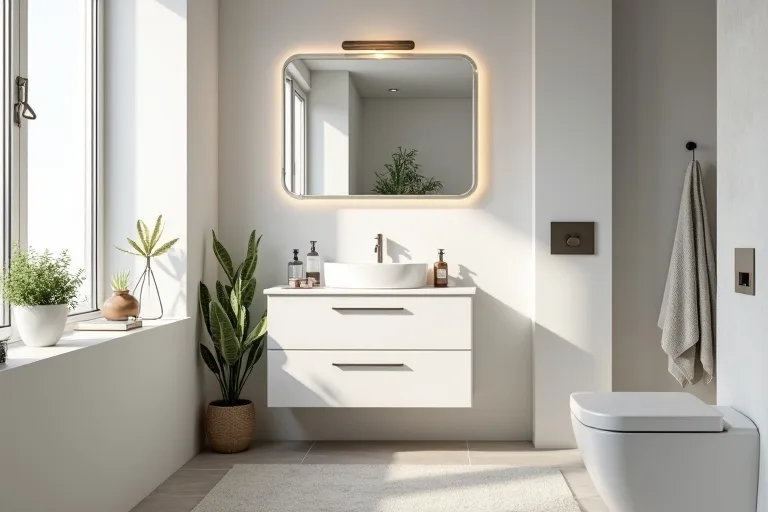
- Stand at the doorway and trace the path to the sink.
- Check whether doors, drawers, and nearby fixtures overlap.
- Measure the open floor space you need to move comfortably.
- Compare that to the vanity depth and projection before you commit.
Match the sink, faucet, mirror, and lighting
A vanity can be the right size and still feel off if the fixtures above and on top of it do not work together. The mirror should suit the width of the vanity, the faucet should fit the sink and countertop space, and the lighting should support daily tasks rather than only look decorative.
One common mistake is choosing a mirror that is either too small or too wide for the vanity run. Another is installing a faucet that feels visually heavy or sits awkwardly close to the mirror or backsplash. These mismatches make the bathroom feel less settled, even when the finishes are attractive.
Lighting is part of the same decision. A lighted vanity mirror for bathroom counter use can be a practical choice in rooms where wall lighting is limited or where the vanity zone needs more focused task light. The goal is not to add more fixtures than necessary, but to make the mirror, faucet, and countertop work as a single zone.
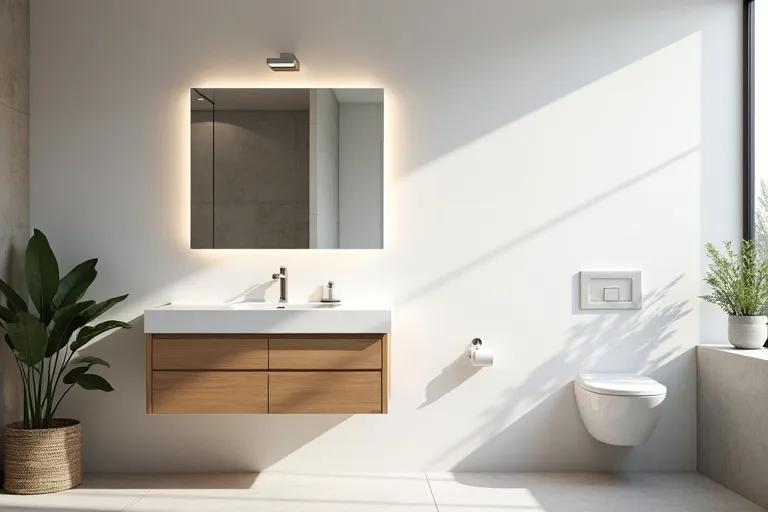
Avoid storage and countertop mistakes
Vanity storage sounds straightforward until the daily routine starts. The wrong drawer layout can make it hard to reach the items you use most often, while a countertop that is too small can leave no sensible place for soap, a toothbrush cup, or a small tray.
Think about what belongs in the vanity and what should stay outside it. If the bathroom is shared, drawer dividers and accessible compartments can reduce clutter. If the room is used by one person, a simpler cabinet may be enough, but only if the interior layout supports the items you reach for every day.
The countertop should also match the real workload of the space. If the sink takes up most of the top, there may not be enough room left for basic daily items. If the vanity is oversized but the top is poorly planned, the room can still feel awkward and underused.
Best next step
Before you buy a vanity or commit to a remodel, compare the room measurements, storage needs, and budget together. That makes it easier to see whether the right choice is a smaller vanity, a different layout, or a better fixture setup.
- Choosing a vanity because it looks right without checking depth and walkway space.
- Ignoring how doors, drawers, and traffic paths overlap in a real bathroom.
- Using a mirror or faucet that feels too large or too small for the vanity zone.
- Assuming storage is enough without planning how daily items will actually be used.
- Leaving lighting as an afterthought, then finding the sink area feels dim or impractical.
- Selecting a vanity that is too small for the room, or too large for the floor plan.
The best bathroom vanity ideas are not only about style. They are about proportion, clearance, storage, and the way the room functions every day. If the vanity fits the wall, leaves comfortable circulation, and works with the sink, mirror, and lighting, the whole bathroom will feel easier to use.
When the room feels uncertain, measure first and buy later. That small pause usually prevents the most frustrating mistakes.
Helpful next tools and planners
If you want to make the decision easier before you buy
These options can help you check the vanity zone against your layout, budget, and fixture choices before you commit to a purchase.
FAQ
How do I know if a vanity is too big for my bathroom?
If it crowds the entry, reduces comfortable movement, or makes drawers and doors hard to use, it is likely too large for the room even if it fits the wall.
What matters more: vanity width or depth?
Both matter, but depth usually affects daily flow first because it changes how much open floor space remains in front of the vanity.
Should the mirror always match the vanity width exactly?
No. It should feel balanced with the vanity and the wall it sits on, but exact matching is not always necessary or best.
What is the easiest way to avoid a bad vanity purchase?
Measure the room, map door and drawer clearances, and compare the vanity plan against your storage needs and budget before ordering.
Three sensible next steps
Some links in this article may be affiliate links. Read more in the Affiliate Disclosure.