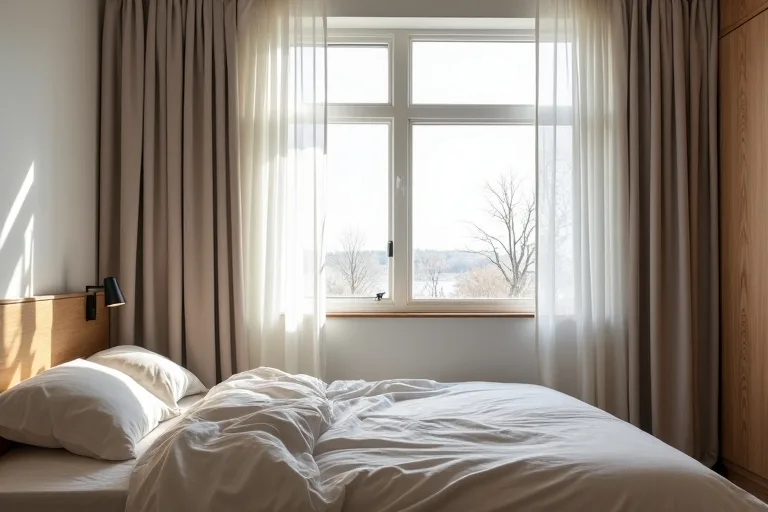
Bedroom curtains do more than cover a window. They affect how well the room blocks light, how finished the wall looks, and how calm the space feels at night and in the morning.
The easiest way to avoid a bad buy is to plan the window treatment before you shop. Once the measurements, mounting height, and curtain type are clear, the rest becomes a simple decision instead of a guessing game.
Measure first, then choose panel length, rod width, and mounting height before buying. That gives you a better chance of getting the sleep support and the softer visual frame you want without returning the wrong size later.
Start with the window and wall space
Before you think about fabric or hardware, look at the whole wall. In a bedroom, the curtain plan is usually shaped by where the bed sits, how much wall is available around the window, and whether the rod can extend beyond the frame without crowding a nightstand, artwork, or heating element.
Measure the window width, then check how much extra space you have on each side for the rod and stack-back. If the curtains need to stay clear of the glass when open, that side clearance matters just as much as the window opening itself.
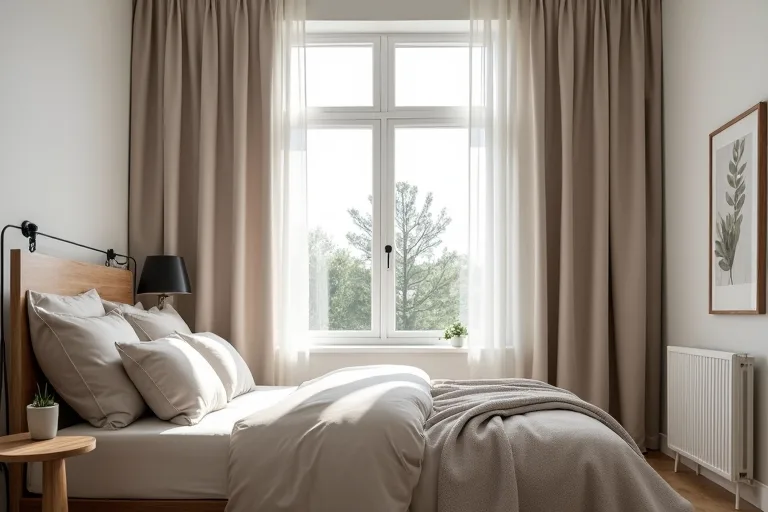
If you want a simple way to sanity-check those numbers, use the Curtain Length Calculator before you add anything to cart. It is especially useful when you are deciding whether a rod should sit close to the frame or higher on the wall.
The real decision is not just which curtains look nicest. It is whether the window treatment will fit the wall, block light well enough for sleep, and hang in a way that makes the room feel calmer rather than crowded.
Choose the right curtain type for sleep and light
Bedroom curtain ideas usually come down to three useful options: blackout panels, light-filtering panels, or layered panels that combine both. The best choice depends on how sensitive you are to morning light, whether the bedroom gets streetlight glow at night, and whether you want the room to feel softer during the day.
Blackout curtains are the practical choice when sleep is the main goal. Light-filtering panels can be better if you want privacy without making the room feel closed in. Layered curtains give you more control, but they also add more fabric, more hardware planning, and more decisions.

A simple way to think about it is this:
- Choose blackout if better sleep is the priority.
- Choose light-filtering if you want softness and privacy in daytime light.
- Choose layered panels if you need flexibility and have room for the extra fullness.
If you are ready to compare options, a neutral set like blackout curtains bedroom set of 2 panels is a straightforward place to start for sleep-focused rooms.
Pick rod style, finish, and mounting height
The rod is not just hardware. It affects how the curtains move, how wide the window looks, and how finished the whole wall feels. A simple adjustable rod is often enough for a bedroom, especially when you want flexibility and a clean, calm look.
Finish matters too. Matte black is a good choice when you want the hardware to feel defined without being shiny or distracting. It works well in bedrooms with neutral bedding, wood tones, or other simple finishes.
Mounting height has a bigger visual effect than many people expect. Hanging the rod a little higher than the window frame can make the room feel taller, while mounting it too low can make the window look compressed. If you are unsure, start by measuring the area above the frame before you buy.
For a flexible option, an adjustable curtain rod matte black is a practical match for many bedroom setups. If you are still mapping the room as a whole, the Bedroom Ideas hub can help you keep the curtain choice in line with the rest of the space.
Check length, fullness, and the final shopping list
Once the type of curtain and rod are clear, the last step is making sure the curtains will hang the way you expect. Length is where many bedroom purchases go wrong. Panels that are too short can look unfinished, while panels that pool too much can collect dust or feel fussy in a room that needs to stay restful.
Also look at fullness. A narrow panel on a wide rod can seem skimpy, especially in a bedroom where you want the window treatment to soften the room frame. On the other hand, too much fullness can overpower a small wall or make the curtains hard to open fully.

Use this final checklist before you buy:
- Confirm window width and wall clearance.
- Decide on blackout, light-filtering, or layered panels.
- Choose rod finish and mounting height.
- Check curtain length against floor clearance.
- Make sure the panel width matches the scale of the window.
- Keep the wall space around the bed and furniture in mind.
If you like planning before spending, a simple digital tool such as the Room Makeover Planner, Home Layout Budget Spreadsheet (Digital Download) can help you compare the curtain purchase with the rest of the room updates.
Best next step
If the measurements are still uncertain, use the Curtain Length Calculator first. It is the easiest way to confirm whether your curtain panels and mounting height will work before you place the order.
- Buying panels before measuring the wall space around the window.
- Choosing a rod that is too short for proper stack-back.
- Mounting the rod too low, which can make the window look smaller.
- Picking curtain length without checking floor clearance.
- Choosing a style that looks good in theory but does not support better sleep.
- Forgetting to match the curtain fullness to the size of the room.
Good bedroom curtain ideas start with planning, not shopping. Measure the window and wall space, decide how much light control you need, then choose the rod, height, and panel length together. That approach makes it easier to get a softer room frame and a better sleep setup on the first try.
Helpful next tools and planners
If you want to make the decision easier before you buy
These are the most useful next steps if you are still narrowing down size, layout, and the right kind of curtain treatment for the room.
FAQ
How do I know what curtain length to buy?
Measure from your planned rod height to the floor, then decide whether you want the panels to stop above the floor or just skim it. The key is to measure after you have chosen the rod position, not before.
Should bedroom curtains be blackout or light-filtering?
If sleep is affected by early light, blackout is usually the safer choice. If you mainly want privacy and a softer look during the day, light-filtering panels may be enough.
How high should I hang bedroom curtains?
In most rooms, higher placement looks calmer and taller than hanging the rod close to the frame. Just make sure the higher position still leaves enough wall clearance and works with the curtain length.
Do I need layered curtains in a bedroom?
Not always. Layering can help if you want more control over daylight, but it also adds more fabric and hardware decisions. A single well-chosen panel set is often simpler and more practical.
Three sensible next steps
Some links in this article may be affiliate links. Read more in the Affiliate Disclosure.