
A bedroom can look finished and still feel wrong. The bed is in place, the furniture matches, and the room may even be neatly styled, but something about it makes moving around awkward.
That usually comes down to layout, not decor. When circulation is blocked or the room feels visually heavy on one side, the space stops working in everyday life.
The biggest mistakes are blocking walkways, placing furniture without measuring, and creating uneven visual weight in the room. If the bed, doors, and storage are not arranged with clear movement in mind, the bedroom will feel cramped even when it is not full.
Why circulation matters more than furniture count
Circulation is simply the path you take through the room. In a bedroom, that means getting from the door to the bed, from the bed to the wardrobe, and around the room without turning sideways or brushing against furniture.
The most common planning error is to think of the bedroom as a collection of pieces instead of a sequence of movements. A room can hold a bed, two nightstands, a dresser, and still feel easy to use if the paths stay open. It can also feel crowded with far less furniture if one item interrupts the main route.
That is why layout comes before styling. Before you choose bedding or accessories, it helps to know where the bed should sit, how much clearance the room can spare, and whether doors, drawers, and window treatments can open without conflict.

Stand at the bedroom door and trace your main path with your eyes. If you have to weave around the bed, squeeze past a dresser, or adjust your stride to reach the wardrobe, the room needs a new layout—not more decor.
The layout mistakes that make a room feel tight
Some bedroom problems are easy to spot once you know what to look for. A large bed in a small room is not automatically the issue. The problem is usually how the rest of the furniture relates to it.
These are the mistakes that most often reduce usable space:
- Placing the bed so the entry path cuts across the room.
- Using nightstands or dressers that are too deep for the available floor area.
- Leaving no clearance for doors, drawers, or closet access.
- Choosing a bed frame that looks slim but adds a wide footprint in practice.
- Pushing every piece against the walls, which can make the room feel awkward rather than spacious.
Small bedrooms need especially careful measurement, but standard rooms can run into the same problems when storage is oversized or the bed is centered without checking what happens around it. A room feels calmer when each piece has a clear job and a clear boundary.
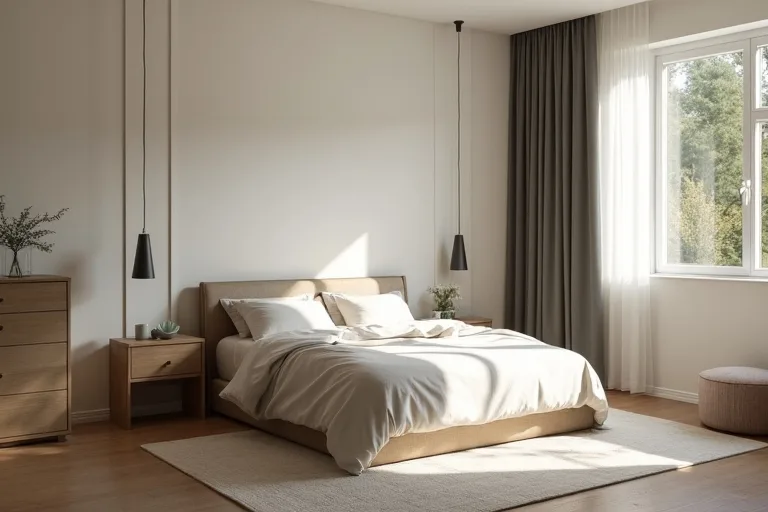
How balance changes the way a bedroom feels
Balance is not only about symmetry. It is about whether the room feels visually even when you enter it. A bedroom with all the heavy pieces on one side can feel unsettled, even if the walking space is technically clear.
That imbalance often shows up when one nightstand is much larger than the other, the dresser dominates a single wall, or the bed is placed without considering what it will face. In practical terms, the room may function, but it will still feel slightly off.
To judge balance, look at the room in layers:
- Height: do tall pieces crowd one side?
- Width: are the heaviest items spread fairly evenly?
- Visual weight: does one wall carry all the furniture while the other feels empty?
When balance improves, the room usually feels more restful. That matters in a bedroom because calm comes from both movement and sightlines. Even simple changes, like matching the scale of bedside tables or moving a bulky dresser away from the bed wall, can make the room feel more settled.
Simple fixes before you buy anything
The easiest way to improve a bedroom layout is to test it before shopping. Move the largest pieces first, then work outward. If the bed placement is wrong, the rest of the room usually follows.
A practical sequence helps:
- Measure the room and note the position of doors, windows, and closets.
- Place the bed where the clearest walking paths remain on both sides, if possible.
- Check that drawers, doors, and wardrobe fronts can open fully.
- Add nightstands only if they fit without crowding circulation.
- Choose curtains, bedding, and storage that support the layout instead of forcing it.
That last step matters more than it sounds. For example, a linen look duvet cover set queen neutral can work well in a room that already has strong layout decisions, because it supports the calm feel without competing with the furniture plan. The same is true of blackout curtains bedroom set of 2 panels when you need the room to feel controlled and practical rather than overstyled. When the structure is right, soft furnishings become the finishing layer, not the fix.
If you want a low-pressure way to test those choices, the Room Makeover Planner can help you compare furniture sizes, room flow, and budget before you commit. It is a useful step when you are deciding whether to rearrange, replace, or simply refine what is already there.
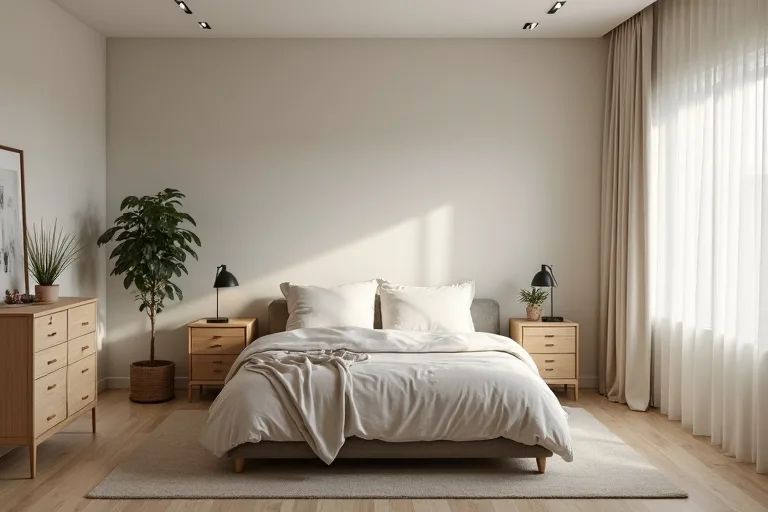
Best next step
If you are still unsure where the bed should go, start with the room plan before you buy bedding or storage. A few minutes of sizing can prevent expensive layout mistakes and make the rest of the room easier to style.
- Buying a bed size before checking clearances around it.
- Centering furniture without thinking about how the room is entered and used.
- Choosing oversized nightstands or dressers that crowd the walking path.
- Ignoring the visual weight of tall or bulky pieces on one side of the room.
- Using styling to mask a layout problem that needs a floor-plan fix.
A good bedroom layout is not about fitting in the most furniture. It is about keeping movement easy, preserving balance, and making sure each purchase supports the room rather than fights it. Once circulation is clear, the room becomes simpler to style and easier to live with.
Helpful next tools and planners
If you want to make the decision easier before you buy
These are the most useful next steps when you are still working out room flow, furniture size, and what to purchase first. Keep the focus on planning, then style the room once the layout makes sense.
FAQ
How do I know if my bedroom layout is wrong?
If the room feels hard to move through, if drawers and doors clash, or if the bed blocks your main path, the layout needs adjusting.
Should the bed always be centered on the main wall?
No. Centering can work well, but only if it protects circulation and does not create awkward access to storage or windows.
What is the biggest mistake in a small bedroom?
Using furniture that is too deep for the space and leaving too little room to move comfortably around the bed.
Should I buy bedding before fixing the layout?
It is better to settle the layout first. Once the room plan is clear, bedding and curtains are easier to choose because they can support the room instead of compensating for it.
Three sensible next steps
Some links in this article may be affiliate links. Read more in the Affiliate Disclosure.