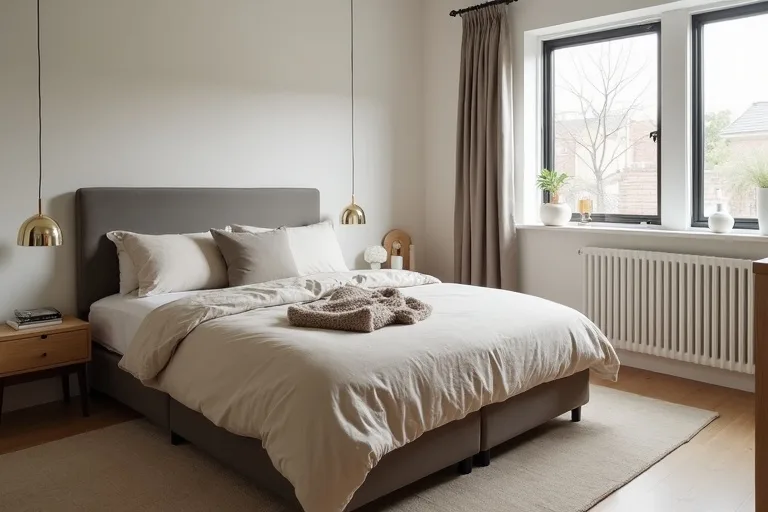
Not every bedroom needs a full makeover. Sometimes the room only needs a better bed position, a little breathing room around the furniture, and a few calm swaps that make the space work harder without starting over.
Other times, the problem is not styling at all. If the bed blocks the flow, storage feels awkward, or the room has been arranged around old habits instead of how you actually use it, a layout reset may save time and money in the long run.
Start with a budget refresh if the room works; choose a full layout reset if the flow, storage, or bed placement is the real problem.
What a budget bedroom layout change can solve
A budget approach works best when the room already has a decent structure and you mainly want it to feel calmer, lighter, or more finished. In that case, you are not redesigning the room from scratch. You are improving the way the existing layout performs.
Small changes can go a long way when the bed is in a reasonable spot and the main issue is how the room feels day to day. A better gap between furniture, a clearer path to the wardrobe, or a more balanced bedside setup can change the room without replacing everything.
This is also the right time to focus on a few practical upgrades that support the layout you already have. A neutral linen-look duvet cover can make the room feel more pulled together, while blackout curtains can help the sleeping area feel more private and finished.

If you are using a small budget, it helps to think in this order: fix the layout first, then decide whether the bedding, curtains, or storage pieces should change with it. That keeps the room from looking like a collection of unrelated purchases.
If the bed placement still feels natural, the door opens cleanly, and you are not constantly stepping around furniture, a refresh is probably enough. If one awkward piece affects the whole room, the issue is likely layout rather than decor.
When a full layout reset is the better choice
A full reset makes sense when the room is technically furnished, but it still does not function well. That usually shows up as blocked walkways, poor access to storage, uneven bedside space, or a bed position that makes the whole room feel tense.
It is worth stepping back when the existing layout forces compromises every day. If you have to twist around furniture to get to the wardrobe, if the bed dominates the room in an unhelpful way, or if storage only works by accident, a reset is not overthinking. It is problem-solving.
These are the moments when a simple styling update will not fix the room. Changing bedding or adding new decor may make the space look better, but the underlying frustration will stay if the circulation and furniture placement are wrong.
- Measure the room and main furniture pieces.
- Test a new bed position with clear walking paths.
- Check storage access from both sides of the bed.
- Only then decide what stays, what moves, and what needs replacing.

How to compare cost, effort, and impact
The easiest way to decide is to compare what you are paying for in each version of the room. A budget refresh usually spends less, moves faster, and keeps most of the furniture you already own. A full reset can take more time, but it may avoid repeated purchases if the current arrangement never really worked.
That is why the real question is not just what you can afford today. It is whether your current layout is helping you or quietly creating extra effort every single day. A small spend can be smart if the room is already close. A larger planning step can be smarter if the room is structurally awkward.
Before buying anything, it helps to map the room on paper or in a planner. If you can test the bed position, storage depth, and circulation first, you are less likely to buy the wrong size items or fill the room with pieces that only look right in isolation.
Best first move: use a room layout planner to check the bed, bedside tables, and walking paths before you commit to new bedding or furniture.

The best order: plan first, then buy
Once you know whether you are refreshing or resetting, the order matters. Start with measurements, then settle the layout, and only then move on to styling choices such as bedding, curtains, and small storage pieces. That keeps the room coherent and protects your budget.
If the layout is already settled, a few targeted purchases can finish the room without turning it into a project. A linen-look duvet cover in a neutral tone can soften the space, and blackout curtains can help the room feel calmer and more restful. But those upgrades work best when they support a layout that already makes sense.
For a more structured decision, it can help to use a simple planner or budget sheet while you compare options. That way, you can see whether the money is better spent on moving furniture, replacing one awkward item, or making a few restrained finishing changes.
When the room is planned properly, shopping feels much easier. You are not trying to fix the room with products. You are choosing products that fit the room you already solved.
Best next step
Before you buy bedding, curtains, or any new storage pieces, test the room layout first. A simple planner can show you whether the bed placement is working and whether a refresh is enough or a reset is worth it.
- Buying bedding or decor before the furniture layout is settled.
- Assuming a room feels off because of style when the real issue is circulation.
- Keeping the bed in a difficult position just because it is the easiest arrangement.
- Choosing storage that looks good but blocks daily movement.
- Skipping measurements and hoping the new pieces will fit well enough.
If the room already functions, a budget refresh is usually the smartest path. If the flow, storage, or bed placement keeps causing friction, a full layout reset is the better investment. Plan the room first, then buy only what supports the layout you have chosen.
Helpful next tools and planners
If you want to make the decision easier before you buy
These are the most useful next steps if you are comparing a light refresh with a deeper room reset. Start with the planner, then use the bedroom ideas hub for practical follow-up, and keep the shopping items for the point when your layout is already clear.
FAQ
How do I know if I need a refresh or a reset?
If the room works but feels unfinished, start with a refresh. If the bed placement, storage, or circulation keeps causing problems, reset the layout first.
Should I buy new decor before planning the bedroom layout?
It is better to plan the layout first. That way, you avoid buying items that look right but do not fit the room well.
What is the most useful first step before shopping?
Measure the room and test your bed placement in a planner so you can check walking paths and furniture fit.
Can a few small changes really improve a bedroom?
Yes. Better placement, clearer circulation, and a couple of calm finishing pieces can make a room feel much more settled.
Three sensible next steps
Some links in this article may be affiliate links. Read more in the Affiliate Disclosure.