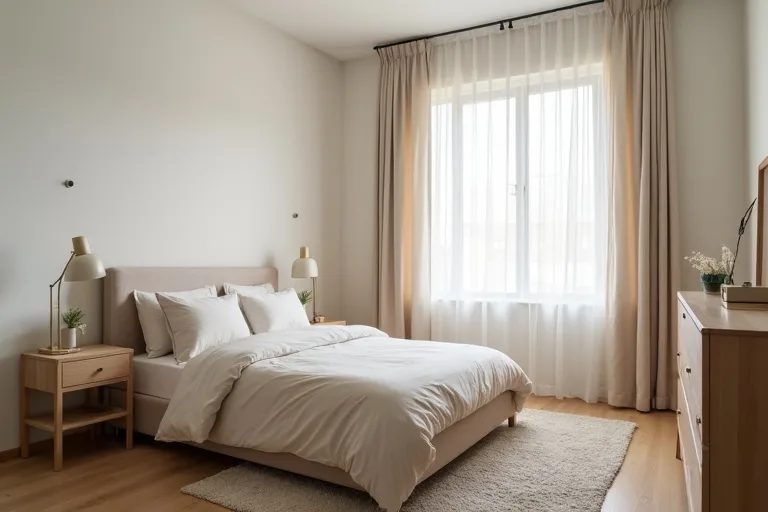
If a bedroom never quite feels settled, the problem is often layout before style. A room can look fine in photos and still feel awkward to use if the bed blocks the path, the dresser crowds the door, or the window treatment makes the space harder to plan around.
Good bedroom layout ideas are less about rearranging for the sake of it and more about making the room easier to move through, easier to use, and easier to shop for later. Once the flow works, every other decision becomes calmer.
Start by placing the bed for the clearest path, then size the remaining furniture around that flow. If the room feels cramped, solve movement first and buy later.
Start with the bed and the main path through the room
The bed usually sets the whole room. In most bedrooms, the best layout is the one that leaves an obvious walkway from the door to the bed and then around the sides without squeezing past corners or furniture edges. That does not always mean the bed has to sit on the largest wall, but it does mean the room should feel easy to enter and leave.
A practical way to test a layout is to stand at the door and trace the route you use most often: to the bed, to the closet, and to the dresser. If you have to turn sideways, step around a drawer, or dodge the bed corner every day, the room is asking for a simpler arrangement.
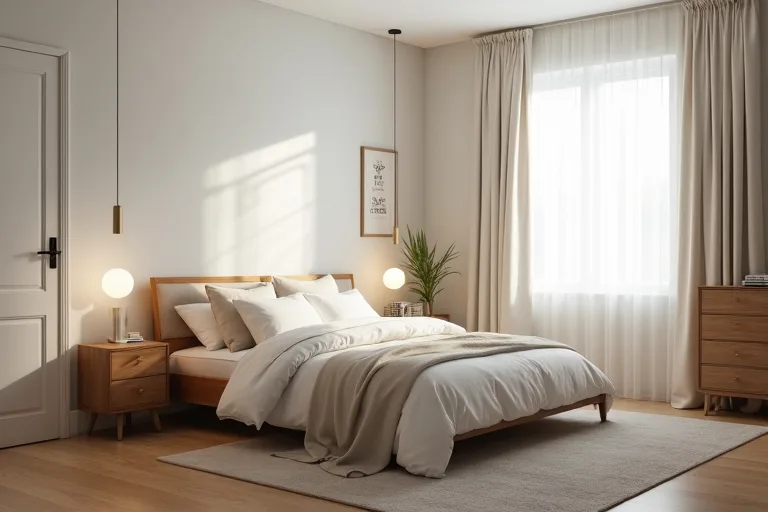
For many rooms, the easiest starting point is one of these three bed placements:
- Centered on the main wall, with space on both sides if the room allows it.
- Offset slightly if a door swing or window makes a centered placement awkward.
- Placed under a window only when the room is too narrow for another sensible option and the window height works well.
If you are unsure which option suits your room, use the room’s traffic pattern rather than trying to force a symmetrical look. A room that moves well will always feel better than one that only looks balanced from one angle.
Before moving anything, ask one question: can you walk from the door to both sides of the bed without squeezing between furniture? If the answer is no, the layout needs more space, not more decor.
Work around doors, windows, and everyday movement
Door swings and window placement can quietly decide whether a room feels easy or frustrating. A bedroom may be large enough on paper but still feel tight if a door opens into the only usable wall or if a dresser sits where the natural path should be.
Windows matter too, not just for light but for what they limit. A bed under a low window may block the opening or make curtain choices awkward. A tall dresser below a window can steal daylight. Sometimes the best layout is the one that keeps the main window wall visually open.
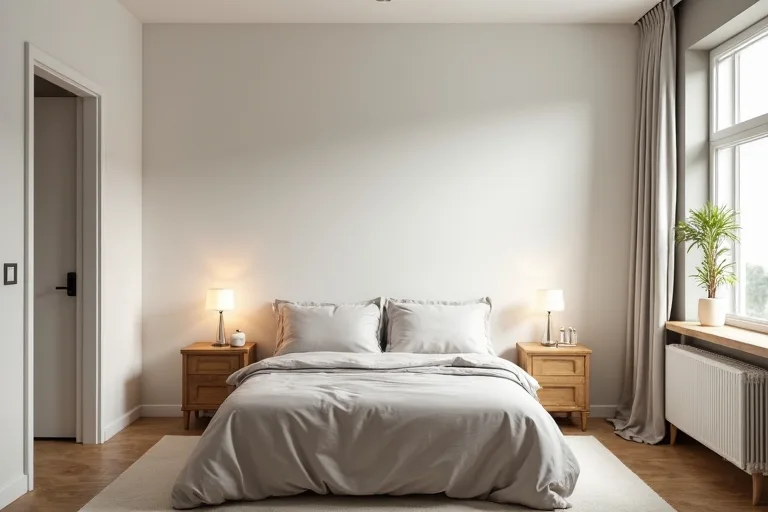
A simple order helps when the room has awkward features:
- Mark the door swing and decide which wall must stay clear.
- Note the window height and any radiator, sill, or trim that affects placement.
- Place the bed where the path remains easiest.
- Add the dresser only after the bed position is settled.
- Use smaller pieces if the room needs more openness.
This is also where bedroom layout and bedroom styling should stay separate. Heavy curtains, oversized furniture, and bulky bedside tables can make a workable room feel cramped again. If you want a calmer result, let the room breathe first and layer style in later.
Size nightstands, dressers, and storage with breathing room
Once the bed is placed well, the next decision is scale. Many bedrooms feel off because the furniture is technically present but not properly proportioned to the room. A compact room with oversized nightstands or a deep dresser can lose its flow quickly.
Nightstands should support the bed without crowding it. If there is barely room to open a drawer or walk past the corner, the piece is too large for the space. The same logic applies to dressers: if the dresser blocks the natural path to the closet or door, it is not helping the room even if it provides useful storage.
One useful rule is to think in layers of use:
- First layer: movement, including the main walkway and door clearance.
- Second layer: sleep use, including bedside access and lamp placement.
- Third layer: storage, including drawers, closet access, and laundry flow.
If a piece serves the third layer but harms the first, it may not belong in that room at all. Sometimes the better choice is a smaller dresser, under-bed storage, or a simpler bedside table rather than forcing one large piece to do too much.
For a room that needs a softer finish after the layout is set, neutral bedding can help the space feel calmer without changing the plan. A linen look duvet cover set queen neutral is a good example of a purchase that makes more sense once the bed size, color balance, and overall room scale are already clear.
Measure before you shop so the next buy actually fits
It is easy to buy bedding or curtains too early because those items seem harmless. In reality, they are part of the room plan. A duvet cover that fights the bed size, or curtains that are the wrong length, can make an otherwise sensible layout feel unfinished.
Before you spend money, measure the room in a way that answers practical questions, not just room dimensions. You want to know how much clear floor space is left beside the bed, where the bedside lamps can sit, how far the dresser can project, and what curtain length will work with the window height.
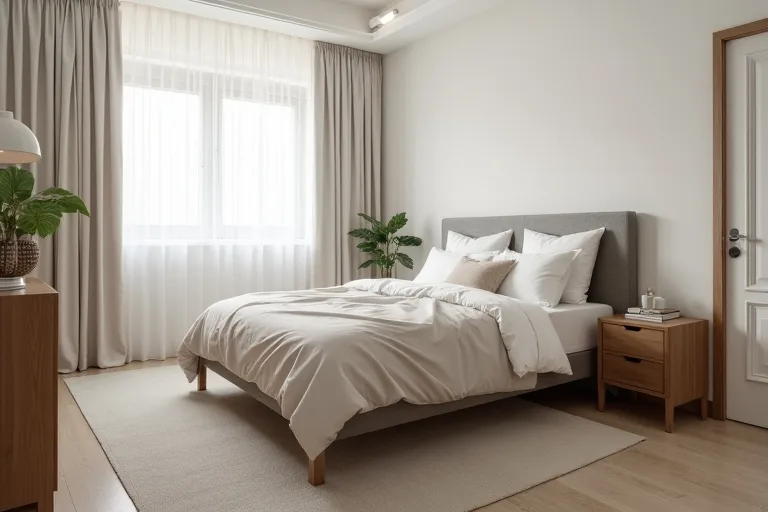
If you are planning a small update, this is the moment to use a room layout planner and map the room before adding anything to cart. That is especially useful if you are choosing between furniture, bedding, or window treatments and want the next purchase to support the layout instead of distracting from it. The room layout planner is a simple place to test ideas before you commit.
Once the layout is clear, then you can make smarter styling decisions. That might mean choosing bedding that suits the bed scale, checking curtain length, or confirming that a new dresser will still leave a clear path. If the room still needs more visual order after that, the Bedroom Ideas hub is a useful place to continue planning with the room’s actual size in mind.
Best next step
If you want the room to feel better before buying anything, map the layout first. A quick plan can save you from buying a bed size, curtain length, or storage piece that only creates a new problem.
- Placing the bed first for symmetry instead of for the clearest walking path.
- Buying a dresser or nightstand before checking door swings and closet access.
- Filling every wall, which can make even a medium bedroom feel cramped.
- Choosing curtains or bedding before confirming the room’s proportions and bed size.
- Ignoring storage flow, so laundry, clothing, and everyday items keep piling up in the wrong place.
The best bedroom layout ideas are the ones that make the room easier to use. Start with the bed, protect the main path, size furniture to the remaining space, and measure before you buy. Once the layout works, calm styling choices become much easier to make.
Helpful next tools and planners
If you want to make the decision easier before you buy
These picks are most useful after you have a layout plan. They can help you move from room planning to the smaller purchase decisions that follow, without rushing the process.
FAQ
What is the first thing to place in a bedroom layout?
Usually the bed. Once the bed is placed for the clearest path, the rest of the room is easier to size and position.
How much space should I leave around the bed?
Leave enough room to walk comfortably on the sides you use most. The exact amount depends on the room, but the goal is to avoid squeezing past corners or furniture edges.
Should a dresser go across from the bed?
Only if it does not block movement or make the room feel narrow. A good layout keeps the path clear first and the view second.
When should I buy bedding or curtains?
After the room layout is settled and the bed size, window height, and clearances are confirmed. That way, soft furnishings support the room instead of creating another mismatch.
Three sensible next steps
Some links in this article may be affiliate links. Read more in the Affiliate Disclosure.