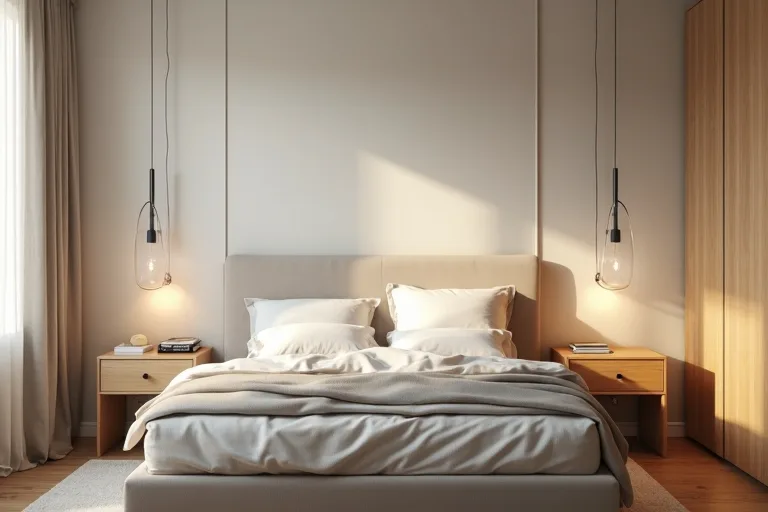
Bedroom lighting works best when it supports the way you actually use the room. That usually means a main light, useful bedside lighting, and a softer source that makes the space feel calm at night.
If the room feels harsh, uneven, or awkward to use, the fix is often not another decorative lamp. It is a clearer lighting plan that matches the bed, the nightstands, and the room layout.
Use layered lighting: one main light, bedside lighting on both sides, and a softer accent source for comfort and balance. Start by planning the room layout first, then choose fixtures that fit the bed width, the nightstand space, and how you read, relax, and get dressed.
Start with how the bedroom is used
Before you choose fixtures, decide what the room needs to do. A bedroom is not only for sleep. It may also be a place to read, dress, fold laundry, or move around early in the morning without switching on a bright overhead light.
That is why bedroom lighting should follow the layout. If the bed is centered, the lighting should feel symmetrical. If one side is tight against a wall, the plan may need wall lights, a smaller table lamp, or a different bedside setup altogether.
The most practical approach is to think in terms of tasks. Ask where you need light for reading, where you need gentle light for winding down, and where you need brighter light for dressing or cleaning. Once those moments are clear, the room becomes much easier to plan.
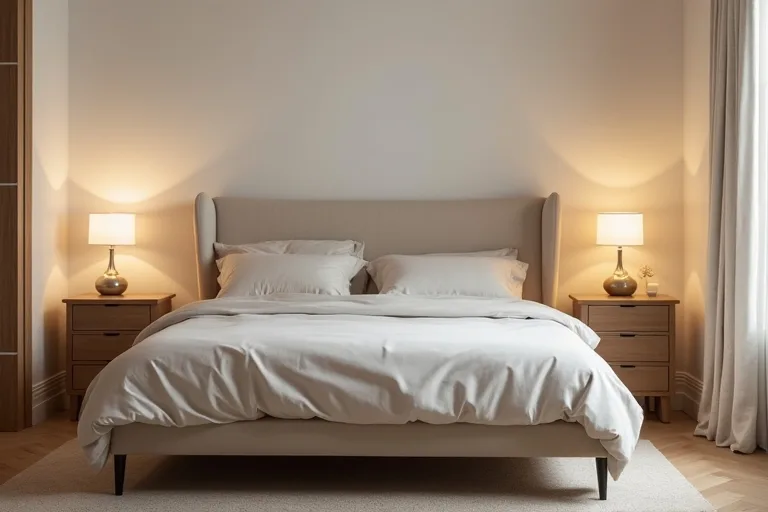
If the bed is the main anchor in the room, the lighting should feel anchored too. In most bedrooms, the real decision is not which lamp looks nicest. It is whether the lighting supports both sides of the bed, avoids glare, and leaves enough space to move comfortably around the furniture.
Build lighting in three layers
The easiest way to plan bedroom lighting is to separate it into three layers. Each one has a different job, and the room usually feels better when all three are considered together.
- Ambient light: the main light that brightens the whole room. This might be a ceiling fixture, a flush mount, or another overhead source that gives general visibility.
- Task light: focused light for reading, getting dressed, or other close-up activities. Bedside lamps and wall-mounted lights usually do this job.
- Accent light: softer light that adds atmosphere without taking over the room. This can be a small lamp, a dimmable fixture, or another gentle source used in the evening.
When these layers are planned well, the bedroom feels flexible instead of overlit. You can use stronger light when needed and keep the room calmer when it is time to rest.
Balance both sides of the bed
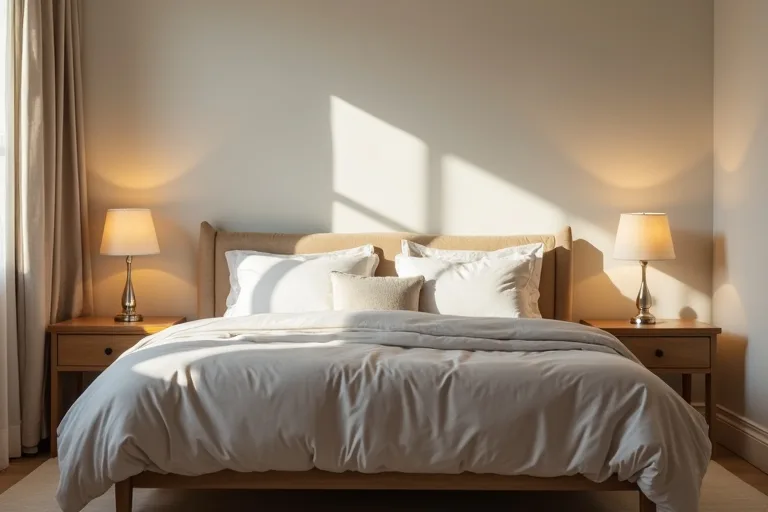
Lighting becomes much easier once you treat the bed as the main planning point. If two people use the room, or if you simply want a more balanced look, both sides of the bed should be considered as separate but matching zones.
That does not always mean identical fixtures, but it does mean equal usefulness. Each side should have access to light that is easy to reach and comfortable to use. If one person has a lamp and the other does not, the room often feels unfinished even if the decor is otherwise fine.
Matching bedside lamps are the simplest solution when there is room for them. If the nightstands are small, wall lights can save space. If the layout is tight, one side may need a compact lamp while the other uses a different fixture with a similar visual weight.
A helpful way to think about it is this: the two sides do not have to be identical, but they should feel equally considered. That balance is what makes the room feel calm.
Choose fixtures that fit the room, not just the style
Once the layout and layers are clear, you can choose the actual fixtures with more confidence. The best choice depends on ceiling height, bedside table size, bed width, and how much surface space you want to keep free.
For bedside lighting, a compact table lamp works well when there is room for a stable base and a lamp height that stays comfortable beside the pillow. A wall light can be a better choice when the nightstand is narrow or when you want to free up more surface space. A ceiling light should support the room without feeling harsh, especially if the bedroom is used mostly in the evening.
If you are still setting up the room, it helps to plan the full layout before buying. The Room Layout Planner is useful for checking how the bed, nightstands, and lighting zones fit together before you commit to fixtures. For overall style direction, the Design Styles page is a sensible place to narrow the look once the practical decisions are in place. If you want to stay within the bedroom planning hub, the Bedroom Ideas section is the best next stop.
For a simple home setup, some readers like to compare a pair of nightstands set of 2 bedroom options with bedside table lamps set of 2 so the bed feels balanced from the start. If you are planning a broader refresh, a digital tool such as the Room Makeover Planner, Home Layout Budget Spreadsheet can help you keep the layout and spending decisions in one place.
Helpful next tools and planners
Room planning first
Use the layout tool before you buy lamps, so the bed, nightstands, and lighting work together.
Style direction second
If the room feels undecided, choose a style direction after the practical layout is set.
Simple budgeting support
A planning spreadsheet can help if you are comparing fixtures, furniture, and small upgrades at the same time.
Best next step
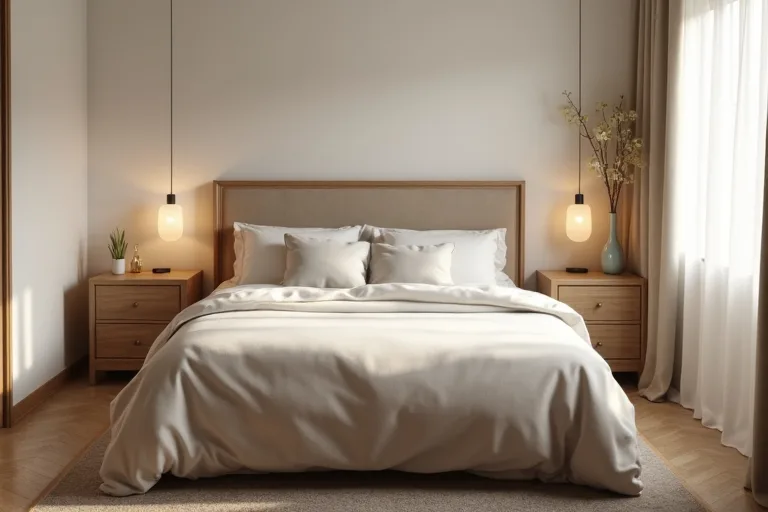
Before you buy any lighting, map the room first. That will tell you whether you need two bedside lamps, wall lights, a different nightstand size, or a simpler ceiling fixture. The right layout decision makes every lighting choice easier.
- Relying on one harsh overhead light for everything.
- Buying bedside lamps before checking nightstand width and lamp height.
- Lighting only one side of the bed and leaving the room visually uneven.
- Choosing fixtures that look good individually but do not work together in the room.
- Ignoring small-bedroom or low-ceiling limits and ending up with clutter or glare.
Good bedroom lighting is usually simple: plan the room first, layer the light, and make both sides of the bed feel equally usable. Once the layout is clear, the right fixtures are much easier to choose, and the room feels calmer at night and more practical in the morning.
Helpful next tools and planners
If you want to make the decision easier before you buy
A few practical tools can help you keep the lighting plan, room layout, and budget aligned before you add anything to cart.
FAQ
How many lights should a bedroom have?
Most bedrooms work well with at least three layers: one general ceiling light, bedside lighting, and a softer accent source. The exact fixtures depend on room size and how you use the space.
Should both sides of the bed have the same lighting?
They should feel equally useful, even if the fixtures are not identical. Matching lamps are the easiest option, but wall lights or mixed fixtures can work if the lighting balance is still even.
Are bedside lamps better than ceiling lights?
They do different jobs. Ceiling lights brighten the whole room, while bedside lamps are better for reading and evening use. Most bedrooms need both.
What is the best lighting choice for a small bedroom?
Choose compact fixtures that do not crowd the nightstands or floor space. Wall lights, small lamps, and a simple flush ceiling light often work better than oversized pieces.
Three sensible next steps
Some links in this article may be affiliate links. Read more in the Affiliate Disclosure.