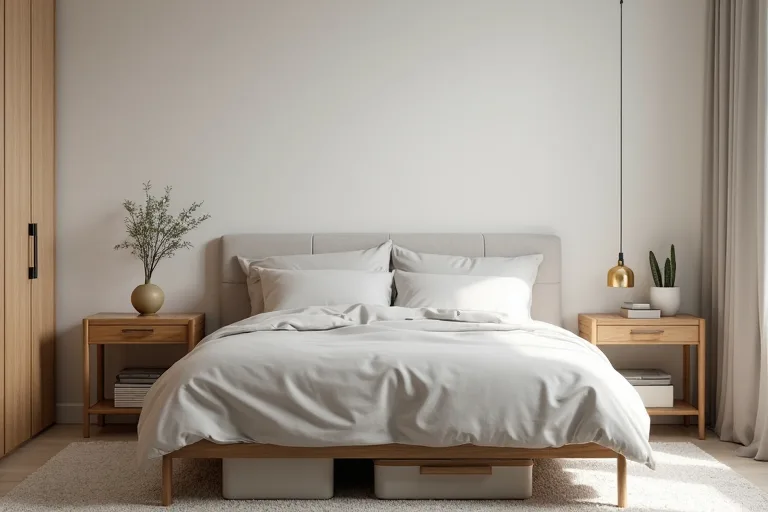
Bedroom storage works best when it supports the way the room is used every day. The goal is not to squeeze in more furniture, but to place storage where it improves flow, keeps essentials close, and reduces clutter without making the room feel smaller.
If your bedroom always feels busy, the problem is often layout rather than a lack of containers. Once you understand which zones need storage most, it becomes much easier to decide whether to use under-bed storage, a better nightstand setup, taller furniture, or a simpler room plan.
The best bedroom storage ideas are the ones that fit your layout, protect floor space, and make daily use easier. In most rooms, the smartest starting points are under-bed storage, compact nightstands, and vertical storage that uses wall height instead of floor area.
Start with the bedroom layout before you buy storage
Good storage decisions start with circulation. Before choosing a wardrobe, dresser, or storage bed, look at how you move through the room. The space beside the bed, the path to the door, and the opening swing of closets and drawers all affect what will actually work.
It helps to think in three simple zones: sleep, daily use, and overflow storage. The sleep zone should stay clear and calm. The daily-use zone should hold the things you reach for regularly, like a lamp, a book, or phone charging. The overflow zone is where seasonal bedding, spare linens, and less-used items can go.

Once you map those zones, you can spot the storage type that fits the room instead of adding furniture at random. That is especially important in smaller bedrooms, where one oversized piece can make the whole room harder to use.
The real decision is not whether a bedroom has enough storage in theory. It is whether the storage can be opened, reached, and used without blocking the bed, wardrobe doors, or walking path. If the room feels crowded when you stand in it, the problem is usually placement, not capacity.
Use under-bed storage and nightstands with purpose
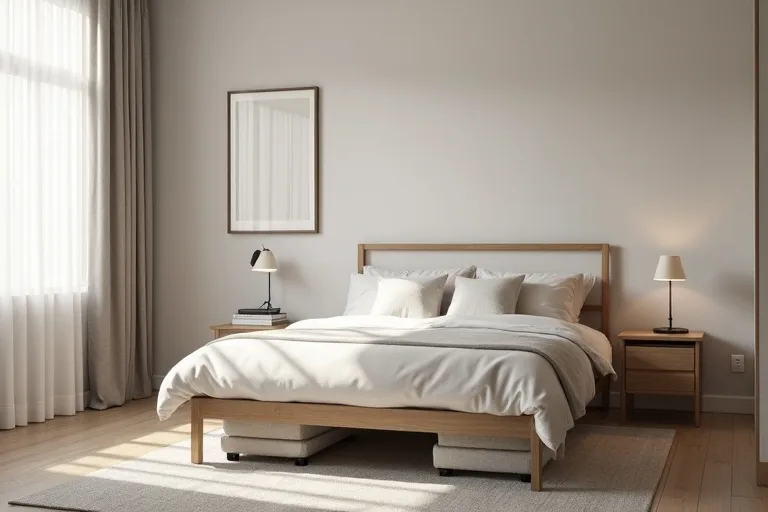
Under-bed storage is one of the most efficient bedroom storage ideas because it uses space that is often wasted. It works well for spare blankets, seasonal clothes, extra pillows, and items you do not need every day. A tidy under-bed system can remove a surprising amount of visual clutter from the room.
If you want the storage to stay useful, choose containers that are easy to pull out and close again. under bed storage containers with wheels are a practical option when you need access without lifting heavy boxes. They are especially helpful in rooms where space beside the bed is limited.
Nightstands matter too, even though they are often treated as purely decorative. A good nightstand should support the way you use the bed every day. For many rooms, a nightstands set of 2 bedroom is a simple way to create balanced storage on both sides of the bed while keeping lamps, books, and charging needs organized.
Keep nightstand storage realistic. One drawer and one open shelf is often enough. When a nightstand becomes overfilled, it stops being convenient and starts acting like a catch-all.
Make vertical storage do more of the work
In bedrooms with limited floor space, vertical storage is often the cleanest solution. Taller wardrobes, shelving above a dresser, and wall-mounted options can free up the room around the bed. The aim is to move storage upward without making the wall feel heavy.
This approach is useful when you want the bedroom to stay calm but still need enough room for clothing, bedding, and personal items. It also helps when a room has an awkward footprint, because wall height is usually easier to use than extra floor area.
- Choose one main storage piece instead of several small ones.
- Keep the heaviest visual volume lower if the room has a low ceiling.
- Use closed storage for items that create visual clutter.
- Reserve open shelves for a few simple, frequently used items.
A wardrobe or dresser can also work better when it is paired with restrained accessories rather than extra furniture. In many bedrooms, less is genuinely more because each item has to earn its place.

Adapt storage ideas to small bedrooms and awkward layouts
Small bedrooms need storage that respects circulation first. That usually means choosing pieces with a smaller footprint, avoiding bulky bedside tables, and using furniture that can serve more than one purpose. A dresser may need to double as a landing spot, while a bench at the foot of the bed may need hidden storage inside.
Awkward layouts benefit from the same calm logic. A room with sloped ceilings, narrow walkways, or a window that limits wall space often needs a more flexible plan than a standard bedroom. In those cases, it is better to place storage where the room can handle it than to force a symmetrical layout that does not fit.
If you are still unsure what belongs where, sketch the room before you buy anything. A simple layout plan can prevent expensive mistakes and help you compare options before you commit. For a broader approach to planning, the room layout planner is a useful next step, and the small spaces storage guide can help when the room needs a tighter, more efficient setup.
Best next step
If you want to avoid buying the wrong storage piece, plan the room first. A simple layout check will show you where storage belongs, what size will fit, and which items should stay out of the circulation path.
- Buying storage before checking how much walking space the room actually has.
- Using large furniture pieces that block drawers, doors, or wardrobe access.
- Treating nightstands as decorative only, then losing useful storage beside the bed.
- Filling every wall with furniture instead of leaving the room visually calm.
- Choosing storage that is hard to open, lift, or reach on a daily basis.
Bedroom storage works best when it follows the room plan. Start with layout, keep daily-use items close, and use under-bed, nightstand, and vertical storage where each one fits naturally. That approach makes the bedroom easier to live with and usually prevents unnecessary purchases.
Helpful next tools and planners
If you want to make the decision easier before you buy
These are simple next steps if you are still mapping the room, comparing storage placement, or planning a bedroom update with a budget in mind.
FAQ
What is the most useful bedroom storage idea for a small room?
Under-bed storage is often the most efficient starting point because it uses space that is already there without taking more floor area.
Are nightstands still worth having if the room is tight?
Yes, if they are compact and useful. A small nightstand can hold daily essentials and reduce clutter better than leaving everything on top of a dresser.
Should I choose a wardrobe or a dresser first?
Choose the piece that fits the room shape and the type of storage you need most. A wardrobe is better for hanging clothes; a dresser is better for folded items.
How do I know if storage is making the room too crowded?
If doors, drawers, or walking paths feel tight, the room likely needs less furniture or a different placement rather than more storage.
Three sensible next steps
Some links in this article may be affiliate links. Read more in the Affiliate Disclosure.