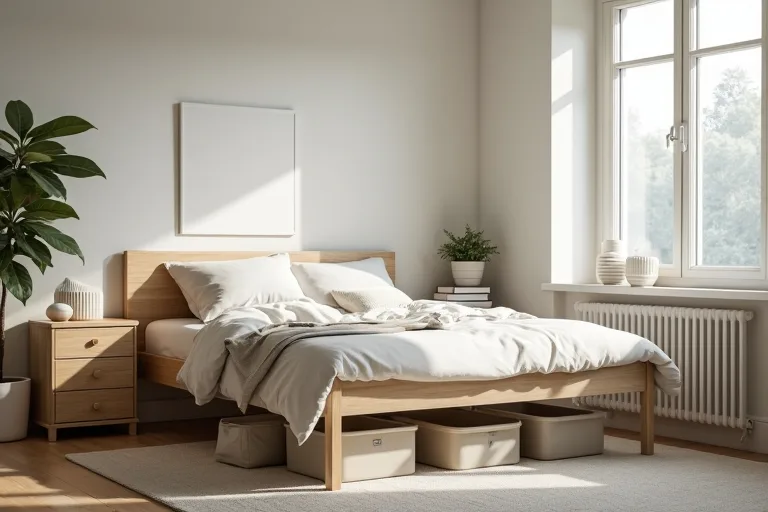
Bedroom storage works best when it solves the mess without adding more visual weight. In a room that already feels busy, the goal is not to fit in more furniture. It is to reduce what you see, free up floor space, and keep the room easy to move through.
The smartest bedroom storage ideas usually stay low, closed, and quietly useful. That means making better use of the space under the bed, behind doors, and inside furniture you already need anyway.
Use hidden, low-visual storage like under-bed bins, closed nightstands, and wall-mounted pieces. In most bedrooms, that gives you the biggest clutter reduction without making the room feel crowded.
Start with the clutter that affects the room most
Not every storage problem deserves the same fix. A bedroom can have plenty of storage and still feel messy if the wrong items are left out. Start by clearing the things that break the visual calm first: laundry, extra bedding, charging cables, books, skincare, and loose items on top of furniture.
When the room feels busy, open storage often makes it worse. Closed storage is usually better because it hides the everyday items that create visual noise. If you only change one thing, make it the surfaces. A tidy dresser top and a clearer floor can make the whole room feel larger.
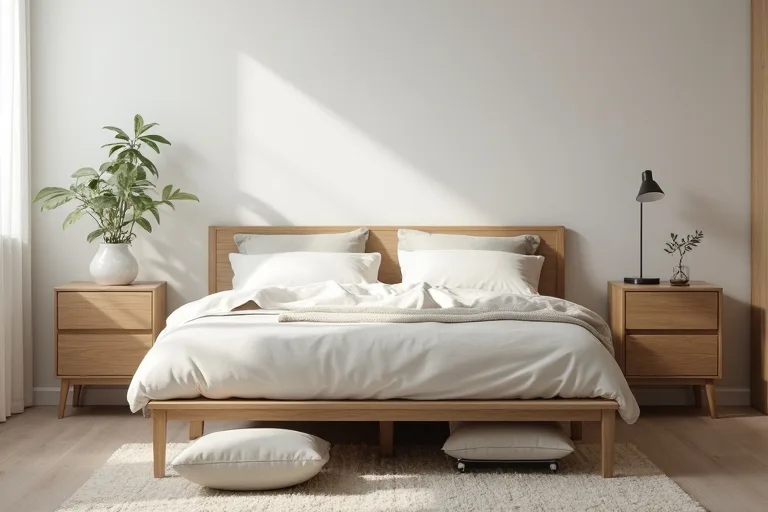
If you want a practical starting point, look at the items you handle every day and the items you only use seasonally. Daily items should be easy to reach. Seasonal items should be hidden away. That simple split makes bedroom storage far easier to plan.
The real decision is not whether you have enough storage space. It is whether the storage you add will reduce clutter without adding new bulk. A closed nightstand, a low storage bench, or under-bed containers often solve more than a tall open shelf ever will.
Use hidden storage zones first
The most efficient bedroom storage usually sits in places that do not compete with the room visually. Under the bed is the biggest one, especially for items you do not need every day. It is a natural place for spare bedding, out-of-season clothes, and backup household items.
For practical access, under bed storage containers with wheels are worth considering because they are easy to pull out and put back without dragging across the floor. That matters in a bedroom, where awkward storage tends to become unused storage.
Other hidden zones are just as useful:
- Behind the bedroom door for hooks, slim racks, or hanging organizers.
- Inside nightstands for books, chargers, and small personal items.
- Under a bench at the foot of the bed for soft storage that does not look heavy.
Keep these zones for items that would otherwise end up on the floor or on top of furniture. That is how the room stays calm.
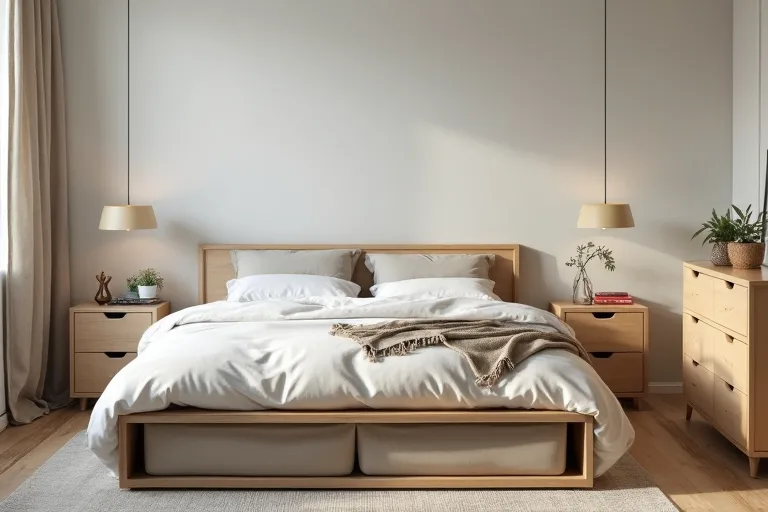
Choose furniture that stores more without looking heavier
Bedroom storage should work like part of the room, not a separate system you have to manage. That is why low-profile furniture usually works better than larger, more visible storage pieces. It gives you function without turning the bedroom into a storage room.
Nightstands are a good example. A simple closed nightstand can replace a cluttered stack of loose items beside the bed. If you are shopping for them, a nightstands set of 2 bedroom can create symmetry while still giving you hidden storage on both sides of the bed.
Look for pieces that do two jobs at once:
- nightstands with drawers instead of open shelves
- storage benches that also help with seating or dressing
- bed frames with built-in clearance for under-bed bins
- wall-mounted shelves used sparingly, not as full display space
The lighter the visual line of the furniture, the calmer the room tends to feel. That is why a smaller closed piece often beats a larger open one, even if the open piece technically holds more.
Make a simple plan before you buy anything
Before you add more storage, map the room layout. In a bedroom, circulation space matters just as much as capacity. If a storage piece blocks the path to the bed, closet, or window, it may solve one problem while creating another.
This is the point where a basic plan helps. Measure the furniture you already have, note where the natural walkways are, and decide which items need to stay visible and which can disappear into closed storage. That keeps you from buying pieces that are the wrong height, too deep, or too bulky for the room.
If you want a more structured way to work through it, the room layout planner is a useful next step. It helps you think through placement before you buy, which is usually the cleanest way to avoid cluttered decisions.
You can also use a simple planning tool like Room Makeover Planner, Home Layout Budget Spreadsheet if you want to compare storage choices, layout changes, and budget in one place.
The best bedroom storage ideas are usually the ones that are decided before shopping starts. That is how you keep the room feeling calm after the new pieces arrive, not just for the first week.

Best next step
If you are trying to reduce clutter without making the room feel more crowded, start with layout and hidden storage first. Then choose one practical storage piece that fits the room you already have.
- Buying open storage when the room already feels visually busy.
- Using tall or bulky pieces where a low closed option would be calmer.
- Filling every surface, even after adding storage.
- Skipping the layout check and blocking natural walkways.
- Choosing storage that is hard to access, so it gets ignored.
The calmest bedroom storage solves clutter quietly. Start with hidden storage zones, prefer closed furniture, and check the layout before you buy. If a piece stores more but looks lighter in the room, that is usually the better choice.
Helpful next tools and planners
If you want to make the decision easier before you buy
These picks fit the planning approach in this guide: practical storage first, then a simple way to organize the room and budget. Keep them secondary to the layout decision, not the other way around.
FAQ
What is the best bedroom storage if I want the room to look less busy?
Closed storage usually helps most. Under-bed containers, closed nightstands, and hidden zones behind doors reduce visual clutter better than open shelving.
Should I buy more storage or change the layout first?
Change the layout first if the room already feels crowded. A better layout can free up space before you spend on new storage.
Is under-bed storage a good idea in a small bedroom?
Yes, as long as it is easy to access. Low containers with wheels are often a practical option because they use space that would otherwise go to waste.
What should I store in the bedroom and what should stay elsewhere?
Keep daily items and bedtime essentials in the bedroom. Store seasonal items, backups, and less-used belongings in hidden or secondary storage if possible.
Three sensible next steps
Some links in this article may be affiliate links. Read more in the Affiliate Disclosure.