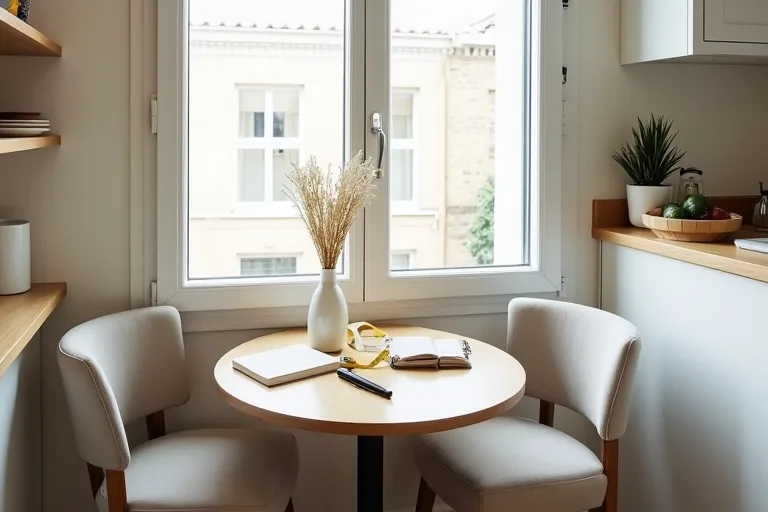
Before you buy furniture or decor for a breakfast nook, it helps to slow down and check the layout first. A small nook can look simple online and still feel awkward in a real home if the table is too wide, the chairs are too deep, or the clearance is tight.
This checklist keeps the decision practical. Measure first, then match the table, chairs, and extras to the space you actually have. That way, the nook works for everyday meals instead of becoming a cramped corner you keep adjusting later.
Measure the nook first, then size the table, chairs, and clearance before you shop. If the space is small or the walk path is tight, the right table shape matters less than getting the width, depth, and pull-out room right.
Start with the space and how the nook will be used
A breakfast nook does not need a lot of furniture to feel complete, but it does need a clear purpose. Ask what the nook is meant to do on an ordinary day. Is it a quick breakfast spot, a homework corner, a coffee table for two, or a place that occasionally handles extra guests?
That answer changes the layout. A two-person nook can stay compact and open, while a family nook may need more chair movement and a slightly larger table surface. If the room already feels busy, keep the plan simple and make the layout do the work instead of adding more pieces.

If you are still deciding between a round table, a small rectangular one, or bench seating, think about traffic first. The easiest setup is usually the one that lets people move through the kitchen without turning sideways or pushing chairs in every time they pass.
The real decision is not which breakfast nook idea looks nicest in a photo. It is which layout fits your circulation, chair pull-out space, and daily use without forcing you to compromise on comfort every time someone sits down.
Measure width, depth, and walking clearance
This is the step that prevents most buying mistakes. Measure the nook wall to wall, then measure how far the space projects into the room. After that, check how much clearance you need for walking, pulling out chairs, and opening nearby cabinets or doors.
It helps to write the numbers down before you look at products. A rough floor plan on paper or in a planner can make the space feel much clearer than trying to remember dimensions while browsing.
- Measure the full nook width.
- Measure the usable depth from wall to walkway.
- Check the space needed for chair pull-out.
- Confirm nearby door swing, drawer access, and appliance clearance.
- Leave room for the path people use most often.
If you want a faster sanity check, use the dining table size calculator before you buy. It is especially useful when the nook is tight and every inch matters.

Choose the right table, chairs, and layout
Once the measurements are clear, the furniture choice becomes easier. In a small nook, the best table is usually the one that fits the room flow first and the style second. A round table can soften traffic in a tight corner, while a small rectangular table may work better along a wall or banquette.
Chairs matter just as much. Upholstered seating can feel more comfortable for lingering, but it also needs enough room to pull out and sit down easily. If the nook is narrow, choose chairs that do not visually or physically crowd the table edge.
A good layout usually follows this order:
- Pick the table shape that matches the room flow.
- Confirm the table size against the available clearance.
- Choose chairs with a depth that still allows movement.
- Only then decide whether a bench or storage piece makes sense.
If you are comparing table options, an extendable dining table for small dining room can be a sensible option when the nook needs flexibility. For seating, an upholstered dining chairs set of 4 may work well if the layout can handle the extra depth and you want a softer, more comfortable feel.
Finish with lighting, storage, and a simple budget
Decor is easier to choose once the layout is settled. A breakfast nook usually needs only a few supporting pieces: a light source, perhaps a rug, and one or two practical accents that do not clutter the table.
Lighting should suit the shape of the nook rather than overpower it. If the space is small, keep the fixture scale modest and make sure it hangs in a way that does not block sightlines or feel too low over the table. Rugs can help define the area, but only if there is enough room for chair movement without catching the edge every time someone sits down.
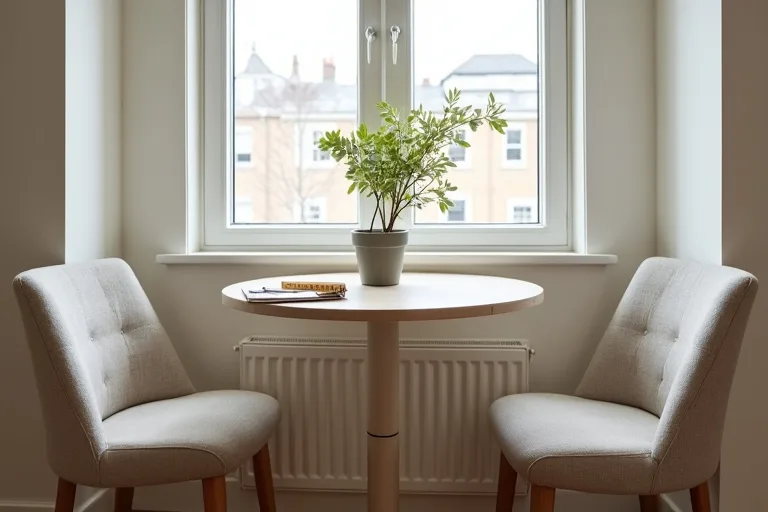
If the nook needs storage, choose it only when it genuinely helps the room. A bench with hidden storage can be useful, but it should not make the seating too deep or the path too tight. Before buying decor, set a simple budget and decide what the space really needs now versus later.
A digital planning sheet can help here. The Room Makeover Planner, Home Layout Budget Spreadsheet (Digital Download) is useful if you want to keep measurements, layout notes, and spending in one place while you make decisions.
Best next step
Before you commit to a table or chair set, confirm the fit with a sizing tool. That final check is often the difference between a nook that feels easy to use and one that only looks right in theory.
- Buying a table before measuring walking clearance.
- Choosing chairs that look good but feel too deep for the nook.
- Forgetting to check nearby cabinet doors, drawers, or appliance swing.
- Adding storage or a bench that makes the room feel tighter.
- Styling the space before the layout is actually working.
The best breakfast nook ideas are the ones that fit the room comfortably and make daily use easier. Measure first, choose the table shape and chair size second, and keep decor simple until the layout is proven. If you want confidence before you buy, use the dining table size calculator for a final check, then move on to the Kitchen & Dining hub for the next planning decision.
Helpful next tools and planners
If you want to make the decision easier before you buy
These are useful if you are still comparing sizes, layouts, and a simple way to keep the project organized. Start with planning and sizing first, then use product links only if they still match the measurements.
FAQ
How do I know if my breakfast nook is too small for a table?
If the table leaves little room to pull out chairs or blocks the main path through the kitchen, the nook is likely too tight for that size. Measure the space and check clearance before you choose the table.
Should I choose a round or rectangular table for a breakfast nook?
Round tables often work well in tighter corners because they soften movement, while rectangular tables can fit better along a wall or in a longer nook. The room shape and walking path matter more than the style alone.
Do upholstered chairs work in a small breakfast nook?
Yes, if there is enough depth for comfortable seating and pull-out space. They add comfort, but they can feel bulky in a narrow layout, so measure carefully.
What should I buy first for a breakfast nook?
Start with the table size and chair clearance, then add lighting, storage, and decor only after the layout works. That order keeps the space functional and avoids unnecessary purchases.
Three sensible next steps
Some links in this article may be affiliate links. Read more in the Affiliate Disclosure.