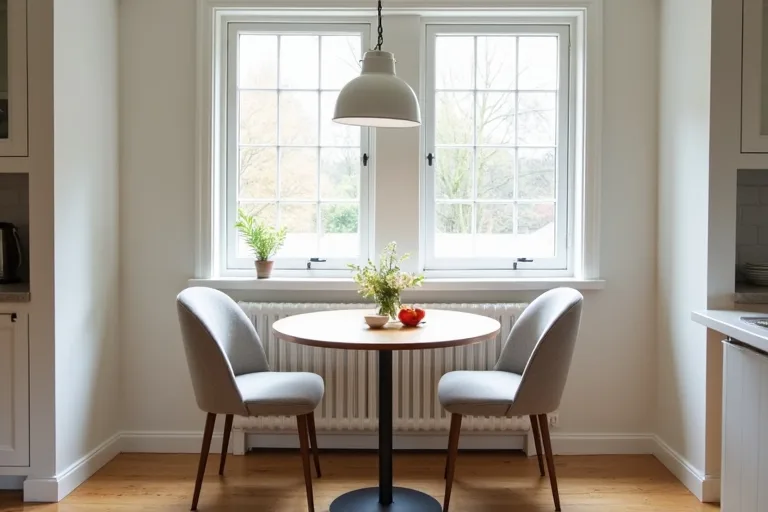
A breakfast nook works best when it feels like it belongs to the room rather than fighting it. That usually comes down to fit, not styling: the table is right-sized, the chairs can be pulled out easily, and the nook still leaves a clear path through the kitchen-dining area.
If a nook feels awkward, it is often because one piece is too large, too bulky, or too close to circulation space. The good news is that balance is usually easier to fix than people expect once the layout is measured properly.
Start by measuring clearance, then right-size the table and chairs so the nook feels balanced, not crowded. Once the proportions are correct, a simple light fixture, rug, or bench can help the space feel finished without adding clutter.
Measure clearance before you buy anything
The most useful breakfast nook ideas begin with the space around the table, not the table itself. A nook can look attractive in a product photo and still feel wrong in a real room if the chairs cannot move back comfortably or if the walkway gets pinched every time someone passes.
Before shopping, measure the full footprint of the nook and note where doors, drawers, and walkways need to stay open. That gives you a real boundary for table size, chair width, and any bench seating you may want to include.
For a simple sizing check, use the dining table size calculator before you commit to a shape. It is the easiest way to turn a vague feeling of “too big” or “too small” into a clearer decision.
The real decision is not which table looks nicest online. It is which table leaves enough clearance for everyday movement while still making the nook feel intentional. If you have to turn sideways to pass the area, the table is already working too hard for the room.
Choose the right table shape and size for the room
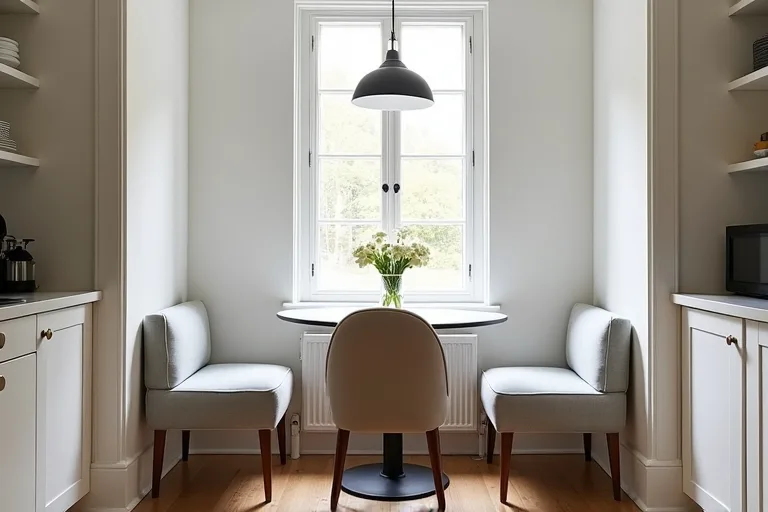
Table shape changes how a nook reads. A round table often softens a tight corner and can make movement feel easier, while a small rectangular table may suit a narrower room or a nook that needs to align with a wall or banquette. The best choice depends less on trend and more on how the room is used.
If the nook is compact, a table that is slightly smaller and visually lighter usually helps the area feel more balanced. If the room is open-plan, the table may need a stronger presence so the nook does not disappear next to the kitchen or living area.
- Measure the usable footprint, not just the wall length.
- Check clearance for chairs being pulled out.
- Choose the shape that supports traffic flow.
- Only then decide whether the table needs to be extendable.
An extendable dining table for a small dining room can be useful when the nook has to work for both daily meals and occasional guests. It is a practical option only if the expanded version still fits the room comfortably.
Match seating to the space and traffic flow
Once the table is sized correctly, seating is the next decision that affects balance. Chairs that are too deep or too wide can make even a good table feel oversized. Upholstered seating can work beautifully in a breakfast nook because it softens the room and helps the area feel more finished, but only if the scale is still manageable.
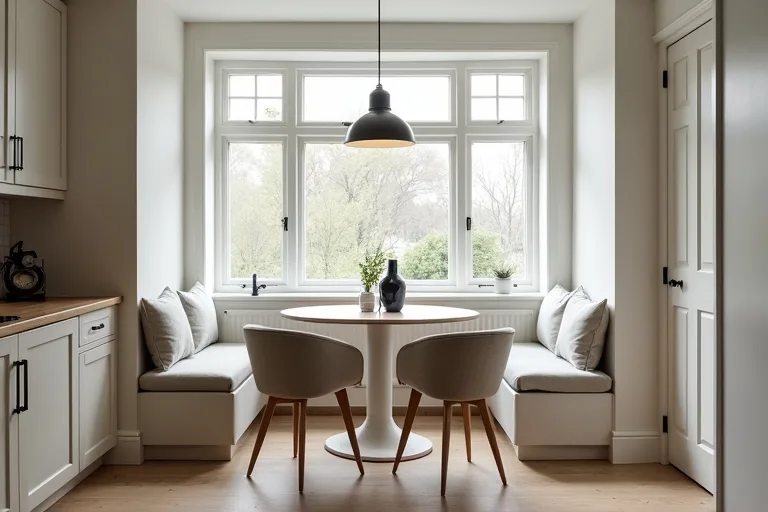
For a small nook, the main question is whether you want movable chairs or a more anchored bench-style arrangement. Movable chairs are flexible, while a bench can save space and keep one side of the nook visually calm. Neither is automatically better; the right answer depends on how often people need to walk through the area.
If you prefer a softer look, an upholstered dining chairs set of 4 can help the nook feel more comfortable and settled. Just make sure the chair profile still leaves enough clearance to move in and out easily.
Use a few finishing choices to anchor the nook
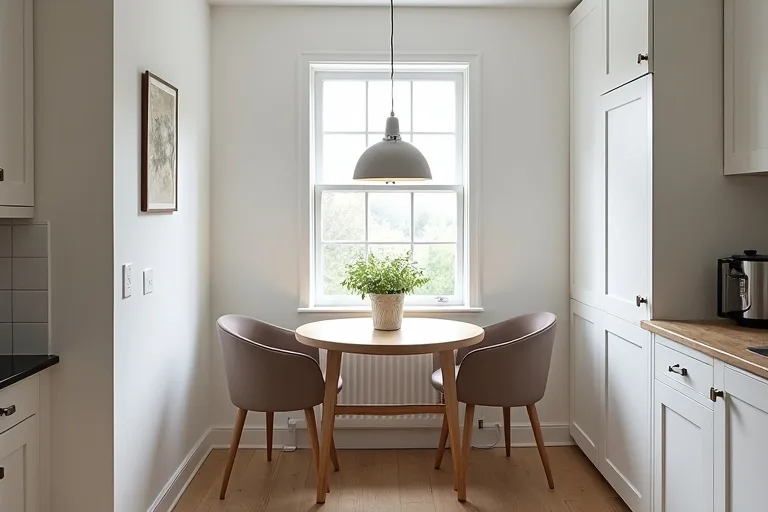
When the layout is right, small finishing touches can make the nook feel complete without making it busier. A pendant light centered over the table gives the area a clear visual anchor. A rug can define the nook if it fits the space cleanly and does not block chair movement. A small piece of storage nearby can help, but only if it supports the way the room is used.
One of the easiest ways to improve balance is to keep the visual weight low and controlled. That means avoiding oversized décor, heavy chair backs that dominate the view, or too many competing finishes in a compact area. A breakfast nook usually looks better when it is edited, not decorated to the point of distraction.
If you are planning a wider room update, the Kitchen & Dining hub is a good next stop for related layout and furnishing decisions, especially if you are also weighing dining seating or small-room proportions.
Best next step
Before you choose a table or chairs, measure the nook and check the clearance you actually have to work with. That one step makes the rest of the decision easier and reduces the chance of buying pieces that feel too large once they arrive.
- Choosing a table before measuring chair clearance.
- Selecting a shape that blocks the natural path through the room.
- Using chairs that are too bulky for the nook.
- Adding storage or styling pieces that crowd the walking area.
- Trying to fix a sizing problem with décor instead of layout.
Breakfast nook ideas work best when they start with fit. Measure the space, right-size the table, and choose seating that supports the flow of the room. Once those basics are right, the nook feels more balanced, more finished, and much easier to live with.
Helpful next tools and planners
If you want to make the decision easier before you buy
These are useful if you are still deciding between sizes, seating, and layout. Start with the planning tools, then use the product links only if they fit your measured space.
FAQ
What size table works best in a breakfast nook?
The best size is the one that leaves comfortable clearance for chairs and walking space. Use the room footprint and the table size calculator to check fit before choosing a shape.
Should a breakfast nook have chairs or a bench?
Chairs are easier to move and rearrange, while a bench can save space and make the nook feel more built-in. The better option depends on how tight the space is and how often people walk through it.
Is a round table better than a rectangular one?
Not always. Round tables can help in compact spaces and soften the look, while rectangular tables can suit narrow rooms or layouts that need clearer alignment. The room shape should guide the choice.
How do I make a small nook feel finished without clutter?
Use a simple pendant light, keep chair and table proportions balanced, and limit extra décor. A small nook usually feels more finished when the layout is calm and intentional.
Read next
Three sensible next steps
Some links in this article may be affiliate links. Read more in the Affiliate Disclosure.