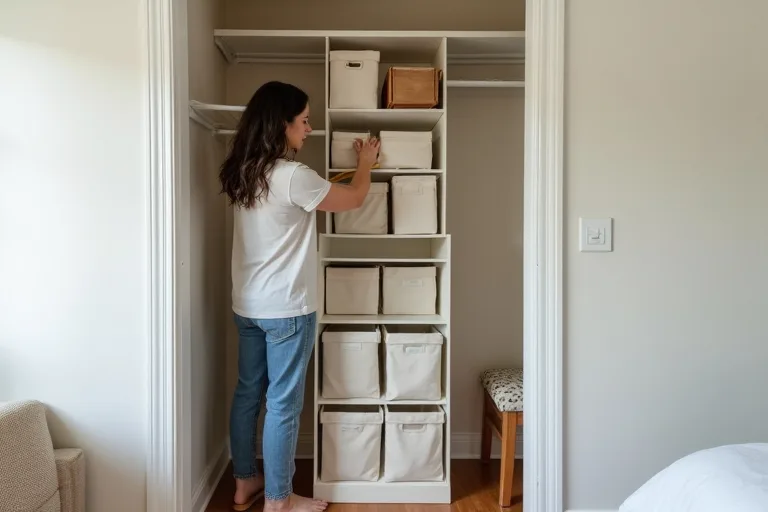
If your closet feels full, the problem is usually not a lack of bins. It is a mismatch between what you store, how often you use it, and the space you actually have.
A calmer approach is to sort first, measure next, and then choose the simplest storage that fits the closet and your routine. That makes every buying decision easier and usually saves space too.
Measure first, sort what you need to store, then choose the simplest storage that fits your closet and your routine.
Start with what the closet needs to hold
Before you look at bins, shelves, or cabinets, make a short list of what belongs in the closet. A closet for daily clothing needs a different setup from one that also holds shoes, bags, luggage, linens, or off-season items. The more clearly you define the job, the easier it is to avoid buying storage that looks useful but does not solve the real problem.
Sort items into a few simple groups: hang, fold, store in a bin, or keep out of the closet entirely. If you are unsure, start with the things you use most often. Those should be the easiest to reach, while seasonal or backup items can sit higher, lower, or farther back.

This is also the point where it helps to think about the rest of the room. A closet should support the bedroom, not compete with it. If the room is tight, the most useful system is often the one that gives you clear access without crowding the floor or door swing. A planning tool can make that decision easier before you commit to new storage.
The real question is not “Which storage looks best?” It is “What needs to be easy to reach, and what can be stored more simply?” If everyday items are hard to access, the system will not stay tidy for long.
Measure the space before you shop
Good closet organization starts with the measurements, even if the closet is small. Write down the width, depth, and height of the usable interior, then note anything that interrupts the space: hanging rods, shelves, baseboards, vents, doors, or trim. A storage piece that seems compact in a shop can still block access once it is inside the closet.
Pay attention to clearance as well. A cabinet or cube organizer may fit in the footprint, but still be awkward if it prevents the door from opening fully or makes it hard to reach items on the side. For a closet that is already tight, the smallest workable layout is often the best one.
- Measure the full interior width, depth, and height.
- Check door clearance and how far the door opens.
- Mark fixed features like rods, shelves, and trim.
- Decide where daily-use items should sit.
- Leave a little buffer so the closet is easy to use, not just technically fitted.

If you want a clearer next step, use the Room Layout Planner to test the fit before buying anything. For storage choices that affect the rest of the room, that simple check can prevent a lot of wasted purchases.
Choose the simplest storage type for the job
Once you know what the closet must hold and how much room you really have, choose the lightest system that solves the problem. In many small closets, that means starting with shelves or bins before moving to a full cabinet setup. Cabinets can be useful when you need hidden storage, but they can also make a small closet feel heavier and less flexible.
Here is the simplest way to think about the main options:
Bins are best for grouped items such as accessories, seasonal clothing, or smaller household items that would otherwise scatter.
Shelves work well when you can stack folded items neatly and want to keep the contents visible.
Rods are ideal for clothing that wrinkles easily or is used often.
Cabinets make sense when you need a cleaner visual finish or want to hide mixed items, but they usually require more space and more careful planning.
For many compact closets, an 8 cube storage organizer paired with fabric storage bins set for cube organizer is a practical starting point. It gives you flexible compartments without committing to a heavy built-in look, and it can work well for folded items, accessories, or shared storage in a bedroom.
If you are still mapping the room, the Sofa Size Calculator may seem unrelated, but the same habit applies: confirm fit before you buy. For the closet itself, a simple digital planner such as the Small Space Furniture Planner, Room Layout Spreadsheet (Digital Download) can help you compare storage setups without guessing.
Set up a system you can keep up with
The best closet organization ideas are the ones you can maintain on an ordinary week. If you need to move three things every time you put away laundry, the system is probably too complicated. The goal is not to create perfect styling. It is to make storage feel obvious enough that you use it without thinking.
A stable system usually has three parts: one place for daily items, one place for occasional items, and one place for overflow or seasonal storage. That keeps the closet from turning into a single mixed pile. It also makes it easier to reset the space later, because each item has a clear category and a clear home.
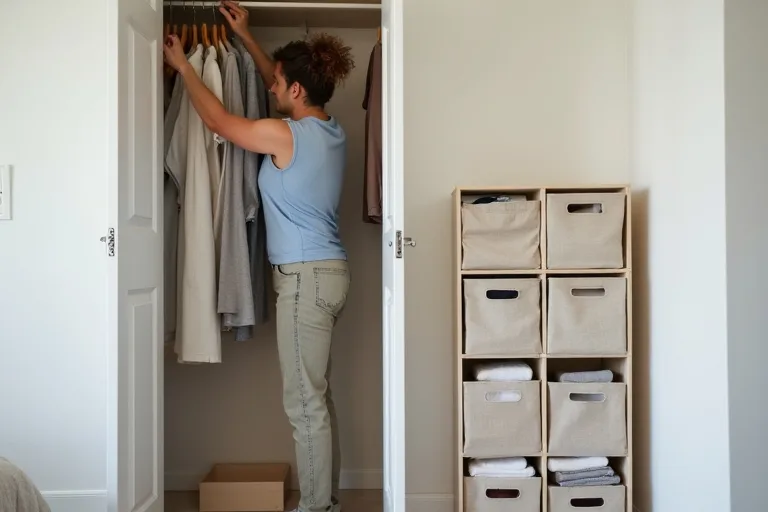
If your closet is shared, label the system in a low-key way so everyone can follow it. If it is just for you, keep the categories simple enough that you do not need to remember a special rule every time you put something away. That is usually what keeps the closet usable over time.
Best next step
Before you buy bins, shelves, or cabinets, check the dimensions in a layout tool and test one plan at a time. That gives you a clearer answer than shopping by look alone, especially in a small closet.
- Buying bins before measuring the usable interior space.
- Choosing storage that blocks the door or makes shelves hard to reach.
- Mixing too many storage types in one small closet.
- Using closed cabinets when open storage would make daily use easier.
- Adding more containers instead of removing items that do not belong in the closet.
A good closet setup starts with the room, not the product. Measure the space, sort what you actually need to store, and choose the simplest storage that fits both the closet and your routine. If you want a calmer decision, plan the layout first and buy second.
Helpful next tools and planners
If you want to make the decision easier before you buy
These options can help you check fit, compare layouts, and choose a storage system that matches the closet instead of crowding it.
FAQ
What should I measure before buying closet storage?
Measure the usable width, depth, and height, then check doors, trim, shelves, rods, and anything else that changes the available space.
Are bins or shelves better for a small closet?
It depends on what you store. Shelves are better for visible folded items, while bins are better for grouping smaller items or keeping mixed contents contained.
When do cabinets make sense in a closet?
Cabinets make sense when you need hidden storage and have enough room to keep the closet easy to access. In very small closets, they can be too heavy a solution.
How do I avoid overbuying storage?
Sort your items first, choose one system, and test the fit in a layout tool before buying extra pieces you may not need.
Three sensible next steps
Some links in this article may be affiliate links. Read more in the Affiliate Disclosure.