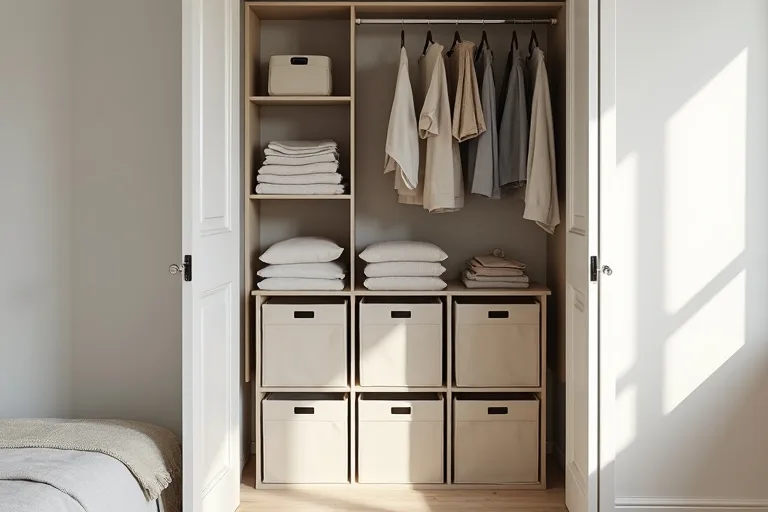
A well-organized closet is not about fitting in more things. It is about making the space easier to use every day, so the items you reach for most are visible, accessible, and not buried behind seasonal overflow.
The best closet organization ideas start with the layout you already have. Once you know what fits on the shelf, in the hanging area, and on the floor, the right storage choices become much clearer and far less expensive to get wrong.
Start by sorting what you keep, then choose storage that fits your closet dimensions and daily routine.
Start with layout before storage
The first decision is not which bins to buy. It is what your closet needs to do. A small closet can work well if every zone has a job: hanging space for clothing that wrinkles easily, shelves for folded pieces, and a clear floor area for items that do not need to stay out in the open.
Measure the parts that matter: shelf depth, hanging width, hanging height, and usable floor space. That gives you a realistic picture of what fits without blocking access. If your closet has fixed shelves or a narrow opening, the wrong storage system can make the space feel smaller instead of more organized.
For room planning around a closet, it also helps to look at the space outside the closet door. If the closet opens into a tight bedroom, you may need a shallower storage setup or a layout that avoids crowding the walkway. The broader planning approach in the Small Spaces & Storage hub can help you think through that before you buy anything.
If the closet feels chaotic, the real issue is usually not lack of containers. It is a mismatch between the closet layout and the way you use the room. Organize around access first, then storage second.
Build simple zones that match daily use
Closets usually work better when they are divided into a few clear zones instead of one large catch-all area. A simple setup can keep daily clothing easy to reach while giving seasonal pieces and overflow storage their own place.
Think in three zones:
- Daily use: the items you wear often should stay at eye level or within easy reach.
- Seasonal storage: off-season clothing can move higher up or into labeled bins.
- Overflow and backup: spare linens, accessories, or less-used items can live in the least convenient part of the closet.
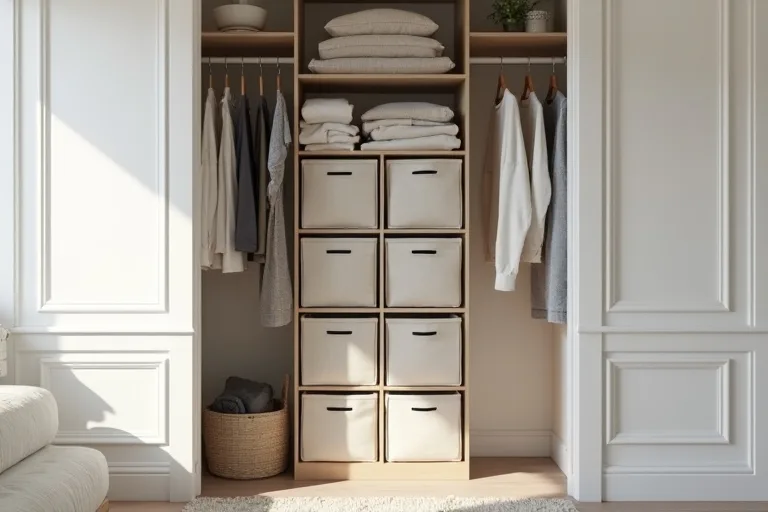
This is where a cube system can help. If you have a closet nook, a wider reach-in closet, or a section of the bedroom that needs flexible storage, an 8 cube storage organizer gives each zone a defined place without requiring a built-in solution. It is especially useful when you want open access but still need a clean visual line.
Choose storage pieces that fit the space
Good closet storage should make items easier to find, not harder. In small closets, open shelving, bins, and hanging organizers each solve different problems, so it helps to decide based on what you store most often.
Use shelves when you want fast access and a clear view of folded items. Use bins when you need to group smaller pieces or make a shelf look tidier. Use hanging storage when the floor is too small for furniture or when you need a lighter solution that does not block the closet.
For a cube unit, fabric inserts are often the most practical choice because they keep smaller items contained without adding visual clutter. A fabric storage bins set for cube organizer works well for accessories, workout wear, seasonal items, and any category that tends to spread out. If you want to map the closet around the storage first, the Room Layout Planner is a useful next step before you commit to a purchase.
Some people also prefer a simple digital planning tool for a smaller room or shared bedroom. The Small Space Furniture Planner, Room Layout Spreadsheet (Digital Download) can help you work out where a storage piece will fit before it arrives.

Keep the system easy to maintain
The best closet setup is the one that still works after a busy week. If putting things away takes too many steps, the closet will slowly drift back into clutter. Make the system obvious: one category per bin, one purpose per shelf, and only as many containers as the closet can handle comfortably.
Labels can help, but they work best when the categories are simple. A label should save time, not force you to overthink where something goes. Clear bins can also help if the contents are easy to recognize, while fabric bins are better when you want a calmer visual result.
It is also worth leaving a little open space. A closet packed completely full is harder to maintain because every item becomes a small effort to return. If you keep some room for overflow, the system stays usable when your routine changes.
Best next step
If your closet is part of a small bedroom, shared room, or tight layout, plan the placement before you buy storage. That usually prevents the most common mistake: choosing a unit that is useful in theory but awkward in the room.
The Styling Homes tools make that next step simpler. Use the room planner to test where storage can go, then decide whether a cube unit, bins, or a lighter shelf-based setup is the better fit.
- Buying storage before measuring shelf depth, hanging height, and floor space.
- Using too many different containers, which makes the closet harder to keep in order.
- Putting daily-use items too high, too low, or too far back.
- Filling every available inch so the closet has no room to function.
- Choosing decorative storage that looks neat but does not match what you actually store.
The smartest closet organization ideas are the simple ones that fit your real layout. Sort what you own, divide the closet into clear zones, and choose storage that supports access instead of fighting the space. For many small closets, an 8 cube storage organizer with fabric bins is a practical, flexible option that keeps things contained without overcomplicating the room.
Helpful next tools and planners
If you want to make the decision easier before you buy
These options are most useful after you have measured the closet and decided how much open, hidden, or flexible storage you actually need.
FAQ
What is the first step in closet organization?
Sort what you keep, then measure the closet so you can choose storage that fits the available space and your daily routine.
Are cube organizers good for closets?
Yes, especially in small closets or bedroom corners where you need flexible storage that keeps items visible and grouped.
Should I use bins or open shelves?
Use bins for smaller items or visual calm, and open shelves when you want quicker access and easier visibility.
How do I stop my closet from getting cluttered again?
Keep categories simple, leave some open space, and make sure daily-use items are the easiest to put away.
Three sensible next steps
Some links in this article may be affiliate links. Read more in the Affiliate Disclosure.