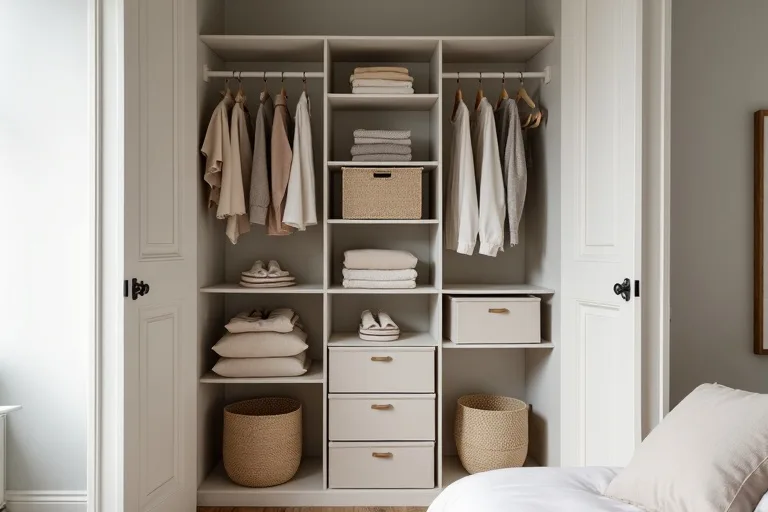
When a closet feels cluttered, the problem is often not the amount you own. It is the way the space is divided. Too many storage types, too many open piles, and too many small decisions can make even a tidy closet look busy.
The calmest closet organization ideas usually start with one simple rule: make the layout easier to read. That means clear zones, fewer containers, and storage that matches the size of the room instead of fighting it.
Use fewer, larger storage zones, matching bins, and clear category-based storage to keep the closet calm and easy to use.
Start with fewer storage types
If a closet feels busy, the first fix is usually subtraction. A simple system with fewer storage types often works better than mixing hooks, baskets, stackable boxes, and open trays all in the same space. Each new organizer adds a visual signal, and the room starts to look crowded even if nothing is overflowing.
Choose one or two main storage methods and let them do the heavy lifting. For many closets, that means a hanging zone for clothing and a cube or shelf zone for folded items, accessories, or off-season pieces. The goal is not to display everything. It is to make it easy to see what belongs where.

If you are deciding between a prettier mix of containers and a simpler setup, choose the simpler setup. A closet usually feels calmer when the eye can follow one clear storage pattern from top to bottom.
Group clothes and accessories by category
A closet gets easier to use when each category has a clear home. That might mean shirts together, trousers together, activewear together, and accessories in one dedicated bin or drawer. The point is to reduce search time and prevent small items from spreading across shelves.
When categories are mixed, clutter tends to spread quietly. You reach for one item, set another aside, and the space starts to feel disorganized again. A category-based layout makes it easier to put things back without thinking too hard.
- Keep daily-use items at eye level or in the most reachable zone.
- Move rarely used items higher up or into labeled bins.
- Reserve open storage for the pieces you actually want to see.
- Use closed storage for small, mixed, or seasonal items.
Use vertical structure without filling every inch
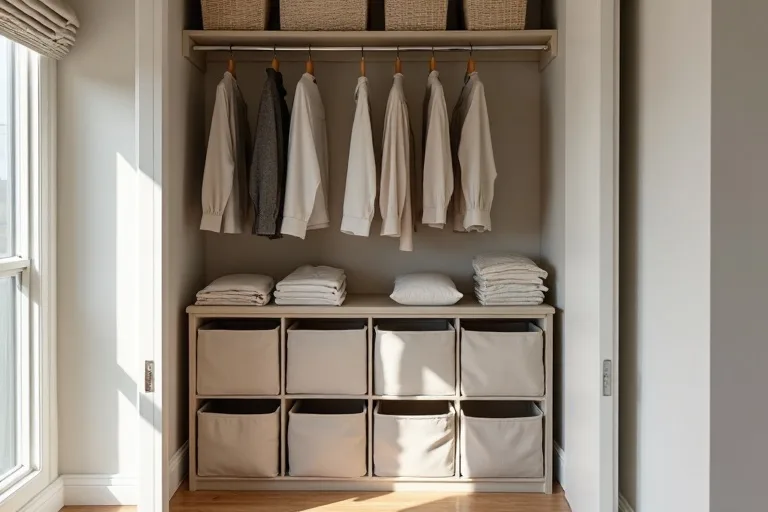
Vertical space is one of the easiest ways to make a small closet more efficient, but it works best when it stays restrained. Tall shelving, stacked cubes, and upper storage can add structure without adding visual noise, as long as the system is not packed wall to wall.
An 8 cube storage organizer can be a useful option when you need a simple frame for folded clothing, bags, or household items. It works best when each cube has a clear purpose and you avoid overfilling every compartment. If the closet is open to view, neutral fabric storage bins set for cube organizer can keep the look quieter than mixed baskets or mismatched boxes.
Before buying, check whether the vertical layout leaves room to open doors, pull bins out easily, and keep one section visually lighter. A closet that is too full in every direction often feels busier than a smaller but more intentional setup.
Choose bins, labels, and a layout that stay calm
The last layer of organization should support the layout, not compete with it. That is why matching bins, simple labels, and a limited color palette usually work better than a collection of decorative containers. The more similar the pieces are, the less the closet has to do visually.
Labels should be easy to read and easy to ignore at a glance. Use them to clarify categories, not to decorate the room. If a label is needed to remember what is inside, the bin is probably doing its job. If you need several labels in one small area, the storage setup may be too granular.

If you are planning a new closet from scratch or adjusting an existing one, it can help to check the layout before you buy. The Room Layout Planner is a good next step if you want to confirm zones, storage placement, and whether a cube unit actually fits the space. For a more detailed planning pass, the Small Space Furniture Planner, Room Layout Spreadsheet (Digital Download) can help you map the room before you commit to any organizer.
Best next step
Before you add baskets or bins, map the closet layout first. A simple plan makes it easier to see where hanging space, folded storage, and vertical storage should go, and it helps you avoid buying organizers that only look right in the cart.
- Using too many different storage containers in one closet
- Leaving small accessories loose on shelves instead of giving them one home
- Filling every vertical inch, which makes the closet harder to read
- Choosing bins before checking the actual space and door clearance
- Keeping open storage for items that look messy when exposed
The calmest closet organization ideas are usually the simplest ones: fewer storage types, clear categories, and a layout that fits the room. If you plan the zones first, then choose a cube organizer or bins that match the space, the closet will feel more orderly without looking busy.
Helpful next tools and planners
If you want to make the decision easier before you buy
A simple organizer can help, but the best results usually come from checking the layout first. These options are useful when you want to compare fit, storage capacity, and placement before committing.
FAQ
What makes a closet look cluttered even when it is organized?
Usually it is too many storage styles, too many visible items, or categories that are spread across multiple spots. A simpler layout with fewer visual interruptions often looks calmer right away.
Should I use open bins or closed bins in a small closet?
Use open storage for items you reach for often and closed bins for mixed, seasonal, or visually busy items. Closed bins are usually better when the closet is visible from the room.
Is an 8 cube storage organizer too much for a small closet?
Not necessarily. It depends on the width, depth, and how much clearance you need. It can be a practical fit if the layout is checked first and each cube has a clear purpose.
What should I do before buying closet organizers?
Measure the available width, height, and door swing, then decide which categories need hanging, folded, or hidden storage. Planning first helps you avoid buying pieces that make the space feel more crowded.
Three sensible next steps
Some links in this article may be affiliate links. Read more in the Affiliate Disclosure.