
Coastal interior design works best when it feels settled, not styled for a theme. Before you buy the pieces that catch your eye, it helps to check whether the room can actually support that look in a practical way.
This checklist keeps the decision simple: confirm the room plan, scale, and finish balance first, then choose the pieces that support the space instead of competing with it.
Check the room plan, scale, and finish balance first, then buy the signature pieces. Coastal style should feel light, calm, and usable in everyday life, not crowded with obvious seaside decor.
What coastal style should feel like in a real home
Good coastal design is usually quieter than people expect. In a lived-in home, it is less about shells, anchors, and obvious blue accents, and more about light, softness, and easy movement through the room. The right pieces should support that feeling without making the space feel overly themed.
Start by asking what the room needs to do. A living room may need comfortable seating, a clear coffee table zone, and a wall arrangement that feels balanced from the main entry point. If the room already feels busy, coastal styling should simplify it rather than add more visual noise.

If you would remove a piece the moment the room feels cluttered, it is probably decorative, not essential. The best coastal signature pieces are the ones that help the room feel finished while still leaving the space open and easy to use.
Check room layout and natural light first
Coastal style depends a lot on how light moves through the room. A bright room can carry softer contrast and cooler accents more easily, while a darker room usually needs warmer neutrals, clearer contrast, and simpler shapes so the space does not flatten out.
Before you shop, walk the room and note the main sightlines. Where do you enter, where does your eye land first, and which wall actually has enough visual weight for art or a focal piece? Signature items only work well when they fit the room’s natural rhythm.
- Identify the main seating area or focal zone.
- Check where daylight lands during the day.
- Measure the wall or surface that will hold the signature piece.
- Confirm that walking paths stay open.
- Choose only one or two focal moments for the room.

Confirm color balance, scale, and texture
Once the layout makes sense, check whether the room has the right balance of color and texture. Coastal interiors usually work best with a restrained base, such as soft white, sand, beige, pale gray, or muted blue, but the exact mix should suit the room rather than a trend.
Scale matters just as much as color. A large sofa can make delicate accessories disappear, while oversized decor can overpower a smaller room. The easiest way to avoid that mistake is to compare each new piece against the biggest items already in the room, then make sure the proportions still feel calm.
Texture is where coastal style often feels natural instead of staged. Linen, light wood, woven finishes, stone-like surfaces, and matte decor can add depth without needing extra color. If the room already has enough texture in rugs, cushions, or window treatments, keep the signature pieces simple.
Do not buy a piece just because it looks coastal on its own. Ask whether it works with your sofa size, wall width, and the amount of texture already in the room. If the answer is no, the item is probably too small, too bold, or too themed.
Choose signature pieces that finish the room
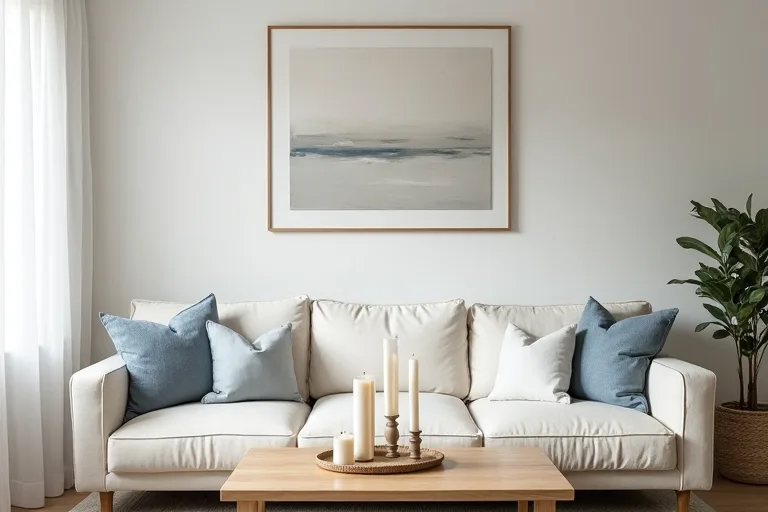
Signature pieces are most useful when they solve a real styling gap. In a coastal room, that might be a framed art set over the sofa, a pair of simple candle holders on the coffee table, or a planner tool that helps you confirm the room direction before you spend more.
For a finishing layer, neutral abstract wall art framed set works well when you want the room to feel complete without leaning too literal. A modern candle holders set can add a clean, quiet detail on a side table or coffee table, especially when the room already has enough softness and you just need one crisp accent.
If you are still unsure about the overall direction, a planning tool can be more useful than another decor purchase. The goal is to buy less, but with more confidence.
Best next step
If the room still feels uncertain, use a planning tool before you buy the signature pieces. That gives you a clearer read on layout, proportions, and whether the coastal direction suits the space you actually have.
- Buying coastal decor before checking whether the room has enough light and open space.
- Using too many themed objects, which can make the room feel staged instead of calm.
- Choosing art, rugs, or accessories that are too small for the wall or furniture they need to support.
- Ignoring undertones, so the whites, woods, and blues fight each other instead of working together.
- Adding texture everywhere at once, which can create visual clutter rather than softness.
Coastal style is easier to get right when you start with the room plan, then choose pieces that support it. If the layout works, the proportions are right, and the finishes feel balanced, the room only needs a few well-chosen signature items to feel finished.
Helpful next tools and planners
If you want to make the decision easier before you buy
Use a planning tool first, then keep shopping focused. If you already know the room direction, a few restrained finishing pieces can help bring it together without overcomplicating the space.
FAQ
How do I know if coastal style fits my room?
Look at the natural light, room size, and existing finishes. If the room already feels open and you can keep the palette restrained, coastal style usually works well.
What should I buy first for a coastal room?
Start with the biggest decision points: sofa, rug, wall art placement, and the main color direction. Smaller decor should come after those are settled.
Can coastal style work in a small room?
Yes, as long as you keep the palette light, the furniture scaled correctly, and the decor limited. Small rooms usually benefit from fewer, better-chosen pieces.
How much coastal decor is too much?
When the room starts to feel themed instead of practical, it is usually too much. One or two clear coastal references are often enough.
Three sensible next steps
Some links in this article may be affiliate links. Read more in the Affiliate Disclosure.