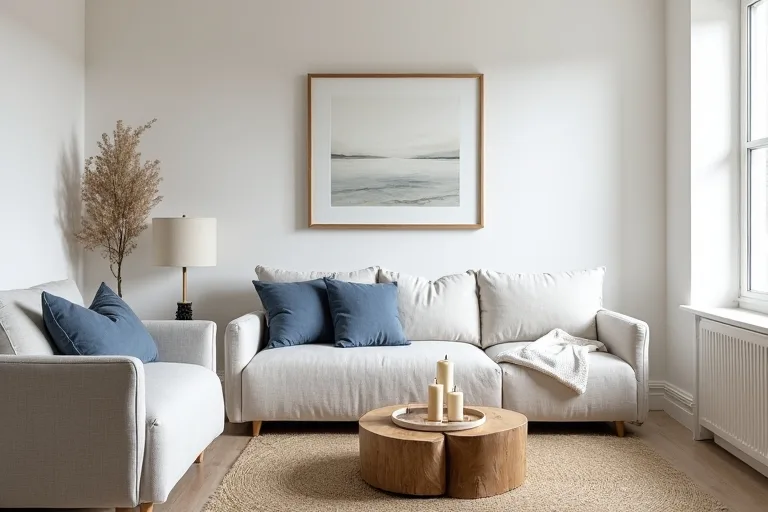
Coastal interior design is one of the easiest styles to get wrong for the same reason it is so appealing: it looks simple. When the balance is off, a room can slide into theme territory fast, with too much blue, too many shells, or furniture that feels more decorative than usable.
The better approach is calmer and more practical. Think light, relaxed, and open first. Then choose materials, furniture shapes, and finishing touches that support the way the room actually works.
Coastal style uses light colors, relaxed textures, and simple natural materials to make a room feel calm and airy. The best version of it is not beach-themed; it is practical, bright, and easy to live with.
What coastal interior design style really means
At its core, coastal interior design is about lightness, ease, and a room that feels connected to fresh air and natural surroundings. It often borrows from seaside homes, but you do not need a water view to use it well. The style works best when it feels understated rather than decorative.
The most useful way to think about coastal style is as a combination of visual clarity and soft texture. Walls are usually light. Furniture tends to have simple shapes. Materials look natural or natural-adjacent, such as wood, linen, rattan, jute, or stone. The effect should be relaxed, not over-styled.
That is why coastal style pairs well with practical room planning. If the layout feels tight or cluttered, the style loses its calm. If you want to compare it with related looks, the design styles hub is a useful place to start.
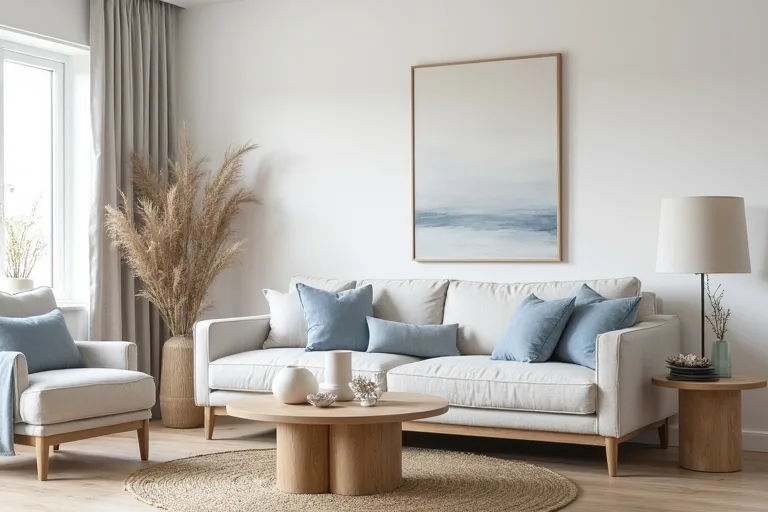
If the room only looks coastal when you add a few obvious seaside objects, the style is probably too literal. If it still feels calm when those items are removed, the foundation is stronger. The real decision is not whether a room has enough beach references. It is whether the space has enough light, breathing room, and simple materials to feel comfortable every day.
Colors, materials, and layout cues that make it work
Most coastal rooms start with a restrained palette. White, warm off-white, sand, oatmeal, pale grey, muted blue, and soft green all work well when they are used as a backdrop rather than the main event. You do not need strong contrast for the room to feel finished.
Materials matter just as much as color. Coastal style feels more believable when the finishes look tactile and natural. Try to mix a few of these rather than leaning on one material alone:
- Painted or limewashed walls in a light, calm tone
- Natural wood in pale or medium finishes
- Linen or cotton upholstery
- Jute, sisal, or wool rugs
- Glass, ceramic, or stone accessories
Layout is part of the style too. Coastal rooms often feel open because they are not crowded. Leave enough space around larger furniture pieces so the room can breathe. A sofa with visible floor space around it will usually feel more coastal than a room packed with small decorative items.
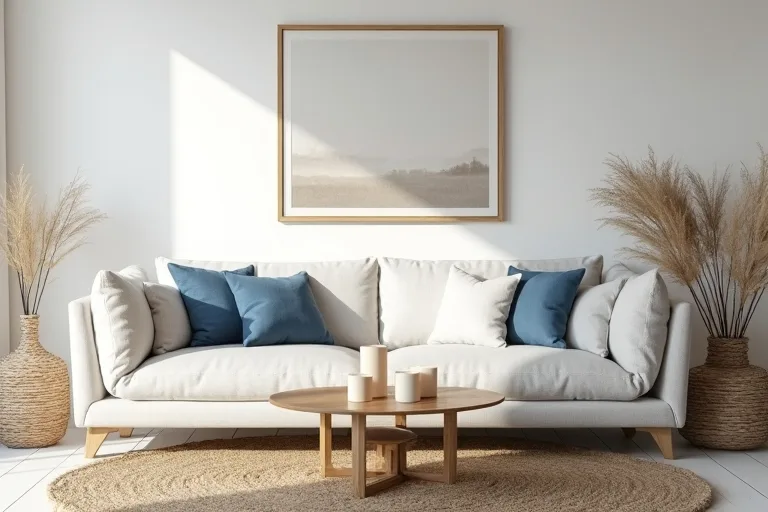
If you are planning from scratch, tools that clarify size and flow can help before you shop. A Room Layout Planner is especially useful when you want the room to feel open rather than crowded.
How to keep coastal style calm, not themed
The line between calm and themed is usually about restraint. Many coastal rooms become too literal when every object points to the same idea: anchors, shells, ropes, striped cushions, and blue accents all at once. That can make the room feel busy, even if the palette is light.
A better approach is to choose one or two subtle signals and let the rest of the room stay simple. For example, a linen sofa, a pale oak coffee table, and a natural rug already carry a coastal feeling. You may only need one or two accents to finish the room.
When in doubt, use this order of decisions:
- Set the layout so the room has clear circulation and usable furniture spacing.
- Choose the largest pieces in light, simple shapes.
- Bring in natural texture through rugs, curtains, and cushions.
- Add a small amount of muted color, usually through art or ceramics.
- Finish with a few clean accessories instead of many small ones.
That is also where styling details can do useful work. A framed neutral abstract wall art set can give a coastal room a softer, more edited finish without making it feel obvious. A pair of modern candle holders on a coffee table can add shape and scale while keeping the surface quiet.
Good coastal styling should help the room feel easier to use. If you need support before buying, the Home Style Quiz can help you check whether this direction really suits the rest of your home.
Room-by-room coastal styling that feels practical
Coastal style can work in almost any room, but the priorities change depending on how the space is used. In a living room, keep seating comfortable and low-fuss. In a bedroom, focus on calm layers and softer contrast. In a kitchen or dining space, use the style through light finishes, simple tableware, and clean surfaces rather than themed decor.
For outdoor living, coastal style often feels most natural because the connection to fresh air and informal use is already there. That makes outdoor living a helpful next step if you want your indoor and outdoor spaces to feel connected without copying the same furniture or accessories everywhere.
Here is the simplest way to adapt the style by room:
Living room: keep the main furniture quiet, use a textured rug, and avoid filling every surface.
Bedroom: choose soft bedding, light curtains, and a limited palette so the room still feels restful at night.
Kitchen and dining: lean on pale wood, ceramic, and easy-to-clean finishes instead of decorative clutter.
Outdoor areas: repeat the same relaxed palette with weather-appropriate materials and comfortable seating.
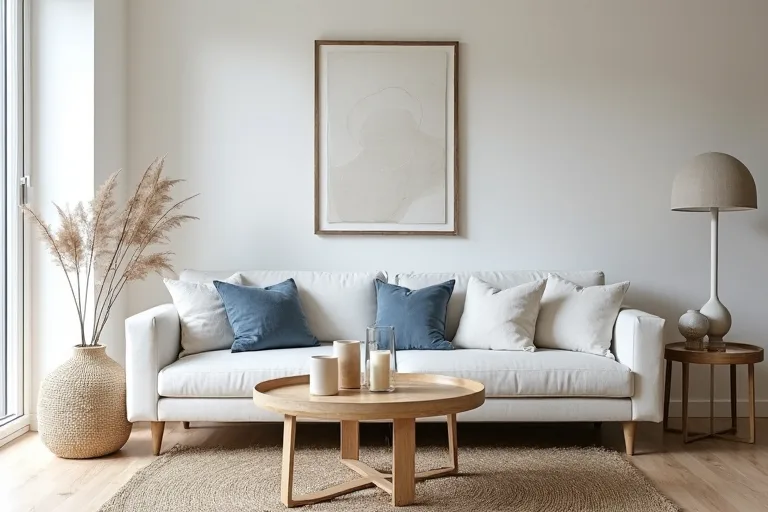
If you are still deciding on purchases, it is usually smarter to settle the layout and scale first, then buy the pieces that support that plan.
Best next step
If you want coastal style to feel calm in your own home, start with the room plan before you shop. That will help you avoid buying pieces that look right individually but do not work together in the space.
- Using too many blue accents and turning the room into a theme
- Choosing decorative items before the layout is settled
- Mixing too many finishes, which makes the room feel busy
- Forgetting texture and ending up with a flat, plain space
- Buying oversized furniture that removes the open feeling coastal style needs
Coastal interior design works best when it is treated as a planning decision, not a decorating theme. Start with light, open layout choices, keep the palette soft, and add texture with restraint. If the room feels calm before the accessories go in, you are on the right track.
Helpful next tools and planners
If you want to make the decision easier before you buy
A few practical tools and finishing pieces can help you move from idea to room plan without overbuying. These are best used after you have the layout and style direction clear.
FAQ
Is coastal style the same as beach style?
Not exactly. Coastal style is usually softer and more restrained, with fewer literal seaside references. Beach style can lean more decorative and thematic.
What colors work best in a coastal room?
Light neutrals, warm whites, sand tones, pale wood shades, muted blue, and soft green all work well when the goal is a calm, airy room.
Can coastal style work in a small room?
Yes. In fact, it often suits small rooms because the light palette and simpler forms can make the space feel less crowded.
What is the easiest way to make a room feel coastal without redecorating everything?
Start with one calm textile change, one natural material, and one simple wall or coffee table accent. Then remove anything that feels overly busy.
Three sensible next steps
Some links in this article may be affiliate links. Read more in the Affiliate Disclosure.