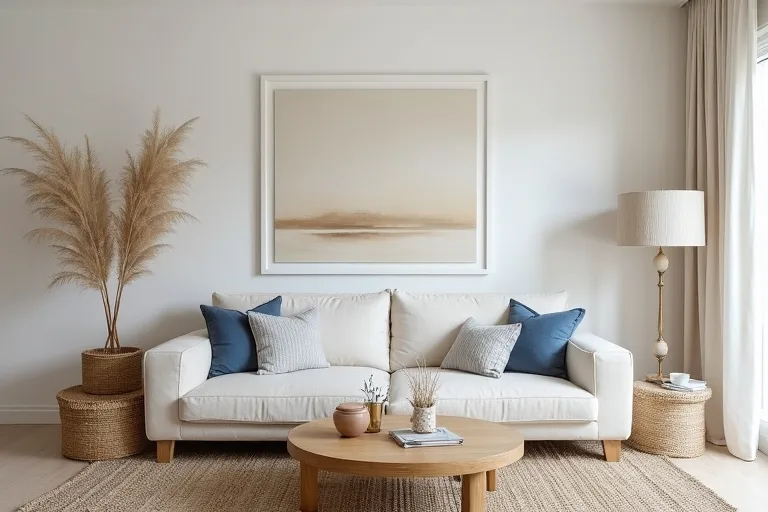
Coastal interiors work best when they feel easy to live with, not decorated to prove a theme. The look should support light, space, and calm movement through the room.
If you start with layout and comfort first, the style becomes much simpler to edit. You can still get the relaxed coastal feeling without filling the room with shells, stripes, or obvious beach references.
Use light colors, natural textures, simple shapes, and enough clear space for everyday use. Coastal style feels best when it looks relaxed and practical, with a few well-chosen details instead of lots of decorative objects.
What coastal style really means in a real home
Coastal interior design is often misunderstood as a decorative theme. In practice, it is more about atmosphere than motif. The room should feel bright, breathable, and easy to use, with surfaces and furniture that make sense for daily life.
The strongest versions of coastal style usually avoid anything too literal. Instead of leaning on anchors, ropes, or heavy nautical patterns, they use a quieter combination of soft neutrals, weathered wood, linen, woven textures, and a restrained amount of color. That gives the room the same relaxed feeling without making it look staged.
The most useful way to think about the style is this: coastal should make a room feel lighter, not emptier. It should reduce visual noise, not create more of it. That means every piece has to earn its place, especially in living areas where people sit, move, store things, and gather.
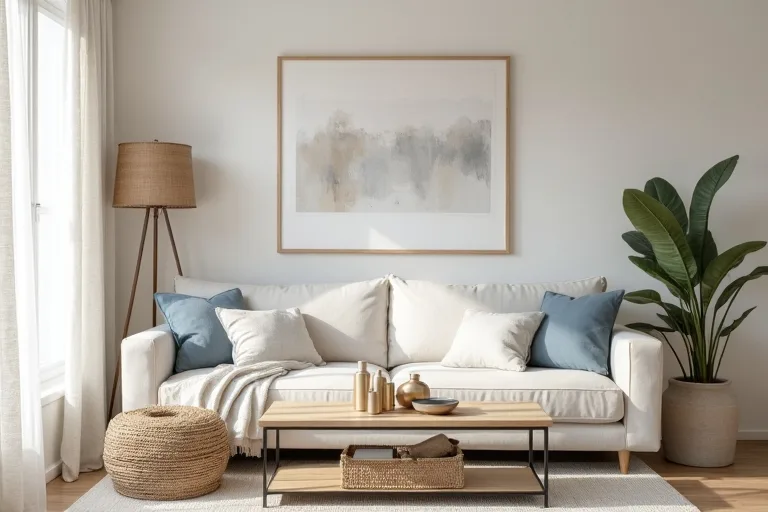
If you removed the blue accents tomorrow, would the room still feel calm and finished? If the answer is no, the space may be relying too heavily on theme pieces instead of the actual design basics.
The palette, materials, and furniture shapes that make coastal style work
A coastal room usually starts with a restrained base. White, ivory, sand, oat, pale gray, and soft wood tones give the room a quiet backdrop. From there, you can add small amounts of muted blue, green, or charcoal for balance. The safest approach is to keep the strongest color lowest in volume, so the room still feels restful.
Materials matter just as much as color. Linen, cotton, light oak, rattan, seagrass, jute, and matte ceramics all work well because they add texture without heaviness. A room with too many glossy or overly polished surfaces can lose the relaxed feeling quickly.
Furniture shapes should stay simple. Think clean arms, soft edges, visible legs where possible, and proportions that allow the room to breathe. A bulky sofa, oversized coffee table, or crowded arrangement can fight the coastal look even if the color palette is correct.
These steps help keep the style grounded:
- Choose a light base color before you add accents.
- Use one or two natural textures repeatedly instead of many competing ones.
- Keep furniture shapes simple and open.
- Limit strong blue to details that are easy to change later.
How to keep coastal style comfortable and functional
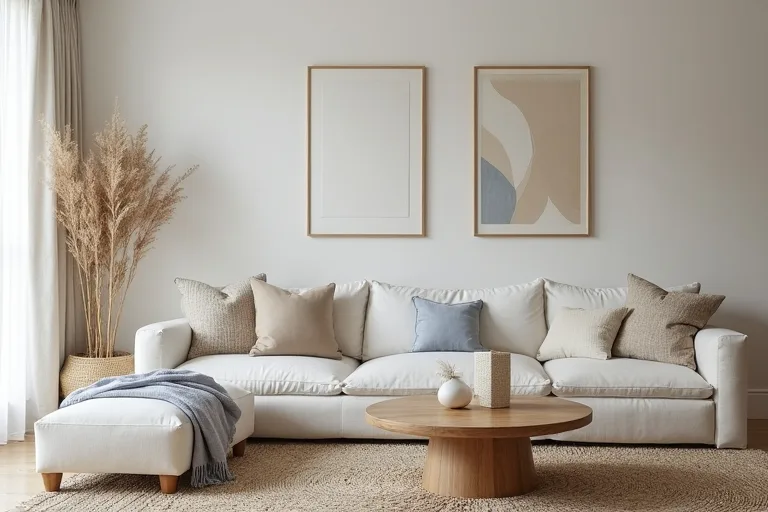
The best coastal rooms still work like normal rooms. That means there needs to be enough walking space, enough landing space, and enough storage for the things that belong there. If the room feels pretty but awkward, the style is not doing its job.
Start with the layout before adding accessories. A sofa that blocks circulation or a coffee table that is too large for the open space will make the room feel crowded no matter how light the palette is. Coastal style tends to look best when there is a clear path through the room and a sense of visual pause around the furniture.
Storage is also important. Baskets, closed cabinets, sideboards, and ottomans can keep everyday clutter under control without making the room feel hard-edged. Coastal does not have to mean fragile. In fact, the most livable versions are often the ones with the smartest hidden storage.
Comfort comes from the details people actually use. That includes cushions that support sitting, lighting that works in the evening, and surfaces that can handle drinks, books, and daily objects. If the room only looks good in photos, it is probably overstyled.
Before you buy anything new, check scale, traffic flow, and where you will place the items you use every day. A room layout planner or style quiz can prevent the common mistake of choosing decor that fits the mood but not the room.
Finishing touches that feel coastal without adding clutter
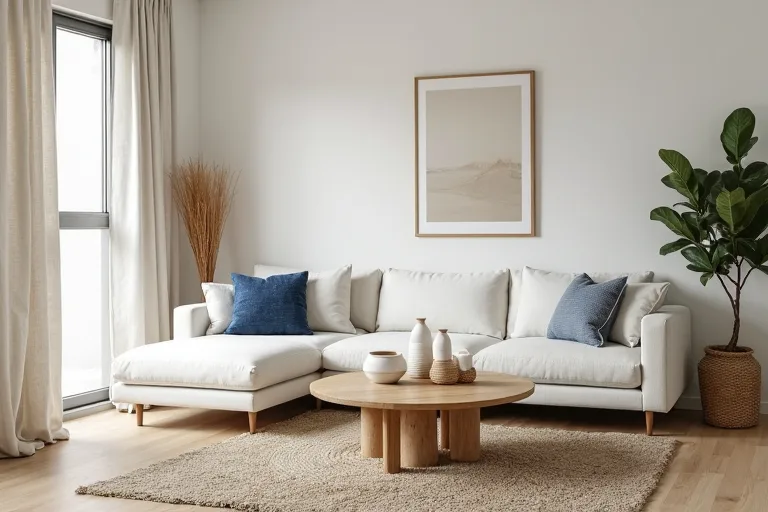
This is where many rooms go wrong. A few finishing touches are enough; more than that can quickly turn a calm room into a theme room. The goal is to add softness, depth, and warmth without making every surface feel occupied.
Framed neutral abstract wall art is a good example of a finishing piece that supports the style without taking over the room. It adds shape and balance while keeping the palette quiet. Modern candle holders can do something similar on a shelf, sideboard, or coffee table: they give the room a finished look without needing a lot of visual weight.
If you want a simple test, look at the room from the doorway. You should notice light, texture, and clear form before you notice objects. That usually means you have enough decor and not too much.
A few restrained accents can make the room feel complete:
• one soft blue element repeated in more than one place
• one woven basket or natural fiber object per zone
• one framed artwork grouping instead of many small pieces
• one or two candle holders, not a full collection
For readers who like to stay organized while planning a room update, a digital home planning system can also help you track layout ideas, purchase decisions, and room priorities before buying decor. That is especially useful when you are trying to keep the style calm and the budget under control.
Best next step
If you are still deciding what belongs in the room, start with the layout rather than the shopping list. A simple planning tool or style quiz can help you confirm scale, flow, and whether coastal details actually suit the space you have.
- Using too much blue and calling it coastal.
- Buying decor before checking layout and scale.
- Mixing too many textures, which makes the room feel busy.
- Choosing furniture that is bulky or visually heavy.
- Leaving no storage plan, so the room fills up with visible clutter.
- Adding themed objects instead of finishing the room with shape, light, and texture.
Coastal interior design works best when it stays calm, light, and practical. Build the room around layout, comfort, and simple materials first, then add only the details that support the space. If the room feels easy to use and easy to keep clear, the style is probably right.
Helpful next tools and planners
If you want to make the decision easier before you buy
These are useful when you want to finish a coastal room without overdecorating or second-guessing the scale of what you add.
FAQ
How do I make coastal style feel less themed?
Use fewer literal beach references and focus on light neutrals, natural textures, and simple furniture shapes. The less obvious the decor, the more timeless the room feels.
What colors work best in a coastal room?
Start with white, ivory, sand, pale gray, and warm wood tones, then add small amounts of muted blue or green if you want contrast.
Can coastal style work in a small space?
Yes. It can work very well in small rooms if you keep the palette light, avoid bulky furniture, and leave enough open space for movement.
What should I buy first for a coastal update?
Start with the pieces that affect comfort and flow: the main seating, lighting, and storage. After that, add only a few finishing items that suit the room’s scale.
Three sensible next steps
Some links in this article may be affiliate links. Read more in the Affiliate Disclosure.