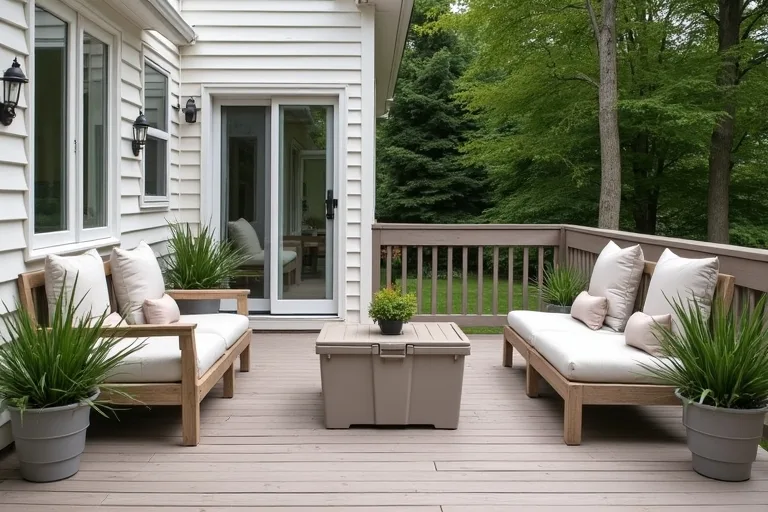
When a deck feels a little bare, the instinct is usually to add more decor. In practice, the better starting point is often much simpler: look at the layout, the storage, and the few pieces that shape how the space reads at a glance.
That is why budget deck decorating ideas can work well, but only when they support the overall plan. A deck usually feels more finished when it has clear zones, less visible clutter, and one or two styling anchors that hold the whole space together.
Start with layout, storage, and one or two strong styling pieces; that gives a deck a finished look without overspending.
What makes a deck feel unfinished
A deck usually looks unfinished for a few practical reasons, not because it lacks enough decor. The most common issues are visible clutter, mismatched pieces, too many small items, and a layout that does not clearly define where people should sit, set things down, or move through the space.
If chairs are floating without purpose or supplies are left out in view, the deck can feel temporary even when the individual pieces are fine. The same is true when cushions, pots, and accessories all compete for attention instead of working as one simple group.
One of the easiest ways to improve the look is to begin with the backdrop. A modest deck with clean sight lines, a comfortable seating arrangement, and one obvious place for storage feels calmer right away. After that, decor can do a better job because it is supporting a decision, not trying to fix one.
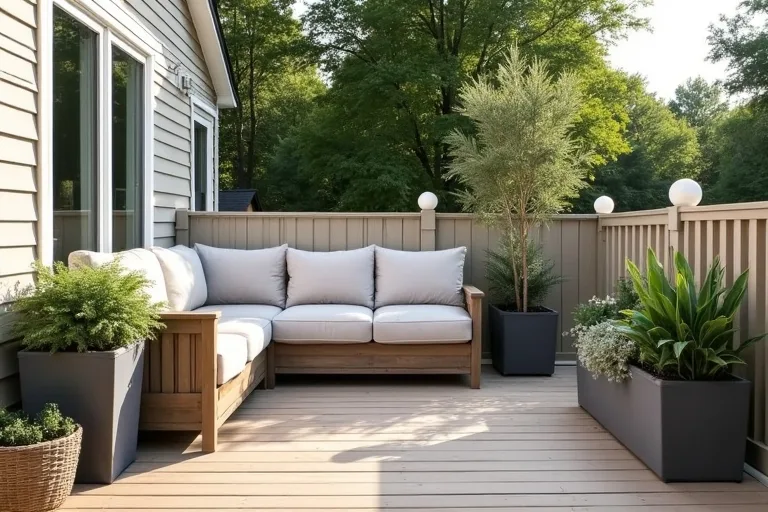
If you removed every cushion, lantern, and decorative object, would the deck still feel organized? If the answer is no, the real problem is usually layout or storage, not styling. Fix that first, then add decor only where it changes the view or the way the space functions.
The lowest-cost upgrades that change the whole space
Some of the best budget deck decorating ideas are not really decor at all. They are small, visible improvements that make the deck easier to use and easier to keep tidy. Those changes tend to have more impact than buying several inexpensive accessories.
- Give clutter a home with closed storage.
- Use one or two larger planters instead of many small ones.
- Choose cushions and textiles in the same few tones.
- Keep surfaces mostly clear so the deck reads as intentional.
A waterproof deck storage box is especially useful when outdoor items have no natural place to go. It can hide cushions, garden tools, toys, or small seasonal pieces while doubling as a side table or extra perch. That kind of piece earns its place because it solves more than one problem.
Likewise, a large outdoor planters set can do a lot of visual work. Bigger planters create structure, frame a seating zone, and make the deck feel grounded. They are often a better investment than several smaller decor pieces that disappear visually and create more fuss than style.
Budget decor versus more collected pieces
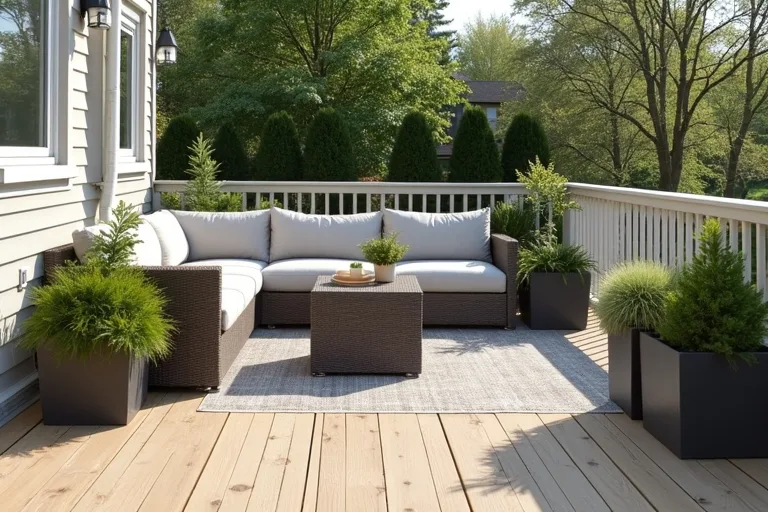
Budget decor is not a problem when it is used with restraint. The trouble starts when every item is chosen separately and nothing repeats. A collected look usually comes from a few simple decisions made on purpose: repeating materials, limiting colors, and choosing larger pieces that visually belong together.
Here is a practical way to think about the tradeoff:
Budget approach: smaller purchases, more variety, and faster setup. This can work well if the deck is already organized and only needs a light refresh.
More finished approach: fewer but stronger pieces, a tighter palette, and less visible clutter. This usually costs a little more upfront, but it tends to look calmer and stay usable for longer.
If your deck already has good bones, you may only need one or two upgrades to make it feel finished. If it still feels temporary or crowded, spending on accessories first usually leads to disappointment. In that case, a better storage piece or a pair of larger planters may make more sense than another round of small decor.
How to choose a simple palette and layout
A finished deck is rarely about having more. It is usually about having fewer decisions made better. Start with one neutral base, then add one accent material or color that repeats in at least three places. That might be wood, black metal, soft gray, warm beige, or muted green.
For layout, keep the circulation path easy and let the main seating area feel anchored. A side table, a storage box, and a pair of larger planters can define the space without crowding it. If the deck is small, the safest move is to choose pieces that do more than one job and avoid accessories that only add visual noise.
This is also where a planning tool can help. If you are unsure how the deck should work before you start shopping, the Room Layout Planner can help you think through placement first, and the Home Style Quiz can give you a clearer style direction before you buy anything that does not fit the rest of the house.
For more outdoor planning ideas, the Outdoor Living hub is a useful place to continue once you know the deck’s function and style direction.
Best next step
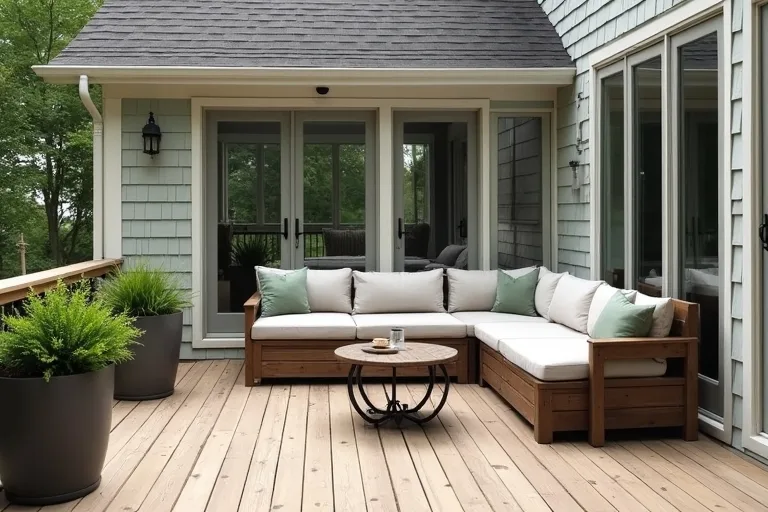
If you want the deck to look more finished without wasting money, decide the layout and style direction before you shop. That usually keeps the project smaller, calmer, and easier to complete.
- Buying small decor before the deck has a clear layout.
- Using too many colors, materials, or accessory styles at once.
- Leaving storage visible when it could be hidden in a simple deck box.
- Choosing several low-impact items instead of one or two stronger anchors.
- Ignoring scale, so the deck ends up with pieces that feel scattered.
A budget deck can look good, but it usually looks best when the money goes into the parts that shape the space first. Start with storage, layout, and scale. Then add one or two larger styling pieces, such as a large outdoor planters set or a waterproof deck storage box, so the deck feels settled instead of pieced together.
Helpful next tools and planners
If you want to make the decision easier before you buy
These are practical next steps if you want to plan the deck more clearly before choosing decor. The goal is to reduce guesswork, not to add more shopping.
FAQ
How do I make a deck look finished on a budget?
Focus on layout, hidden storage, and one or two larger pieces that define the space. That usually works better than buying lots of small decor items.
What is the best first upgrade for an unfinished deck?
Usually storage or seating placement. Once the deck feels organized, styling choices become much easier to judge.
Are large planters worth it on a small deck?
Often yes, because they can anchor the space and reduce the need for many smaller accessories. Choose them only if they still leave enough room to move around comfortably.
Should I buy decor before planning the layout?
It is better to plan the layout first. Otherwise, even good-looking items can feel random or crowded once they are placed on the deck.
Three sensible next steps
Some links in this article may be affiliate links. Read more in the Affiliate Disclosure.