
Dining chairs are easy to choose for looks and much harder to choose for fit. A chair can look balanced in a product photo and still make a real room feel tight, awkward, or uncomfortable once people sit down and pull their chairs out.
The safest approach is to plan the table and chair arrangement as one system. Measure the room, check the walking space around the table, and then choose chairs that leave enough clearance for everyday use rather than just occasional entertaining.
Measure clearance first, then choose chairs that fit the table and leave enough space to sit and move comfortably. If the room is small, right-size the table before you buy chairs, and use the dining table size calculator to confirm the layout will work.
Start with table size and clearance, not chair style
The most common mistake is choosing chairs before checking how much room the table really has. A set that looks neat in a showroom can crowd a smaller dining area once you factor in chair backs, pulled-out seats, and the path people use to walk around the table.
Think in terms of movement, not just furniture dimensions. You need enough space for a chair to move back, a person to sit down, and someone else to pass without turning the room into a squeeze.
In a modest room, the table often matters more than the chair design. If the table is too large, even slim chairs can feel cramped. If the table is sized properly, many chair styles become easier to live with.
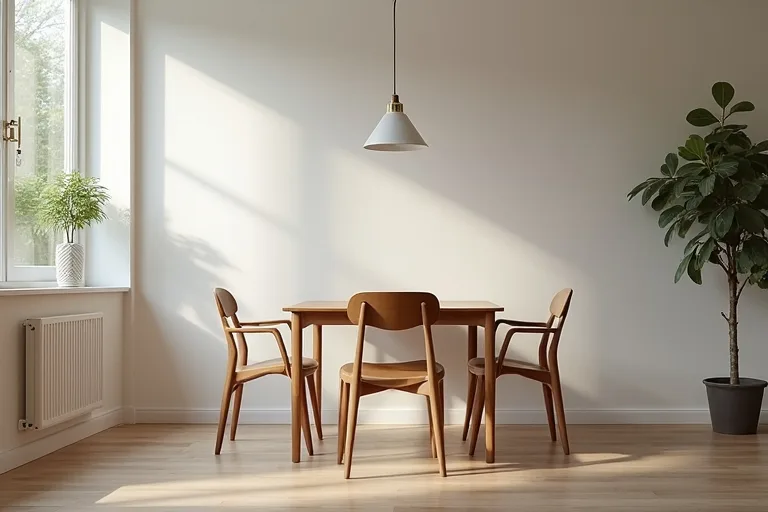
The real decision is not whether the chairs look good on their own. It is whether the full setup leaves enough clearance for sitting, standing, and walking through the room without forcing people to edge sideways.
Watch chair width, armrests, and seat depth
Dining chairs can create problems even when the table size is reasonable. Wider seats, bulky arms, and deep cushions can make a dining area feel much tighter than expected, especially when four chairs must fit around a smaller table.
If you want a cleaner fit, compare chair dimensions with the usable table perimeter, then think about how the chairs will be used day to day. A chair that tucks in neatly is usually easier to live with than one that looks attractive but sticks out into the walkway.

- Check the chair width, not only the seat width.
- Look at armrests if the chairs need to slide under the table.
- Consider seat depth so the chair supports comfort without taking over the room.
- Leave room for pulling the chair back without hitting a wall or nearby furniture.
Do not overload a small dining area with too many seats
Adding extra chairs can feel practical, but in a compact room it often backfires. Too many seats make the dining zone feel crowded all the time, even when nobody is using them.
A better approach is to choose the number of chairs the room can support comfortably, then make sure the table size and circulation space match that decision. If you are deciding between a full seating set and a lighter layout, the room usually feels calmer when there is a little breathing room left over.
This is where planning can save money. A slightly smaller table and fewer, better-fitting chairs may give you a room that is easier to use every day. If you are still early in the process, the Kitchen & Dining hub can help you compare layout-friendly options before you buy.
Comfort depends on height, cushion shape, and table fit
Even a well-sized chair can feel wrong if the seat height is off or the cushion shape puts the body in an awkward position. Comfort is not only about softness. It also depends on how the chair works with the table height and how easy it is to sit for a full meal.
At the simplest level, the chair should support a relaxed sitting position without forcing shoulders up or knees too close to the underside of the table. If people are constantly adjusting their position, the layout is doing less work than it should.
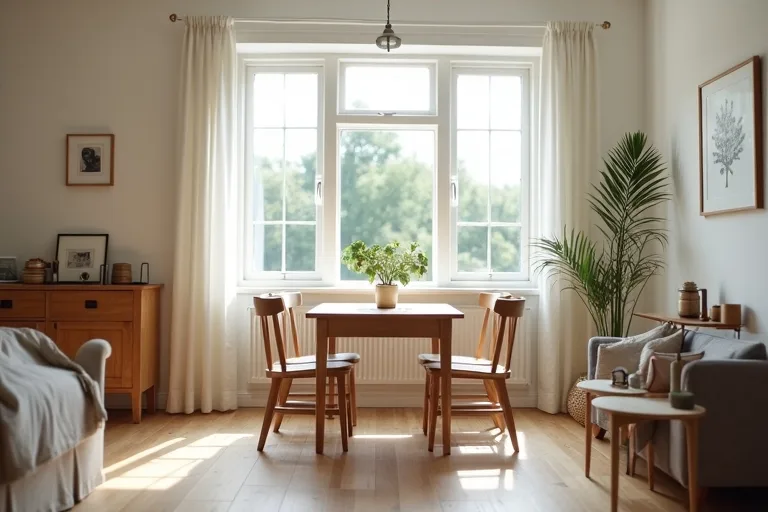
If you need a softer seat, upholstered chairs can be a practical choice, but only if they still fit the space. A set of upholstered dining chairs can work well when you already know the room has enough clearance. If your dining area is tight, a more compact chair profile may be the safer option.
Best next step
Before you place an order, check the room from table edge to wall, and confirm how much pull-out space the chairs need. That one step prevents most of the crowding mistakes people make when they shop by style first.
The quickest way to do that is to test the layout with a sizing tool and then compare it to a simple room plan. If the table is too large for the space, right-size it first; if the room is workable, choose the chair style that fits the measured clearance.
- Buying chairs before checking the table-to-wall clearance.
- Choosing wide or armed chairs that cannot tuck in cleanly.
- Filling a small room with more seats than the circulation space can support.
- Ignoring seat height and comfort, then ending up with chairs nobody wants to use for long meals.
- Using style as the main filter instead of fit, movement, and daily practicality.
The best dining chair setup is the one that fits the room without making people work around it. Start with table size, then check chair width, clearance, and comfort together. If the room is small, a slightly smaller table and fewer, better-fitting chairs usually create a calmer result than trying to force in a full set.
Helpful next tools and planners
If you want to make the decision easier before you buy
These links are useful when you want to move from general ideas to a layout that actually fits your room. Start with the sizing tool, then use a simple planner if you are balancing the dining area with other furniture or a tight budget.
FAQ
How much space should I leave around dining chairs?
Enough space for the chair to pull out, for someone to sit comfortably, and for another person to pass if the room needs that circulation. The exact fit depends on the room, which is why measuring the layout matters before buying.
Are chairs with arms a bad idea for small dining rooms?
Not always, but they take up more visual and physical space. If the room is tight, armless chairs or slimmer arm profiles are often easier to place.
Should I buy chairs or a table first?
In most small or awkward rooms, the table should be sized first because it controls the overall clearance. Once the table fit is clear, chair choice becomes much simpler.
What if I want comfort and a lighter look?
Look for a chair with a comfortable seat and a compact frame. Upholstered chairs can work well, but only if the room still has enough breathing room after they are placed.
Three sensible next steps
Some links in this article may be affiliate links. Read more in the Affiliate Disclosure.