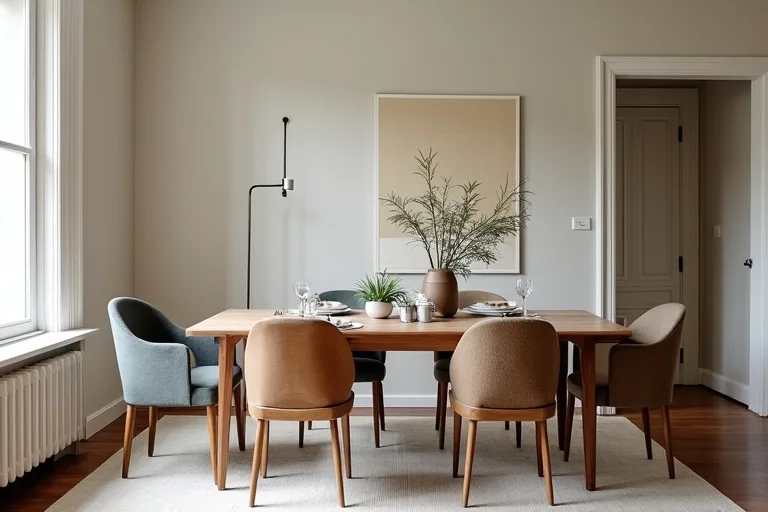
Choosing dining chairs is easier when you treat it as a room-planning decision first and a style choice second. The chair has to work with the table, allow enough clearance to sit comfortably, and still leave the room easy to move through.
If you start with the layout, the rest becomes much simpler. Once the spacing works, you can narrow the options by comfort, finish, and how formal or relaxed you want the room to feel.
Choose dining chairs by measuring clearance, seat height, and how much space each chair needs to pull out comfortably. Then decide whether your room works best with slim wood chairs, upholstered chairs, or a mixed set that balances comfort with easier movement.
Start with the chair style that suits the room
The best dining chair ideas usually begin with the room itself. In a compact dining area, a lighter-looking chair with a simple frame can keep the space from feeling crowded. In a larger room, upholstered chairs, armchairs at the ends, or a fuller back shape can help the table feel anchored.
Think about the everyday use of the space. If the dining table is used for meals, homework, and occasional work-from-home sessions, comfort matters more than a purely decorative silhouette. If the room is mostly used for quick meals, a cleaner and more compact chair may make the space easier to live with.
One of the most practical ways to refine your choice is to compare the chair against the table rather than shopping chair by chair in isolation. A chair that looks good on its own can still feel too bulky once it is placed around a real table.

If you want to size the room before you shop, the dining table size calculator is the most useful next step. It helps you confirm whether the table and chairs can work together without squeezing the walkway.
The real decision is not just which chair looks best. It is whether the chair height, width, and pull-out space still leave a comfortable path around the table once the room is in use.
Measure height, width, and clearance before buying
Before you order anything, check the basic measurements that determine whether the chair will actually fit. Seat height needs to work with the table height. Chair width affects how many seats you can place around the table. Clearance affects whether people can sit down and stand up without hitting walls, consoles, or nearby furniture.
It helps to measure in this order:
- Measure the table height and compare it to the chair seat height.
- Check the available floor space around the table, including pull-out room.
- Estimate how much width each chair needs once placed side by side.
- Consider whether chair arms will interfere with the table apron or neighbouring seats.
These checks matter even more in small dining rooms, where a chair that is only slightly too wide can make the whole layout feel tight. In open-plan spaces, the main issue is often flow: the chairs may fit, but the room still needs to feel easy to pass through.
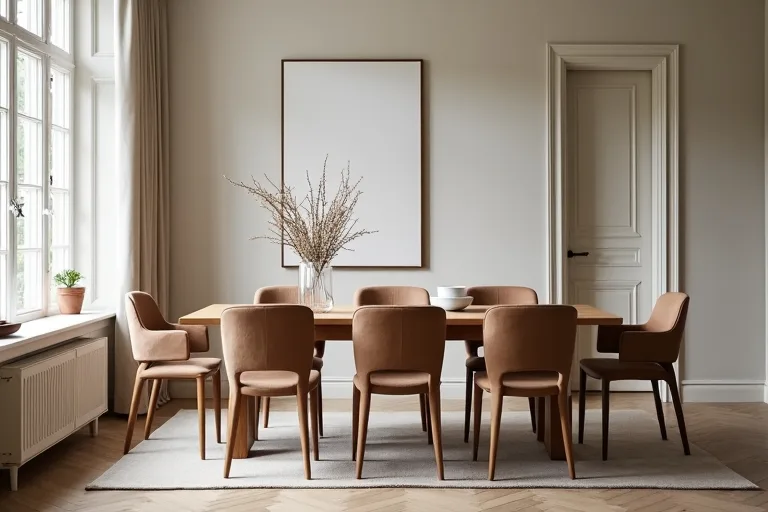
If you are not sure whether your room has enough margin, measure first and compare the layout using the dining table size calculator before you commit to a chair style.
Match chair count and comfort to the table shape
Table shape changes the whole seating plan. A rectangular table usually gives the most flexibility for chair count, while a round or oval table can create a softer flow but may limit how many chairs feel comfortable day to day. The best choice depends on how many people you need to seat and how often the table needs to stay clear.
Wood chairs are often the simplest option when you want easy movement and a lighter visual finish. Upholstered dining chairs add comfort, especially if people sit for longer meals. Mixed-material chairs can give you a balanced look without making the room feel too formal.
Comfort details matter more than they first appear to. A slightly contoured seat, supportive back, or modest armrest can make a big difference if the dining area is used often. On the other hand, an oversized upholstered chair can quickly reduce the number of seats you can fit.
If you are furnishing a small room, pairing a table with slim chairs can be the smarter move. The extendable dining table for small dining room option can also be useful when you need flexible seating without crowding the space every day.
Choose materials and styling for the way you live
The most practical dining chair ideas are usually the ones that fit your routine. If you want quick wipe-down maintenance, wood, painted finishes, or easy-clean surfaces are often simpler than heavily textured upholstery. If comfort is the priority, a padded seat or upholstered back can make the room more inviting, even if the maintenance is slightly higher.
Consider how the chair will age in the room. A neutral fabric can keep the room calm, while a darker finish may hide marks more easily. Metal details can make a simple chair feel sharper, but they can also change the tone of the room quickly, so it helps to keep the rest of the setting restrained.
For a coordinated look, many people prefer using matching chairs, but a mixed set can work well too if the finishes stay related. A wood table with upholstered seats is often one of the easiest combinations to live with because it balances structure and comfort.

If you want a more comfortable option, an upholstered dining chairs set of 4 is a useful starting point for comparing texture, shape, and seat comfort. For planning the overall room setup, a Room Makeover Planner, Home Layout Budget Spreadsheet (Digital Download) can help you keep layout choices and spending in the same place.
Best next step
If you already have a chair style in mind, check the room layout before you buy. The fastest way to avoid a tight fit is to confirm clearance around the table, then compare your chair dimensions against the space you actually have.
- Buying chairs before measuring the space around the table.
- Choosing seat heights that do not suit the table height.
- Ignoring chair width and ending up with too many seats for the room.
- Picking upholstered chairs for a busy space without thinking about upkeep.
- Adding armrests or bulky backs that reduce clearance more than expected.
- Letting style lead the decision before the layout is confirmed.
The best dining chair choice is the one that fits the room without making it feel crowded. Start with clearance, seat height, and width, then choose the material and shape that match how you use the space. A chair that works well in the layout will always feel better than one that only looks right in a showroom.
Helpful next tools and planners
If you want to make the decision easier before you buy
Use these options to check dimensions, compare chair styles, and keep the room plan clear before you place an order.
FAQ
What is the easiest way to choose dining chairs?
Start by measuring the table height, the space around it, and how much room each chair needs to pull out. Once the layout works, choose the style that fits your everyday use.
Should dining chairs match the table exactly?
No. They should work together in scale and comfort, but they do not need to match in finish or material. A coordinated contrast often feels more relaxed and practical.
Are upholstered dining chairs worth it?
They can be if the dining area is used for long meals or regular sitting. They are less ideal if you want the easiest possible upkeep or have a very tight room.
How many chairs can I fit around my table?
That depends on the table shape, chair width, and available clearance. A sizing tool is the safest way to check before buying, especially in smaller rooms.
Three sensible next steps
Some links in this article may be affiliate links. Read more in the Affiliate Disclosure.