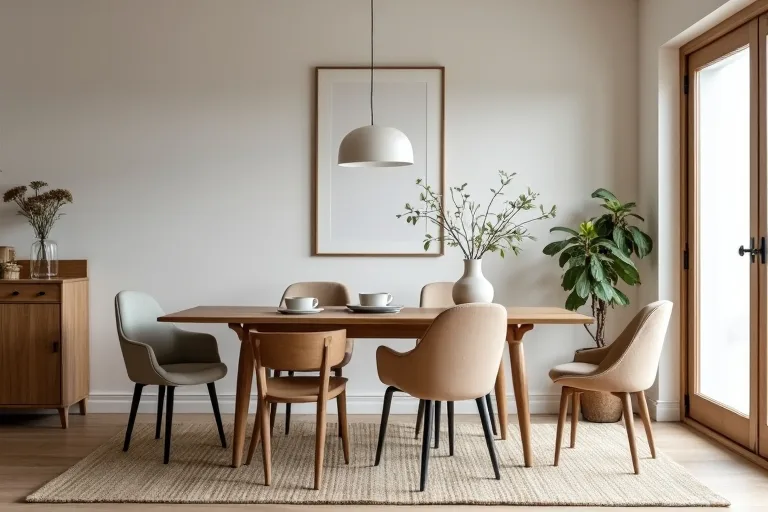
Dining chairs can look right in a room and still make daily life awkward. The problem is usually not the chair alone. It is the way the chair, table, and walkway space work together.
If your dining area feels cramped, noisy, or hard to move through, it often helps to slow the decision down. A better chair choice usually starts with clear measurements, then comfort, then style that suits the way you actually use the room.
Choose dining chairs that fit the table, leave enough clearance, and feel comfortable to use every day. The right chair is not just the one that looks best in a photo; it is the one that lets people sit, stand, and pass by without bumping the room into a bottleneck.
Start with comfort, not style
The easiest dining chair mistake is buying for appearance first. A chair can match the room and still feel too upright, too shallow, too wide, or too hard to use for a normal meal. That becomes obvious quickly if the dining table is also doing work as a homework spot, laptop surface, or everyday catch-all.
Comfort does not have to mean bulky or padded. It simply means the chair supports the body well enough that people stay seated without fidgeting, and that the seat height works cleanly with the table. If the room is modest, comfort also needs to stay visually light so the area does not feel packed.

For most homes, the best chair is the one that balances three things: a seat that feels usable, a shape that suits the table, and a footprint that does not crowd the room. That balance matters more than matching every piece exactly.
If you are choosing between two chair styles, ask which one will be easier to use on an ordinary weekday. The better choice is usually the one that lets people slide in, get up, and walk past the table without turning the dining area into a tight squeeze.
Measure fit before you buy
Chair sizing is where a lot of dining plans go wrong. A chair may technically fit under the table, but still make the whole room feel blocked if the seat is too deep, the arms are too broad, or the layout leaves no sensible clearance behind it.
Before shopping, focus on the measurements that affect movement most: chair width, seat height, and how much space remains around the table once chairs are pulled out. If you want an easy next step, use the Dining Table Size Calculator to check how the room behaves before you commit.
A simple order helps:
- Measure the table size and the space around it.
- Check how far chairs need to pull back for comfortable sitting.
- Confirm that walkways still feel open when chairs are in use.
- Only then decide whether the chair shape or table size needs to change.
This is also where a room planner or budget tracker can save time. If the dining area needs a bigger correction than expected, the Room Makeover Planner, Home Layout Budget Spreadsheet (Digital Download) can help you map the upgrade without losing track of the plan.
Choose chair types that suit the room
Different chair styles solve different problems. In a small dining room, slim-profile chairs with open backs often make the room feel easier to move through. In a larger room, heavier chairs or upholstered seats can add comfort and presence without overwhelming the layout.
Upholstered chairs are worth considering when the dining space is used often and the table doubles as a gathering point. They usually feel more comfortable for longer meals, but they also need a little more care. If the room sees daily crumbs, children, pets, or frequent spill risk, a simpler finish may be easier to live with.

When you compare chair types, think about how the room is used, not just how it looks on the floor. A chair with arms may feel more comfortable, but it can also reduce the number of seats that fit cleanly around the table. A lightweight chair may be easier to move, but it may not feel steady enough for everyday use if the table is busy.
Match chairs to the table and daily routine
The best chair choice depends on the table as much as the chair itself. That matters even more with extendable tables, since the room has to work both on ordinary days and when the table is opened up for guests.
If you are pairing chairs with an extendable table, check whether the chairs still leave enough clearance when the table is at its larger setting. That is where a room can feel good in theory but awkward in practice. If the table is too large for daily use, it may be worth starting with room sizing rather than shopping for a more compact chair alone.

For smaller rooms, an extendable table can be a helpful adjustment when the dining area needs flexibility. You can explore ideas with an extendable dining table for small dining room, but only after the room measurements make the case for it. If the current setup is already crowded, upgrading the table may improve the room more than changing the chairs alone.
When you are ready to compare chair finishes, a set such as upholstered dining chairs set of 4 can be a useful reference point for comfort and proportions, especially if you are replacing a mismatched group and want the room to feel more settled.
Best next step
Before you buy new chairs or replace the table, measure the full dining layout and check how much clearance you actually have. That one step usually makes the decision clearer and prevents a costly mismatch between chair size, table size, and everyday movement.
- Buying chairs because they match the room, then discovering they block the walkway.
- Ignoring seat height and assuming every chair will work with every table.
- Choosing upholstered chairs for comfort without considering cleaning and daily upkeep.
- Forgetting to test the larger size of an extendable table before finalizing the layout.
Good dining chair ideas start with fit. If the chairs allow comfortable seating, leave enough clearance, and support the way your household uses the room, the whole dining area feels calmer and easier to live with. Measure first, compare chair shape against the table, and only then decide whether you need a better chair, a different table, or both.
Helpful next tools and planners
If you want to make the decision easier before you buy
These options can help you test layout, compare proportions, and keep the room plan clear before you spend on new seating or a bigger table.
FAQ
How do I know if dining chairs are too big for my room?
If the chairs make it hard to pull out, stand up, or walk behind the table comfortably, they are probably too large for the space, even if they look balanced on their own.
Are upholstered dining chairs a good choice for everyday use?
Yes, if comfort matters and the room is used often. They are especially helpful for longer meals, but they may need more upkeep than simpler chair finishes.
Should I choose chairs or a new table first?
Start with measurements. If the current table already leaves poor clearance, the room may benefit more from a better-sized table than from new chairs alone.
What works best in a small dining room?
Usually a slimmer chair profile, a table sized to the room, and a layout that leaves clear walking space around the seating area.
Three sensible next steps
Some links in this article may be affiliate links. Read more in the Affiliate Disclosure.