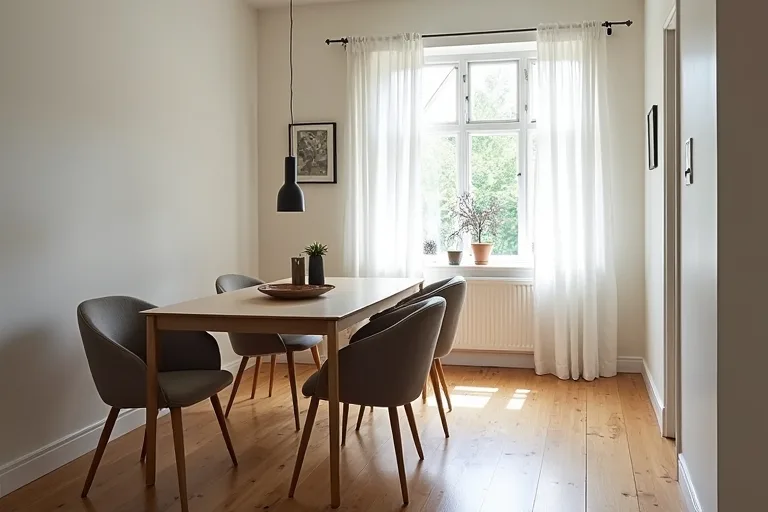
Dining tables create problems when the room is judged by style first and spacing second. A table can look balanced in a photo and still make everyday movement awkward once chairs are pulled out and people need to pass behind them.
The good news is that most of these issues are easy to avoid before you shop. If you slow the decision down, measure the room, and think about clearance, chair size, and traffic flow, the right table becomes much easier to spot.
The biggest mistake is choosing a table without checking clearance, chair space, and room flow first. If the table fits only when no one is sitting down, it is probably too large for the room.
Why the table can feel wrong even when it looks right
A dining table is rarely just about the tabletop. It affects how far a chair can move, whether someone can walk behind a seated guest, and how open the room feels from the kitchen or living area. That is why a table that seems reasonable in a showroom can feel oversized at home.
When people say a dining area feels cramped, the problem is often not the table alone. It may be the combination of table depth, chair width, and the amount of circulation space left around the perimeter. In a small dining room, even a modest change in table size can affect the whole room.
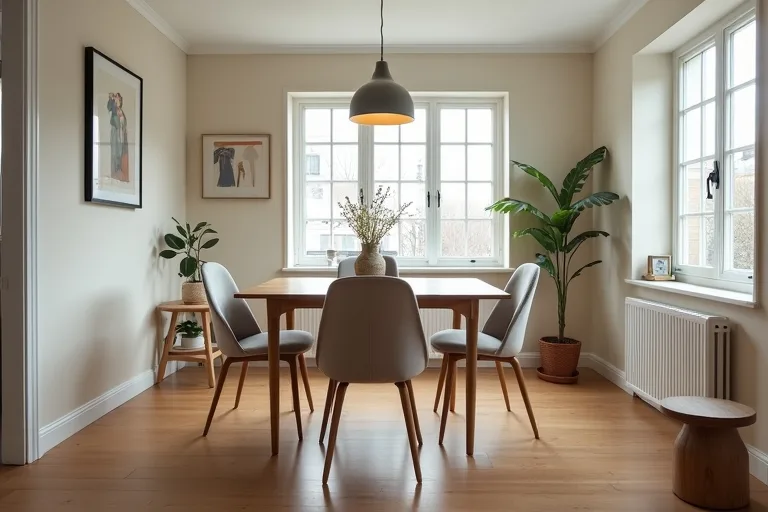
Before you compare finishes or seating styles, look at the real question: can people sit down, stand up, and pass through the room without shifting furniture every time? If the answer is no, the layout needs attention before the purchase does.
Sizing mistakes that crowd the room
The most common sizing mistake is treating the table footprint as the only measurement that matters. In reality, the room has to account for pulled-out chairs, walking space, and the visual weight of the table itself. A table that technically fits can still dominate a room if clearance is tight.
Start with the full dining zone, not just the table dimensions. Measure wall to wall, note where doors swing, and remember that chairs need room behind them. If the table sits in a passage between the kitchen and another room, that traffic lane matters just as much as the dining set.
- Measure the room and mark the table area on the floor.
- Check how much space remains when chairs are pulled out.
- Confirm where people actually walk through the room.
- Compare a few table sizes before deciding on one shape or finish.

Shape, chair, and placement choices that change comfort
Shape matters because it changes how the room functions. A round table can soften a tight room and improve flow, but it may not be the best option if you need defined seating for more people. A rectangular table can make sense in longer rooms, yet it can feel heavy if it is too wide or placed too close to a wall. Extendable dining tables often solve that tradeoff well in small rooms because they give you everyday breathing room with extra seating only when you need it.
Chair choice is just as important. Upholstered chairs are comfortable for longer meals, but bulky arms or wide legs can eat into clearance. If the table already sits near a walkway, slimmer chairs may make the difference between a room that works and one that constantly feels in the way.
Placement can also make a good table feel wrong. Centering the table in the room is not always the best answer if it blocks a direct route or creates a tight corner by a cabinet, radiator, or doorway. A small shift in position can improve flow more than replacing the table itself.
A calmer way to choose before you buy
The easiest way to reduce regret is to slow down and compare a few options against the room, not against each other. If you already know the space is tight, start with planning clarity first and shopping second. That usually leads to a better choice and fewer returns.
Use a simple sequence: measure the room, map the walking paths, check chair clearance, then compare table shapes that suit the space. If you want a faster answer, the Dining Table Size Calculator can help confirm spacing and reveal whether a standard table, a smaller table, or an extendable option makes the most sense.
For readers working through a full dining area update, the Kitchen & Dining hub is a useful place to continue planning without rushing into a purchase. If you want a simple way to track room notes, costs, and layout ideas, a planner can also keep the decision clear while you compare products.
Before you buy anything, confirm the usable dining footprint with the Dining Table Size Calculator, then compare room-friendly options from the Kitchen & Dining hub. If your space is tight, look for an extendable dining table for small dining room use rather than forcing a fixed table into a layout that needs flexibility.

Best next step
If you are unsure whether the room can handle your table idea, use the calculator first. It is a calmer way to test spacing before you commit to a purchase, especially in a smaller dining room where every inch changes how the room feels.
- Buying a table by appearance alone without checking clearance around it.
- Forgetting that chairs need extra space when people sit down or get up.
- Choosing a shape that suits the showroom but not the actual room layout.
- Using oversized upholstered chairs in a room that already feels tight.
- Placing the table in the center when a slight offset would improve circulation.
- Skipping the planning step and hoping the room will feel better after the purchase.
The right dining table is the one that supports everyday movement, comfortable seating, and clear circulation. If the room feels crowded before you buy, that is a layout signal, not a styling problem. Measure first, compare shapes honestly, and use a sizing tool to make the decision simpler.
Helpful next tools and planners
If you want to make the decision easier before you buy
These options fit the planning-first approach: one tool for checking the room, one table type that often works well in tighter spaces, and one simple planner for keeping the project organized.
FAQ
How much space should I leave around a dining table?
You need enough room for chairs to move and for people to pass behind them. The table should work with real use, not just fit as a static object in the room.
Is a round table better for a small dining room?
Not always. A round table can improve flow, but the best choice depends on the room shape, the number of seats you need, and where people walk through.
Are upholstered dining chairs a bad idea in a compact room?
Not necessarily, but bulky upholstered chairs can take up more visual and physical space. Slimmer versions are often easier to use in tighter layouts.
When does an extendable table make the most sense?
It is often a smart choice when you want everyday breathing room but still need extra seating sometimes. That flexibility can be especially useful in smaller dining rooms.
Three sensible next steps
Some links in this article may be affiliate links. Read more in the Affiliate Disclosure.