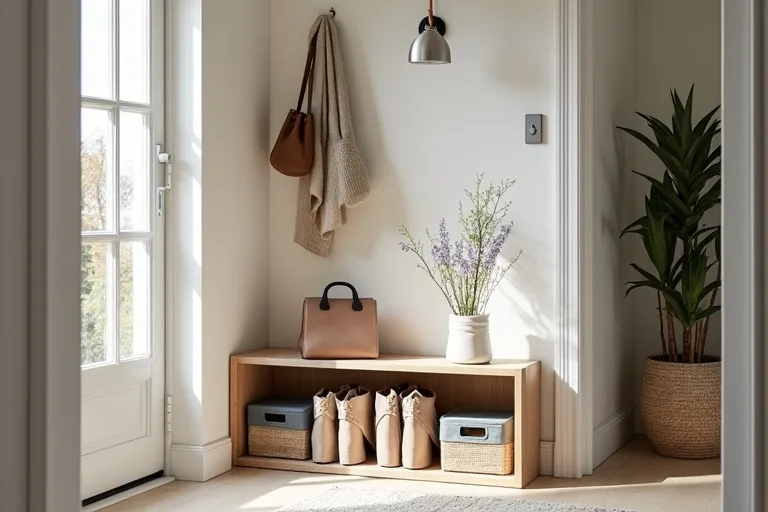
Entryway storage works best when it solves a specific daily problem. If shoes, bags, mail, or coats are piling up near the door, the answer is usually not more furniture. It is a clearer plan for what has to fit, how often it gets used, and how much floor space you can actually give up.
This checklist keeps the decision simple before you buy bins, shelves, or a cabinet. A few minutes of measuring and sorting can save you from bringing home storage that looks useful but gets in the way every day.
Measure the space, list what needs to be stored, and choose the simplest storage that keeps the entryway clear and easy to use.
Start with the space, not the storage
Before you compare products, look at the entryway itself. Small entry areas fail when storage blocks the path, hits the door swing, or asks too much of a narrow wall. The best solution is the one that fits the real footprint of the room and still lets people move through it comfortably.
Measure the width of the walkway, the depth you can spare, and the places where doors open. If the entry is part of a hall or a compact corner, the most important number may be how much clearance remains after storage is placed. That is often more useful than the overall size of the room.
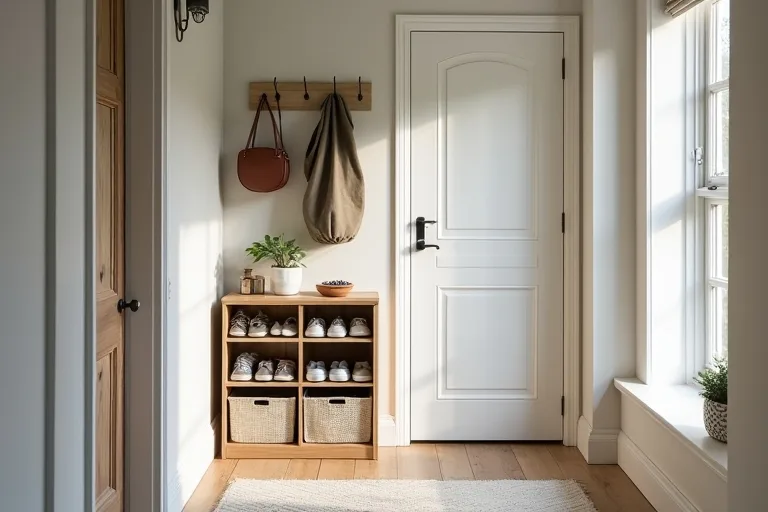
If you are unsure how to think through the layout, use the room layout planner before you shop. It is a simple way to test whether a shelf, cube unit, or cabinet leaves enough room for movement.
If a storage piece solves clutter but makes the entry feel tighter, it is probably the wrong piece for that spot. The right option should reduce friction, not create a new obstacle at the door.
Choose what really needs to live in the entryway
Entryway storage gets easier when you separate daily items from occasional ones. The daily list is usually small: shoes you wear often, bags you grab on the way out, keys, dog leashes, and maybe mail. Seasonal or backup items should not shape the whole storage plan if they only come up once in a while.
A useful checklist is simple:
- What must be easy to reach every day?
- What can be stored out of sight or in another room?
- What item is creating the most visual clutter?
- Which objects need open access versus closed storage?
That sorting step helps you avoid overbuying. Many entryways need only a small shelf and one bin, not a full wall of storage. If you want a simple storage-and-utility option, an 8 cube storage organizer can work well in wider entry spaces where you need flexible sections for shoes, baskets, and grab-and-go items.
Compare bins, shelves, and cabinets by how they work
Bins, shelves, and cabinets each solve a different problem. Bins are best when you want quick sorting and a softer look. Shelves are useful when you need easy access and a lighter visual feel. Cabinets hide more, but they also take more visual and physical space, so they need to earn their place.
Think about the way the entry is used, not just the style. A busy family entry may need open access and simple drop zones. A quieter apartment entry may work better with closed storage that keeps small items out of sight. The goal is not to combine everything. The goal is to choose one system that suits the routine.
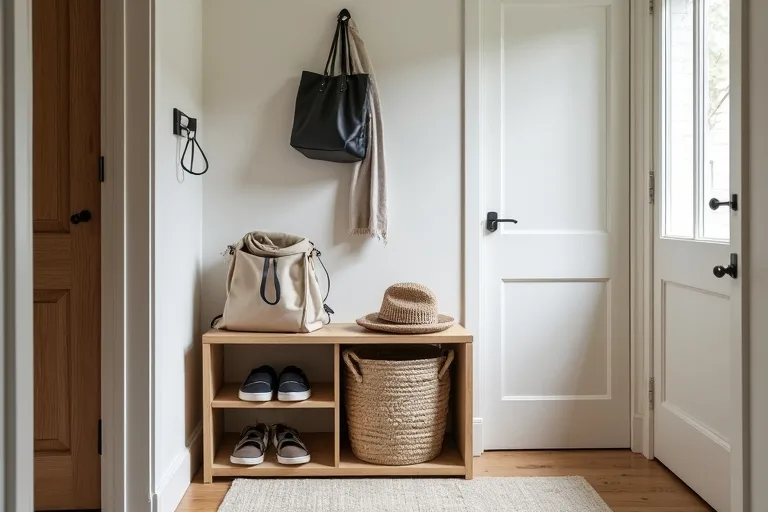
If cube storage makes sense for your space, pair it with the right inserts. A set of fabric storage bins set for cube organizer can make one unit feel more orderly and easier to live with. For readers who want a planning step before buying, the tools hub is the best place to check sizing and layout support.
Pick one setup and buy for the routine
The easiest entryway decisions are usually the ones that keep the plan simple. One well-chosen unit often works better than mixing a shelf, a cabinet, a bench, and loose baskets. Too many pieces make a small space harder to read and harder to clean.
Use the room plan to check whether your chosen storage fits the daily routine. If the door is used constantly, open shelves or cube storage may be easier than deep cabinets. If the area collects visual clutter, a closed-front cabinet may be the calmer choice. If you are still adjusting the plan, a digital layout worksheet can help you think it through before you purchase anything. The Small Space Furniture Planner, Room Layout Spreadsheet (Digital Download) is a practical option for testing placement before you commit.
A sizing tool for other rooms may not be for the entry itself, but it can be useful if you are planning adjacent spaces and want the whole circulation path to work together. That kind of planning keeps the entry from becoming the place where the rest of the home feels cramped.
Best next step
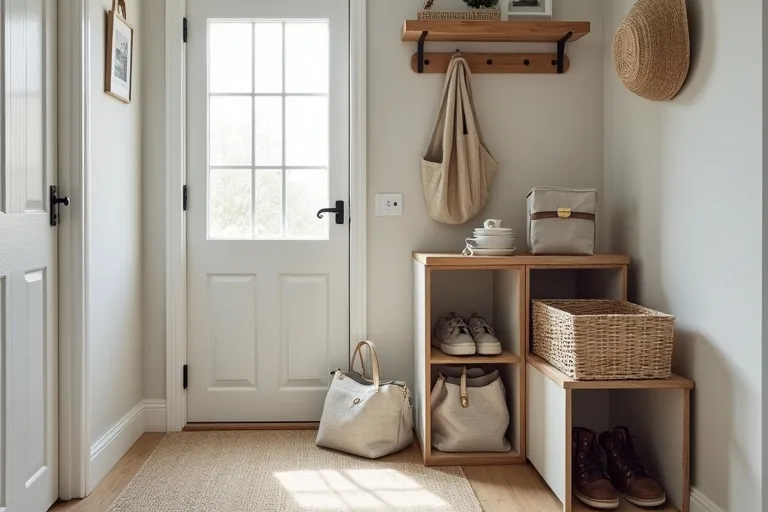
Before you buy, test the layout in a simple planner so you can see whether bins, shelves, or a cabinet leave enough clearance and feel practical for daily use.
- Buying storage before measuring door swing and walkway clearance.
- Choosing a large cabinet when the entry mainly needs quick-access storage.
- Mixing too many pieces instead of one clear system.
- Storing daily items too high, too deep, or too far from the door.
- Using decorative baskets that look good but do not match what you actually need to store.
The best entryway storage is the one that fits the layout, supports the daily routine, and keeps the path clear. Measure first, sort what truly belongs near the door, then choose the simplest bin, shelf, or cabinet that solves the problem without adding clutter.
Helpful next tools and planners
If you want to make the decision easier before you buy
These are the most useful next steps if you are comparing entryway storage options and want a better fit before spending money.
FAQ
What is the first thing to measure in an entryway?
Measure the walkway width, the depth you can use, and the door swing clearance. Those three checks tell you whether a piece will fit without making the entry harder to use.
Are bins or cabinets better for a small entryway?
Bins are usually better for quick sorting and lighter visual clutter. Cabinets are better when you need to hide more, but they can feel bulkier in a tight space.
How do I know if I need open or closed storage?
Choose open storage if you need fast access to shoes, bags, or daily items. Choose closed storage if the entry tends to look busy and you want the area to feel calmer.
Should I buy a storage bench for the entryway?
Only if you truly need seating and the footprint allows it. A bench can help, but in a very small entry it may take up space that is better used for vertical storage.
Three sensible next steps
Some links in this article may be affiliate links. Read more in the Affiliate Disclosure.