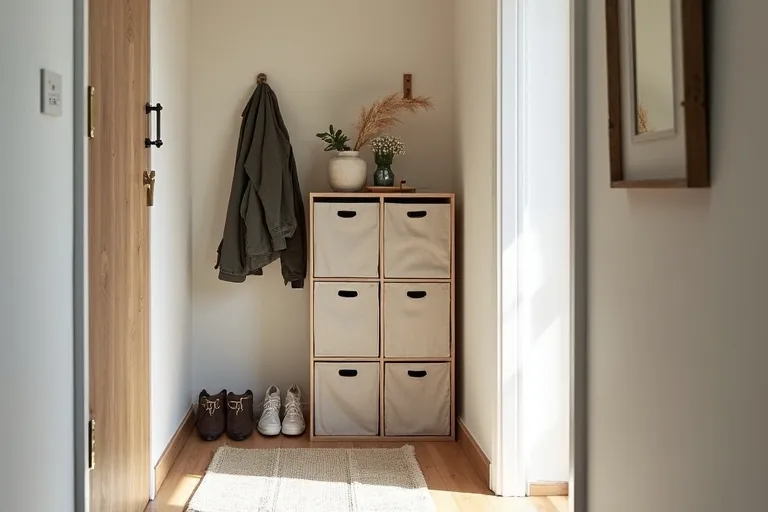
An entryway can start to feel chaotic long before the rest of the home does. Shoes pile up, bags land wherever there is space, and storage that looked useful online suddenly makes the hallway feel tighter.
The problem is usually not a lack of storage. It is storage chosen without enough thought for size, movement, and how the space works on an ordinary day.
The biggest mistake is adding storage without planning for size, flow, and daily use. In a small entryway, the right piece should help people move easily, hide the mess you do not want to see, and make the things you use every day simple to reach.
Why entryway storage looks messy fast
Entryways work harder than most rooms. They handle keys, shoes, bags, coats, mail, dog leads, and whatever comes in from outside. When storage is chosen only because it offers more space, it often creates the opposite effect: more clutter in plain view and less room to move.
That is why the most common mistake is treating the entryway like a catch-all zone instead of a small traffic area. A good storage idea should leave enough visual breathing room for the room to feel calm. It should also match the real habits of the household, not an ideal version of them.
If the space is narrow, the layout matters before the furniture does. A slim wall, a tight corner, or a door swing can make a piece that seems compact online feel oversized once it is in place. For a broader planning view, it can help to return to the main small spaces & storage hub and decide what the room actually needs to do.
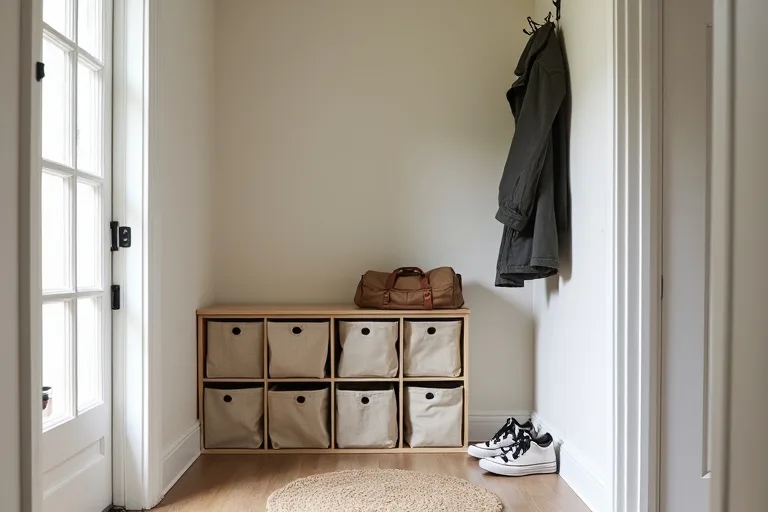
Before buying anything, stand in the entryway and notice what happens first: do shoes collect by the door, do coats need hanging space, or is the real issue that bags and mail have nowhere to land? The answer tells you whether you need hidden storage, open access, or a small landing zone.
Sizing mistakes that block flow
One of the easiest ways to make an entryway look messier is to buy storage that is slightly too large. Even a useful piece can feel awkward if it sits too far into the walkway or makes a door harder to open.
That is why measuring matters more than browsing. A unit should fit the wall, leave enough clearance, and still allow the entryway to feel open. The goal is not to fill every inch. The goal is to create a layout that works without constant adjustment.
If you are comparing options, think in this order:
- Measure the wall, doorway, and any swing space.
- Decide what must be stored there daily.
- Choose the smallest piece that handles that list well.
- Check whether the piece leaves an easy walking path.
For a structured layout check, the room layout planner is a useful next step. It helps you compare furniture size with the room itself before you commit to a purchase.
If you want a practical storage format that works well in many small entryways, an 8 cube storage organizer can be a good starting point because it gives structure without needing a large footprint. In the right spot, it can hide the visual noise that usually builds up near the door.
Open surfaces, hooks, and catchalls are not always the answer
Open storage can be helpful, but too much of it becomes visual noise very quickly. When every shelf, hook, and tray is fully visible, the entryway starts to look busy even if it is technically organized.
This is especially true for shallow tables or wall ledges. They invite items to land there, but they rarely stop items from accumulating. The result is a surface that looks neat for a day and then becomes a magnet for keys, receipts, sunglasses, chargers, and mail.
A calmer setup usually relies on a mix of hidden and visible storage. Keep only the most-used items within easy reach and give everything else a place behind a door, inside a bin, or in a cube system. If a surface is meant to stay clear, make that decision obvious and keep it limited.

Fabric bins can help here because they soften the look of cube storage and keep smaller items from spreading across the room. A simple set like fabric storage bins set for cube organizer is a practical add-on when the main goal is to reduce visual clutter, not add more places to display things.
A calmer storage system by daily use
The easiest entryway systems are built around how often each item is used. Daily items should be the easiest to reach. Less frequent items should be stored where they are still easy to find, but not always visible.
A simple structure works better than a complicated one:
- Daily: shoes, keys, bags, coat, dog lead.
- Weekly: umbrellas, sports gear, extra tote bags, seasonal items.
- Occasional: spare hats, gloves, guest items, backup supplies.
This is where a cube organizer often makes sense. It lets you separate categories without forcing everything into one open pile. Used well, it gives the entryway a clear rhythm: some things stay visible and easy, while the rest are tucked away.
Small Space Furniture Planner, Room Layout Spreadsheet (Digital Download) can also help if you are still deciding what should fit where. It is especially useful when you want to test storage choices before spending on furniture that may be too large or too open for the space.

Best next step
If your entryway feels cluttered, measure the space before you buy anything else. Use the room layout planner to test the footprint of a storage piece, then compare that plan with a structured option like an 8 cube organizer if you need hidden storage that still stays simple to use.
- Buying storage before measuring the wall, doorway, and walking path.
- Choosing a piece that is wide or deep enough to crowd the entry.
- Using too many open shelves or trays that collect clutter in view.
- Mixing hooks, bins, and catchalls without a clear purpose for each one.
- Leaving daily items without a fixed home, which turns every surface into storage.
A better entryway is usually not about adding more storage. It is about choosing the right size, keeping the layout clear, and making daily items easy to place back where they belong. If the space is small, plan the footprint first, then choose storage that fits the routine instead of fighting it.
Helpful next tools and planners
If you want to make the decision easier before you buy
These picks are most useful when you are trying to reduce clutter without making the entryway feel heavier or more crowded.
FAQ
What is the most common entryway storage mistake?
The most common mistake is buying storage before measuring the space or thinking through how the entryway is used every day. That usually leads to blocked flow and more clutter in sight.
Should entryway storage be open or closed?
Usually a mix works best. Closed storage helps hide the items that create visual mess, while a small amount of open access is useful for daily items you need quickly.
Is a cube organizer a good idea for a small entryway?
It can be, especially if you need simple hidden storage that keeps categories separated. The key is to check the footprint first so it does not crowd the walkway.
What should I measure before buying entryway furniture?
Measure the wall space, door clearance, and the path people take through the entry. Those numbers matter more than the product’s appearance in a photo.
Three sensible next steps
Some links in this article may be affiliate links. Read more in the Affiliate Disclosure.