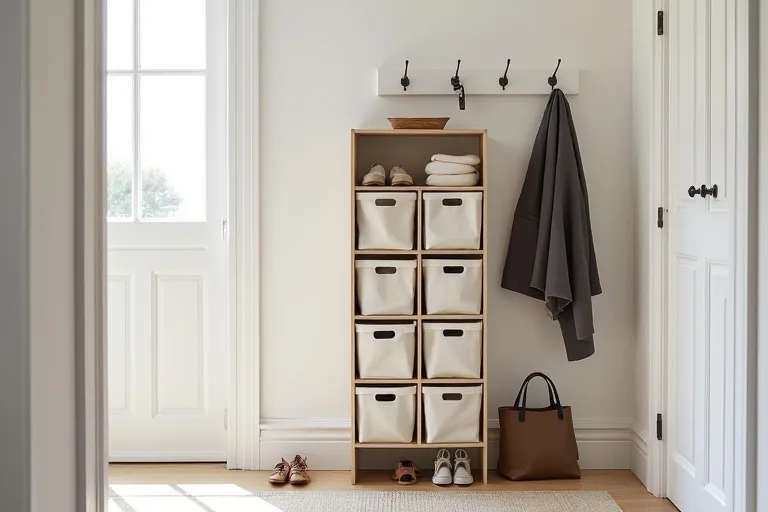
A well-planned entryway does more than hide clutter. It gives coats, shoes, bags, keys, and mail a clear place to land so the rest of the home stays calmer.
The challenge is that small entrances are often asked to do too much in too little space. The best entryway storage ideas are the ones that match the room’s width, depth, and daily traffic, not just the ones that look neat in a photo.
The best entryway storage is slim, easy to reach, and sized for the items you use every day. In a small entrance, that usually means a mix of hooks, a compact bench or cube unit, and a simple tray or basket for loose items. If you want the cleanest result, plan the layout first, then choose storage that fits the space instead of forcing the space around the furniture.
What a small entryway actually needs
Most entryways do not need more furniture. They need a clearer job description. Start by listing the items that actually pass through the space each day: shoes, coats, school bags, keys, parcels, umbrellas, mail, and maybe a dog lead or sports gear. Once you know what must be stored there, it becomes much easier to see what belongs on the wall, what belongs in a bin, and what needs floor space.
A small entrance usually works best when it has three layers of storage. First, a landing spot for the items you drop when you walk in. Second, a place for the things you use constantly. Third, a hidden or contained zone for the less attractive extras that still need to live near the door.
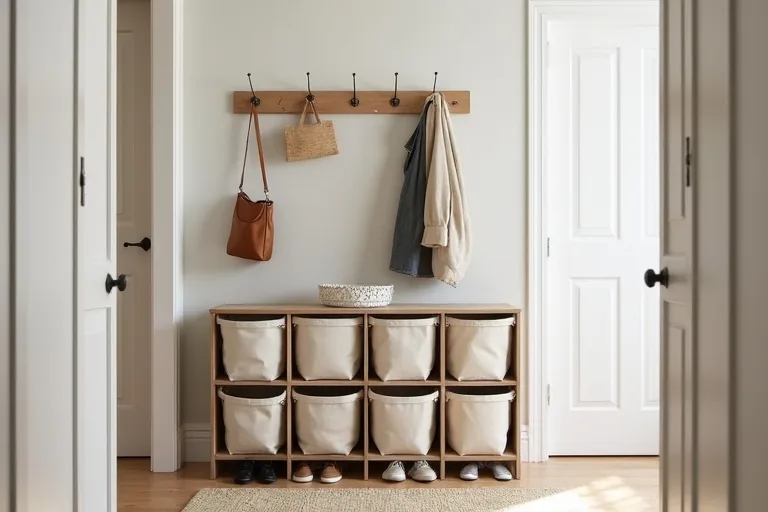
That is why a cube organizer can work so well in a small home. It gives you a clear structure for bags or bins, while the open top can handle keys, a tray, or a small catchall. Paired with wall hooks, it creates a system that is easy to understand and easy to maintain.
Before you buy anything, decide what should be visible, what should be hidden, and what must stay within arm’s reach. If the answer is not clear, the room will probably feel busy even if the furniture is new.
How to choose the right storage type
There is no single best entryway storage solution. The right choice depends on how much you need to store, how much floor space you can spare, and whether the area has to support one person or an entire family.
Here is a simple way to compare the most common options:
- Hooks work best for coats, bags, and daily grab-and-go items. They save floor space and help keep traffic moving.
- A slim bench is useful if you need a place to sit while putting on shoes. It can also hide baskets underneath.
- A cube organizer is a strong choice when you want structure. It suits shoes, baskets, gloves, hats, and school items.
- Baskets and bins are best for loose items that would otherwise spread across the entry surface.
- Wall shelves help when you need a small landing area for mail, keys, or post, without using floor depth.
If you are choosing between a cube unit and a mix of hooks and bins, think about the number of people using the entrance. A single person may only need a simple wall-mounted setup. A family entryway usually benefits from a more divided system, where each person has a clear zone.
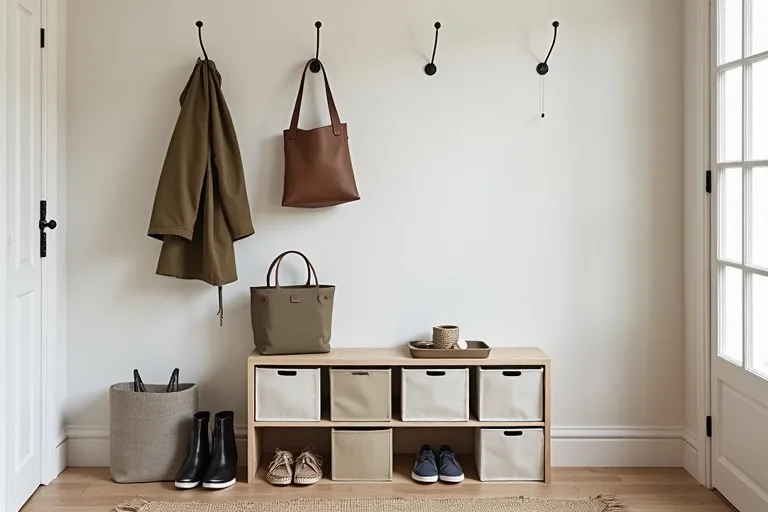
For a modest budget, the combination of an 8 cube storage organizer and a set of fabric bins for cube storage can be a practical middle ground. It creates separation without requiring a custom built-in, and it can be adapted as the household changes.
Sizing and layout before you buy
This is the step that prevents most entryway mistakes. A storage unit can look compact online and still feel bulky once it is in the hall. Measure the available width, depth, and walking clearance before you choose the furniture, especially if the entrance opens directly into another room or a narrow corridor.
A useful rule is to protect the path first and the storage second. If the unit makes it awkward to open the door, crouch to put on shoes, or pass through with bags in hand, it is the wrong size even if it has the right amount of storage.
When you are deciding on placement, think through the movement pattern:
- Where do you step in first?
- Where do you naturally drop keys or mail?
- Where do shoes tend to end up?
- What must be easy to reach as you leave the house?
That quick check usually shows whether you need a bench, a taller storage unit, a narrower shelf, or just better wall organization. If the room is unusually tight, a room layout planner is worth using before you shop. It helps you confirm whether a cube unit, bench, or wall-only solution will fit without blocking movement.
How to keep the entryway calm day after day
Once the storage is in place, the goal is not to decorate around it heavily. The goal is to make the system easy enough that people will actually use it. Small entryways work best when every item has a simple habit attached to it: shoes go here, keys go there, bags hang on this hook, mail is sorted before it reaches the rest of the house.

Choose finishes that are easy to wipe clean, and avoid overfilling open surfaces. A tray, one lidded box, and one or two baskets usually do more for calm than several decorative pieces. If the entryway also connects to a living room, keep the visual weight low so the transition between spaces feels orderly rather than crowded.
For a practical next step, use the Small Space Furniture Planner, Room Layout Spreadsheet and the room layout planner tool before you buy. That way you can test whether a cube unit, bench, or wall-mounted setup really fits the space you have.
Best next step
If you want to avoid buying the wrong size, plan the layout first. A simple room plan will help you see whether your entryway needs a cube organizer, a slim bench, hooks, or a smaller wall-based setup before you spend money.
- Choosing a storage unit before measuring door swing and walking clearance.
- Using one open surface for everything, which turns into a clutter magnet.
- Picking a piece that is too deep for the hallway or too wide for the traffic flow.
- Ignoring what the household actually carries in and out each day.
- Adding too many decorative objects and making the entry harder to use.
Good entryway storage is less about finding the prettiest unit and more about choosing the right scale for the space. Start with the items you need to store, measure the width and depth you can truly spare, and then choose a solution that keeps the path open. For many small entrances, a cube organizer with bins, wall hooks, and a simple landing spot is the most practical mix.
Helpful next tools and planners
If you want to make the decision easier before you buy
These are useful if you are still comparing layout options or want a simple planning aid before choosing entryway furniture and storage.
FAQ
What is the best storage for a small entryway?
The best option is usually a slim setup that combines hooks with a small bench, shelf, or cube unit. The best choice depends on whether you need more hanging space, more concealed storage, or a place to sit.
Should an entryway use open or closed storage?
Most small entryways work best with a mix of both. Open storage is convenient for daily items, while closed bins or baskets help hide the things that make the space feel busy.
How deep should entryway furniture be?
As a general planning rule, keep depth as modest as possible while still meeting your storage needs. The exact size should depend on your available clearance and the way people move through the space.
Do I need a bench in the entryway?
Only if it helps with daily use. A bench is useful for sitting down to put on shoes, but in a very tight entrance, wall hooks and compact storage may be the better fit.
Three sensible next steps
Some links in this article may be affiliate links. Read more in the Affiliate Disclosure.