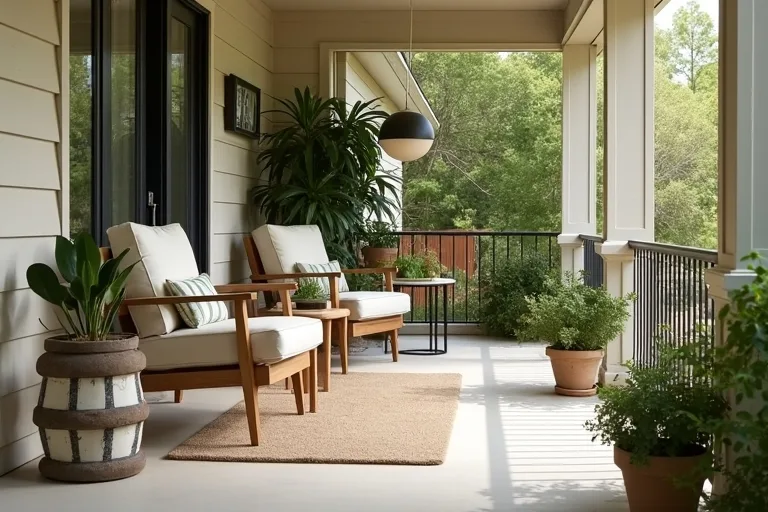
Some front porches feel exposed not because they are too small, but because the layout has not been given a clear job. A chair in the wrong place, a missing boundary, or a weak entry point can make the whole space feel undecided.
The good news is that a porch usually does not need a full makeover. It needs a calmer plan: enough privacy to feel comfortable, furniture that fits the available depth, and a few finishing choices that make the space look intentional rather than left over.
The biggest mistakes are poor scale, no privacy layer, weak seating placement, and missing finishing details. If you fix the layout first, then add shade, lighting, and a simple focal point, a porch usually feels more sheltered and complete without a large budget.
Start with the porch envelope, not the decor
The first mistake is treating a front porch like a decoration zone before it has been planned as a usable outdoor room. If the entrance is fully visible from the street, or if the sitting area has no side boundary at all, the space can feel exposed even when the furniture is attractive.
Before buying anything, look at the porch as a small layout problem. Where does someone walk in? Where can a chair sit without blocking the path? What can be seen from the street, and what should feel softened or screened? Those answers matter more than the pillow pattern or planter style.
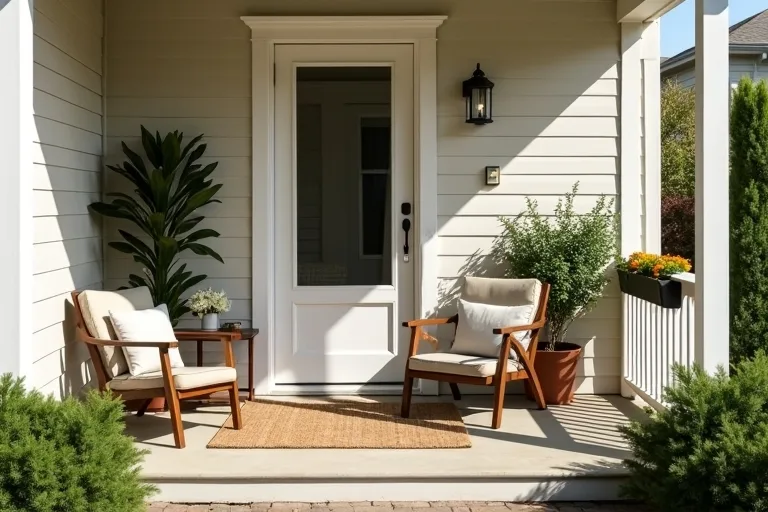
Even a modest porch can feel more grounded when you give it one clear purpose. A pair of chairs, a side table, and a plant grouping can work well if the circulation stays open. If the furniture lands randomly, the porch starts to look unfinished before decor is added.
If you would not know where to sit, where to step, and where to pause when arriving home, the porch layout still needs work. That is the real decision: not what to buy first, but how the space should function before shopping starts.
Get the scale, seating, and circulation right
Another common front porch mistake is using furniture that is too large, too deep, or too spread out for the space. A porch can look exposed when the seating sits too far from the house or too close to the edge, leaving no comfortable middle zone.
Start by measuring the usable porch depth, then think about how people will actually move through it. The porch should allow a clear path to the door, easy chair access, and enough room to stand without feeling crowded. If the layout forces anyone to sidestep furniture just to enter, the porch is too full.
- Measure the doorway swing and the main walking path.
- Mark the seating zone so chairs do not compete with circulation.
- Keep the arrangement simple if the porch is narrow.
- Choose fewer, better-sized pieces instead of filling every corner.
A side table, one bench, or two compact chairs may be enough. When the proportions are right, the porch feels calmer immediately because it reads as planned rather than improvised.

Add shade, lighting, and privacy in the right order
Porches often feel unfinished because the comfort layer is missing. A sunny sitting area without shade feels temporary. A porch without evening light feels unused. And a seating zone with no privacy support can feel too open, even when it is visually tidy.
That is why the order matters. Shade and privacy should support the layout, not compete with it. A simple railing planter, a tall potted plant, a screen, or a porch umbrella can soften the view and make the space easier to use. If the seating gets direct sun, the 9 ft patio umbrella with base is a practical way to create a more comfortable dining or sitting zone without committing to a fixed structure.
Lighting matters in the same way. A porch light that only marks the door is not always enough. Think about whether the seating area needs a warmer layer of light so the space feels welcoming after sunset. Once those basics are covered, the porch stops reading as an afterthought.
Finish the entry with one clear focal point
The final mistake is adding small decor pieces before the porch has a clear visual center. A few scattered items can make the space look busy but still unfinished. What the porch usually needs is one point of attention that gives the eye a place to land.
That focal point might be a centered bench, a pair of planters by the door, a well-scaled wreath, or a simple seating grouping that feels balanced from the street. Once that is in place, the smaller details can do their job more quietly.

Soft finishing layers help here, especially if the porch needs a little more texture. The right outdoor throw pillow covers can make basic seating feel more intentional without forcing a full redesign. A set like the outdoor throw pillow covers set is most useful after the layout is settled, when you already know the size and style direction. If you are mapping a wider refresh, the Room Makeover Planner, Home Layout Budget Spreadsheet (Digital Download) can help you keep the porch plan, spending, and priorities clear before buying extras.
Best next step
If your porch still feels exposed, use a layout tool before you shop. Mapping the seating zone, walking path, and clearances first will usually make the next decisions much easier.
- Buying porch furniture before measuring the usable depth and walking path.
- Leaving the seating area fully open with no privacy or boundary layer.
- Using pieces that are too large, too deep, or too far apart for the porch size.
- Ignoring shade and lighting, so the space only works at certain times of day.
- Adding decor before there is a clear focal point near the entry.
- Filling the porch with small items instead of one or two strong finishing choices.
A front porch usually feels exposed or unfinished when layout decisions are skipped. Once you define the path, size the seating properly, add a privacy or shade layer, and choose one clear focal point, the porch starts to feel calm and complete.
Helpful next tools and planners
If you want to make the decision easier before you buy
These options are most useful after you know how the porch should function. They can help you keep the layout clear, narrow the style direction, and avoid buying pieces that do not fit the space.
FAQ
How do I make a front porch feel less exposed?
Add a privacy or boundary layer, keep seating inside a defined zone, and use plants or screening to soften the view from the street.
What is the most common porch layout mistake?
Buying furniture before measuring the usable space. That usually leads to pieces that block circulation or make the porch feel crowded.
Do I need a lot of decor for the porch to feel finished?
No. A porch often looks more complete with one clear focal point and a few well-chosen items than with lots of small accessories.
Should I choose style or function first?
Function first. Once the layout, path, and comfort needs are clear, the style choices become easier and usually look better.
Three sensible next steps
Some links in this article may be affiliate links. Read more in the Affiliate Disclosure.