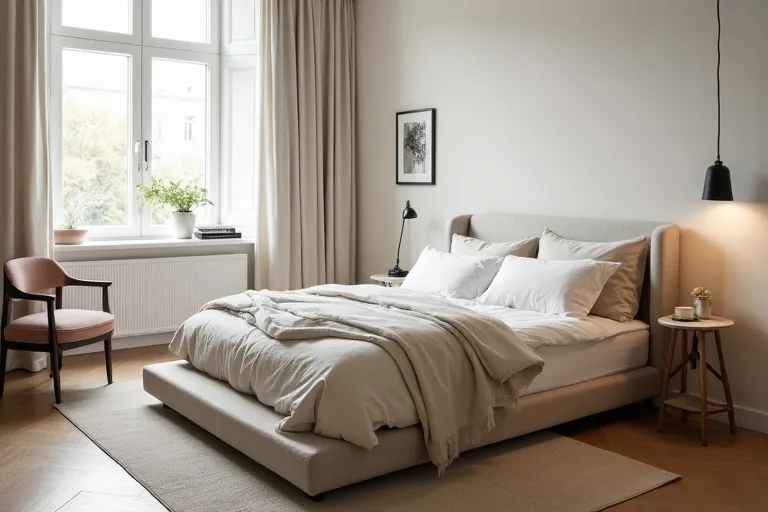
A guest bedroom is easy to overbuy. A bed frame, side tables, storage, lighting, bedding, and decor can all feel urgent at once, but the room usually works better when the layout is settled first.
If you want the space to feel calm and practical, start with what the room can actually hold. Once the bed placement, storage, and lighting are clear, the rest of the buying decisions become much simpler.
Start with layout, bed size, storage, and lighting before buying decor. A guest room feels more welcoming when the basics fit the room well, and when each purchase supports comfort instead of adding clutter.
Start with the room, not the shopping list
Before you buy anything, look at the guest bedroom as a planning problem. The first job is to understand the room shape, traffic flow, and fixed features such as windows, radiators, outlets, and door swings. Those details decide what can go where, and they matter more than the style of the bedding or the color of the lamp.
Measure the room and sketch the main walls. Mark where the door opens, how far drawers need to pull out, and whether a suitcase can sit open without blocking the path. If the guest room is small, a simple layout plan is especially useful because one poor furniture choice can make the room feel cramped very quickly.
For broader help with room planning, the Bedroom Ideas hub is a useful place to compare layout thinking before you commit to purchases. If the room also needs smarter storage, the small spaces storage guide can help you think through compact options that do not overwhelm the floor.
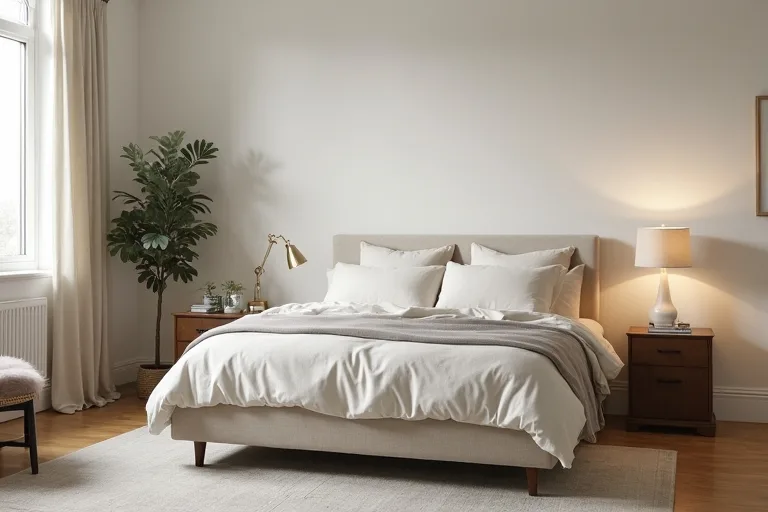
The real decision is not what looks nicest in a store. It is what fits the room, supports easy movement, and gives guests enough comfort without forcing you to squeeze in extra pieces that the space cannot handle.
Choose furniture that fits the space
Guest bedrooms usually work best with fewer, better-chosen pieces. A queen bed may be the right anchor in one room, while a smaller bed or a more compact frame may be the better decision in another. The size of the room should guide that choice, not a general idea of what a guest room “should” have.
When you are comparing furniture, think about how each item behaves in the room, not just how it looks in isolation.
- Bed frame: Check the footprint, headboard depth, and how much visual weight it adds to the room.
- Bedside table: Make sure there is enough room for a lamp, a water glass, and a charger without crowding the bed.
- Extra seating or bench: Only add it if there is still an easy walking path.
- Storage piece: Choose closed storage if the room needs to hide overflow items.
If you are buying a bed as the foundation piece, an upholstered platform bed frame queen is a sensible option to review because it gives the room a defined base without needing much extra styling. For bedding, a linen look duvet cover set queen neutral is a calm, flexible choice that can work with many guest room layouts.
Keep the furniture list short until the room proves it can handle more. In many guest rooms, the most useful pieces are the bed, one or two small tables, a light source, and one storage solution that keeps the room feeling tidy between visits.
Plan comfort, storage, and lighting together
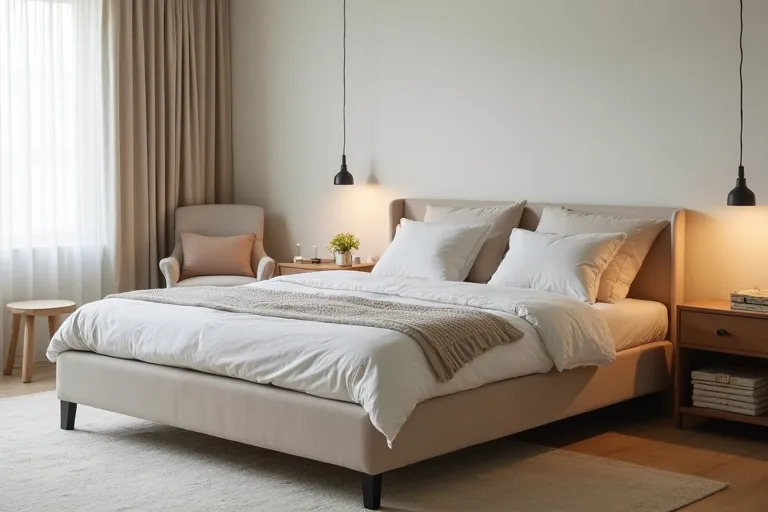
A guest bedroom feels complete when comfort basics are handled together. Bedding, lamps, storage, and a place for luggage all affect how easy the room is to use. If one part is missing, the room can feel unfinished even if the decor looks nice.
Think through the guest experience in this order:
1. Bedding: Choose layers that are easy to wash and simple to keep ready between stays.
2. Lighting: Add one main light source and, if possible, a bedside lamp that makes evening use easier.
3. Storage: Provide a drawer, shelf, or closet space for guests so they do not live out of a suitcase.
4. Surface space: Leave room for a phone, book, glasses, and water.
For rooms with limited storage, it helps to choose pieces that do double duty. A bed with hidden storage, a bench that can hold luggage, or a compact drawer unit can reduce clutter without making the room feel overfilled. The right choice depends on what the room is missing most.
If you want a simple way to keep track of room needs and spending at the same time, the Room Makeover Planner, Home Layout Budget Spreadsheet (Digital Download) is a practical planning tool to use before checkout. It helps you map the room and stay aware of budget decisions while the plan is still flexible.
Decide what decor is useful versus optional
Decor should support the room, not create more decisions. In a guest bedroom, the most useful finishing pieces are usually the ones that improve comfort or make the room easier to use. That may mean a mirror, a small artwork choice, a throw, or a basket for extra blankets.
Optional decor is anything that adds visual interest but does not improve how the room functions. Those pieces can wait until the main setup is working well. That approach keeps the room from feeling busy and helps you spend on the things guests will actually notice.
Choose a small number of finishes and repeat them. If the room already has a soft neutral base, a calm lamp, simple bedding, and one or two practical accents are often enough. You do not need a layered decorative scheme for the room to feel considered.
When in doubt, test every decor idea against one question: does this make the room more comfortable, more usable, or easier to maintain? If the answer is no, it can usually be skipped.
Best next step
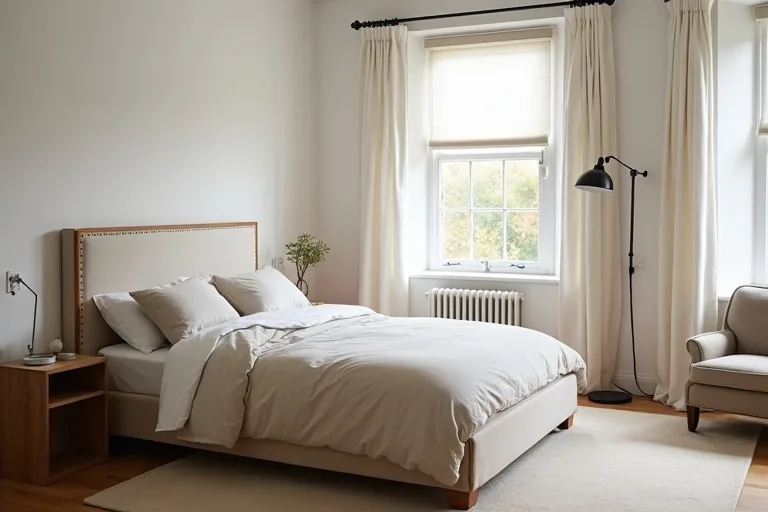
Before you buy the bed, bedding, or storage pieces, confirm the layout and budget on paper. A room planner or budget sheet makes it much easier to see whether the room can handle the furniture you want and whether the spend still makes sense.
- Buying decor before the bed size and layout are set.
- Choosing furniture that blocks door swings or walking space.
- Adding too many pieces and leaving no room for luggage.
- Ignoring lighting, then trying to fix the room with decor alone.
- Buying storage that looks tidy in theory but does not suit the room’s actual needs.
A guest bedroom is easiest to get right when you plan the basics first. Start with the room layout, choose a bed that fits the space, check storage and lighting, and only then decide which decor is truly useful. That order keeps the room calm, practical, and much easier to shop for.
Helpful next tools and planners
If you want to make the decision easier before you buy
These are the most relevant tools and products for turning the plan into a room that fits well, stays organized, and does not need expensive fixes later.
FAQ
What should I buy first for a guest bedroom?
Start with the bed size, layout, and storage needs. Those decisions shape everything else, including lighting and decor.
Do I need a full furniture set for a guest room?
No. Most guest bedrooms work better with a small number of useful pieces rather than a matching set that fills the room.
How do I make a small guest room feel practical?
Keep the layout open, choose compact furniture, and use storage that hides clutter without taking over the floor.
What decor actually matters in a guest bedroom?
Focus on items that improve comfort or ease of use, such as lamps, a mirror, soft bedding, and a simple place for luggage or extra blankets.
Three sensible next steps
Some links in this article may be affiliate links. Read more in the Affiliate Disclosure.