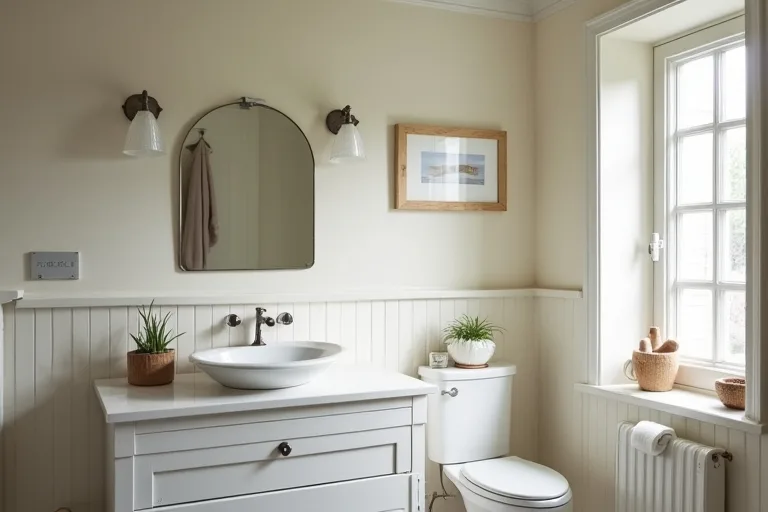
Low-cost upgrades can be smart, but only when they change how a room actually reads. The mistake is spending on small, scattered fixes that feel productive without improving the main view, the daily function, or the overall balance of the space.
If you want the best return from a modest budget, start with visibility. In many bathrooms, the vanity wall and lighting zone carry more visual weight than decor swaps, and that makes them a better place to spend first.
Focus on the most visible zones first, especially bathroom lighting, and avoid spending on changes that do not improve the room’s main view or function.
Start with the view that matters
Before you buy anything, stand in the doorway and look at the room the way you use it most often. In a bathroom, that usually means the vanity area, the mirror wall, and the path you take every day. Those are the places where a small improvement can feel meaningful, because they are seen constantly.
When people feel stuck on a budget, they often start with the easiest items to change: towels, baskets, hooks, frames, or a new soap dispenser. Those updates can be neat, but they rarely change the room’s structure or focus. A better first step is to ask which part of the room looks tired, unfinished, or badly lit from the main viewpoint.

If an upgrade will not change the room as you stand in the doorway or at the mirror, it is probably not the best first spend. The most useful low-cost upgrades usually improve the main sightline, the light at face level, or the way the room functions day to day.
Why lighting usually beats small decor swaps
Bathroom lighting is one of the clearest examples of a high-impact, low-cost change because it affects both function and appearance at the same time. Better light at the vanity makes the room easier to use, but it also makes finishes look cleaner and the whole space feel more intentional.
That is why a modest fixture upgrade can often do more than several decorative purchases combined. If the vanity area is dark, yellow, or visually crowded, the room may feel dated even when everything else is tidy. A simple LED vanity light fixture can make the space feel brighter and more settled without changing the layout.
For a budget comparison, it helps to look at the room as a set of decisions, not separate shopping moments. You can start with the bathroom remodel cost estimator here: bathroom remodel cost estimator. That makes it easier to decide whether the next spend should go toward lighting, a fixture refresh, or a different visible change.
The low-impact mistakes that quietly waste budget
Low-cost upgrades usually go wrong in the same few ways. The issue is not that the items are bad; it is that they are too small, too disconnected, or placed in the wrong part of the room to matter.
Use this simple sequence when you are deciding what to change next:
- Identify the main view from the doorway and the daily-use zone.
- Check whether the problem is light, scale, or placement.
- Choose one improvement that affects that area directly.
- Pause before adding anything else to the same budget.
Wrong scale is a common trap. A fixture that is too small for the vanity wall, or decor that is too tiny for the room, can make the whole area feel unfinished. Poor placement can be just as wasteful; even a nice object loses value if it sits where nobody notices it. Fragmented spending is the third problem, because three or four minor purchases often cost more than one change that actually moves the room forward.

If you are unsure whether the room needs a lighting change or a layout adjustment, it is worth checking the basics before shopping. A tape measure or laser measure helps you confirm clearances, fixture width, and mirror alignment so you do not buy something that looks right online but feels off in the room. You can also use the paint calculator when the real issue is a tired wall color rather than a hardware swap.
A simple way to choose the right upgrade
When budget is limited, the best choice is usually the one that improves both visibility and daily use. That means asking a few practical questions before you spend: Will I see this change every day? Will it improve the room’s main function? Does it work with the existing layout, or is it only cosmetic?
If the answer is no to most of those questions, save the money for a better change. In a bathroom, that often means prioritizing the vanity light, mirror arrangement, or another visible fix before buying more storage accessories or small decor items.
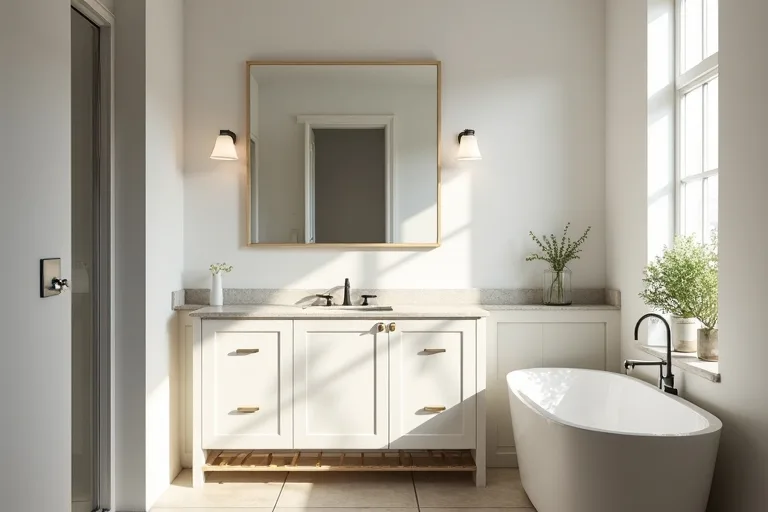
For the planning step, a budget spreadsheet can help you compare options without losing track of the order of work. The Home Renovation Budget Planner Spreadsheet (Google Sheets, Excel) is useful if you want one place to list ideas, costs, and priorities. If you are still deciding what the room needs most, the Remodel & Budget hub is a sensible place to keep your next step focused.
Best next step
Before you spend on another small update, check whether the bathroom’s biggest problem is actually lighting, scale, or placement. The fastest way to stay calm and avoid waste is to compare the visible impact of the next change against the budget it will take.
- Buying several small items before fixing the main visible problem.
- Upgrading decor in a room that mainly needs better lighting.
- Choosing fixtures or accessories that are too small for the space.
- Spending on areas that are rarely seen instead of the main view.
- Skipping measurement and ending up with a poor fit or awkward placement.
High-impact, low-cost upgrades are not about buying more things. They are about choosing the one change that improves the room’s most visible zone and solves a real problem at the same time. In many bathrooms, that means starting with the vanity lighting area, then using a simple budget check and a planning tool before you commit to anything else.
Helpful next tools and planners
If you want to make the decision easier before you buy
These options fit the planning stage well: one helps you compare budget against impact, one helps you measure accurately, and one helps you keep track of the full upgrade sequence.
FAQ
What should I upgrade first if my bathroom budget is small?
Start with the most visible problem, usually the vanity lighting zone. If the room looks dull or unfinished from the main viewpoint, that is often a better first spend than small decor items.
Why do small decor changes often feel disappointing?
Because they rarely change the room’s structure, light, or scale. They can make the room feel tidier, but they do not always change how the space reads overall.
How do I know if a fixture is the wrong size?
If it looks too small for the wall, leaves the vanity area visually unbalanced, or feels out of proportion with the mirror and sink, the scale is probably off. Measuring before buying helps avoid that problem.
Do I need a planner for a small update?
It helps if you are comparing more than one option. A simple budget planner makes it easier to see whether one better upgrade is smarter than several smaller purchases.
Three sensible next steps
Some links in this article may be affiliate links. Read more in the Affiliate Disclosure.