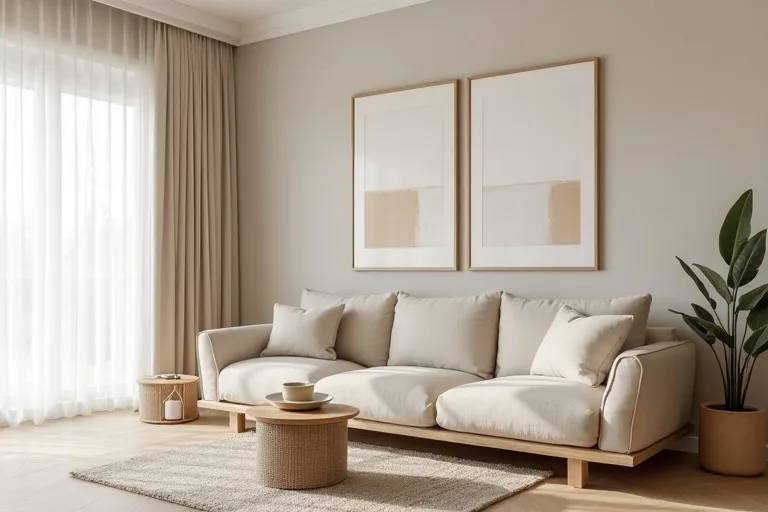
Japandi works best when the room feels quiet, useful, and easy to live in. The style loses that feeling when it is copied too literally, stripped of warmth, or filled with the wrong finishes.
If a room starts to feel staged instead of settled, the issue is usually not the idea of Japandi itself. It is the way the furniture, spacing, texture, and decor have been chosen and placed.
Japandi feels forced when it becomes too styled, too sparse, or uses the wrong materials and proportions. The fix is usually simple: start with the layout, keep the palette restrained, and add just enough natural texture to make the room feel lived in.
Start with the room, not the style
The easiest way to make Japandi feel unnatural is to treat it like a shopping list. A low sofa, pale wood, a few ceramic objects, and a neutral rug can look right in isolation, but the room still feels off if the layout does not support how the space works.
Japandi depends on balance. That means leaving enough open space to let the room breathe, but not so much that it feels empty. It also means choosing furniture that suits the footprint instead of forcing oversized pieces into a compact room or scattering too many small items across a larger one.

Before buying anything, it helps to decide what the room needs to do. A reading corner, a family living room, and a bedroom all need different amounts of seating, surface area, storage, and visual calm. Japandi only works when the room plan comes first.
If you remove the styling items from the room, does the layout still make sense? If the answer is no, the problem is not decor. It is scale, function, or flow.
Watch the material mix
Japandi is often described as minimal, but minimal does not mean flat or synthetic. A common mistake is mixing too many smooth, manufactured finishes and expecting the room to feel calm. High-gloss surfaces, shiny metals, and plastic-looking pieces can make the style feel colder and more deliberate than it should.
The safer direction is to keep the material palette grounded and tactile. Wood, linen, wool, matte ceramics, and paper or fabric shades usually feel more natural than polished surfaces. You do not need every piece to be rustic. You do need enough softness and variation to keep the room from feeling sterile.
- Use one or two main natural materials repeatedly.
- Limit shiny finishes to small accents.
- Choose matte or softly textured pieces where possible.
- Let the finish quality look honest, not overly processed.

Get scale, spacing, and warmth right
A room can use all the right colors and still feel wrong if the proportions are off. Japandi needs a careful balance between open space and warmth. Too much furniture makes it heavy. Too little makes it feel like a display room rather than a home.
One of the most useful checks is to look at the room in layers. Start with the largest pieces first: sofa, bed, table, storage, and rug. Then step down to lighting, curtains, and wall decor. If the larger pieces are too bulky or too small, no amount of styling will fix the imbalance.
Warmth matters here as well. People often strip away too much in the name of simplicity and end up with a room that feels unfinished. A linen curtain panel, a wood side table, a soft rug, or a quiet abstract framed set can bring the room back into balance without making it busy.
Use restraint without making the room feel empty
Japandi is not about removing everything. It is about keeping only what supports the room. That is why too much decor feels fussy, but too little makes the space cold and detached.
Wall art is a good example. A busy gallery wall can overpower the simplicity of the style, while nothing at all can leave the room feeling unfinished. A neutral abstract wall art framed set usually works better because it gives the wall a clear purpose without demanding attention. The same idea applies to curtains, cushions, and smaller accessories: choose pieces that soften the space instead of crowding it.
For a bedroom or living room, the goal is not perfect emptiness. It is controlled visual rest. When the room has enough texture, enough light control, and enough breathing room around each piece, Japandi stops looking forced and starts looking natural.
Best next step
Before you buy more decor, use a simple planning step to check layout, scale, and balance. If the room still feels too bare or too busy after that, adjust the larger pieces first, then finish with restrained texture and art.
- Copying Japandi decor pieces without checking whether the room layout supports them.
- Using too many glossy, synthetic, or high-contrast finishes.
- Choosing furniture that is the wrong scale for the room.
- Leaving the space so empty that it feels cold instead of calm.
- Adding too many small decorative objects instead of a few quiet, useful pieces.
Japandi feels forced when it is treated as decoration instead of a room plan. The style works best when the layout makes sense, the materials feel natural, and the styling stays restrained enough to leave room for light, texture, and everyday use.
Helpful next tools and planners
If you want to make the decision easier before you buy
A small planning step can save you from buying pieces that look right online but feel wrong in the room. These options are most useful when you are checking proportions, finishing touches, or a simple style direction before committing.
FAQ
What makes Japandi look forced?
It usually comes down to copying the look too literally, using the wrong materials, or styling the room without checking the layout first.
Can Japandi work in a small room?
Yes, but the furniture scale and negative space need to be handled carefully so the room stays open without feeling sparse.
Do you need a lot of decor for Japandi?
No. A few restrained pieces with natural texture are usually enough if the main furniture and lighting choices are right.
What is the easiest way to make a room feel more Japandi?
Start with a calm layout, then add linen, wood, and simple wall art instead of more decorative clutter.
Three sensible next steps
Some links in this article may be affiliate links. Read more in the Affiliate Disclosure.