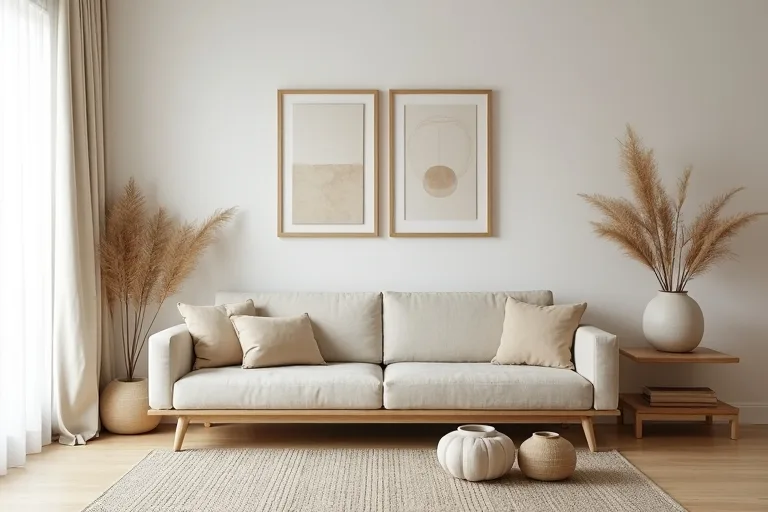
Japandi can look effortless from the outside, but the best version of it is really a planning choice. It blends the calm of Japanese-inspired restraint with the warmth and usefulness of Scandinavian interiors, so the room feels edited without feeling empty.
If you like simple rooms but do not want your home to feel cold, Japandi is worth approaching carefully. The goal is not to strip everything back; it is to choose fewer pieces that work harder for comfort, layout, and daily life.
Use warm neutrals, low-profile furniture, natural textures, and a clear layout so the room feels calm without becoming sparse. If you keep the practical pieces first and the styling second, Japandi stays livable rather than looking unfinished.
What Japandi really means in a real home
At its simplest, Japandi is a style built around restraint, balance, and usefulness. It takes the uncluttered feeling of Japanese interiors and pairs it with the softer, more relaxed comfort of Scandinavian design. In practice, that means fewer visual distractions, more natural materials, and furniture that sits quietly in the room instead of competing with it.
This is why Japandi works best when you start with the room plan, not the decor list. A low sofa, a sensible side table, a clear walkway, and enough storage will do more for the style than a cart full of matching accessories. If you are working on a bedroom, it can help to think first about sleep, movement, and storage, then build the look around those needs. For room-specific planning, the bedroom ideas page is a useful place to compare layouts and calm styling choices.

If a room feels calm but awkward to use, it is not really Japandi yet. The style should make movement easier, storage clearer, and daily routines simpler. Before you buy anything decorative, ask whether the main furniture pieces support the way the room is actually used.
The materials, colors, and shapes that keep Japandi warm
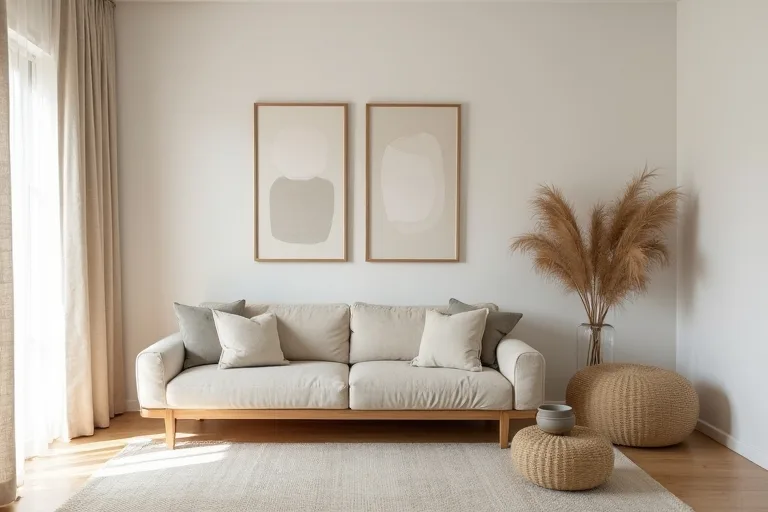
Japandi usually works best with a restrained palette: warm white, soft beige, muted taupe, pale wood, charcoal accents, and a little black for definition. The room should feel light, but not bright in a harsh way. The materials matter just as much as the color. Linen, oak, wool, ceramic, paper, and matte finishes all help the style feel grounded.
Shapes are equally important. Choose simple silhouettes with gentle edges, low seating, and furniture that leaves visual breathing room. The look becomes more convincing when each piece has a reason to be there.
A useful way to narrow the choices is to think in this order:
- Start with the largest pieces: sofa, bed, table, storage.
- Choose a quiet finish: light wood, neutral fabric, or matte painted surfaces.
- Add one or two texture layers: linen, woven rug, ceramic decor, or a throw.
- Keep contrast controlled so the room does not become flat.
What to keep, simplify, and avoid
The easiest way to approach Japandi is to edit the room by category. Keep what supports the daily function of the space. Simplify what feels visually noisy. Avoid anything that adds clutter without improving comfort or use.
Keep: the main seating or sleeping pieces, a practical table or bedside surface, and storage that hides everyday items. These are the foundation of the room, so they should feel sturdy and calm rather than decorative.
Simplify: mixed finishes, small accessories, overly busy patterns, and extra furniture that blocks movement. Japandi benefits from open surfaces, but not from bare surfaces everywhere. A few useful objects are better than a room full of filler.
Avoid: high-contrast clutter, too many textures in one area, and decor that makes the room look styled but hard to live in. If an item only works because it is trendy, it probably is not helping the room plan.
One good rule is to let each visible item earn its place. If it does not improve function, comfort, or the overall calm of the room, leave it out.
How to finish the room without losing the calm
Finishing touches matter in Japandi, but they should feel controlled. This is the point where a room either becomes settled and inviting, or slips into overdecorated. A pair of linen curtain panels neutral can soften light without making the room heavy, while a neutral abstract wall art framed set can add quiet structure without introducing visual noise.
These kinds of finishing pieces work best when the room already has the basics in place. Curtains should complement the window and the light, not fight it. Wall art should support the palette, not break it apart. The result should feel deliberate but understated.
If you like planning before shopping, a simple room layout check can save you from buying decor that fills space instead of improving it. A practical option such as the Home Planning System Bundle, Room Makeover, Small Space, Budget Tool (Digital Download) can help you map the room before making styling decisions.

Best next step
If you are trying to make Japandi work in your own room, start with layout and proportions before you buy decor. The right amount of minimalism depends on the room size, the amount of storage you need, and how much visual openness you can keep without making the space feel unfinished.
- Going too sparse and removing useful storage or seating.
- Using only cool tones, which can make the room feel hard instead of calm.
- Adding too many decor pieces in the name of balance.
- Choosing furniture that looks minimalist but does not support daily use.
- Ignoring window treatments, which can leave the room feeling unfinished.
Japandi works when the room feels calm, practical, and easy to use. The style is less about buying the right decor and more about making careful choices about layout, storage, texture, and restraint. If you keep the furniture functional, the palette warm, and the finishing touches simple, you get the look without losing comfort.
Helpful next tools and planners
If you want to make the decision easier before you buy
These are best used after you have settled the room plan. They can help you confirm the final styling direction and avoid purchases that do not fit the space.
FAQ
Is Japandi the same as minimalism?
No. Minimalism often focuses on reduction, while Japandi adds warmth, texture, and a stronger sense of comfort. It is still edited, but it should feel more lived-in than a strict minimalist room.
What colors work best in Japandi interiors?
Warm neutrals, pale woods, soft taupe, muted stone tones, and a limited amount of darker contrast usually work well. The goal is a gentle palette that feels calm rather than stark.
Can Japandi work in a small space?
Yes, especially if the room needs visual order and sensible storage. Low furniture, clear walkways, and a small number of well-chosen pieces can make a compact room feel more open and easier to use.
What should I buy first for a Japandi room?
Start with the largest and most functional pieces, such as seating, tables, storage, and window coverings. Once those are right, add a few restrained finishing pieces rather than building the room from decor upward.
Three sensible next steps
Some links in this article may be affiliate links. Read more in the Affiliate Disclosure.