
A kitchen island can look stylish and still feel slightly off. Maybe it is too large for the room, too close to the cabinets, or visually heavy compared with the rest of the kitchen. When that happens, the room often feels harder to use even if the finishes are good.
The fix is usually not more decor. It is better proportion, better clearance, and a few finishing choices that support the layout instead of fighting it.
Start with island size and clearance, then add seating and lighting only if the layout still feels balanced. If the island is the wrong proportion, no stool or pendant will fully correct it.
Start with island size and clearance
The most balanced islands are usually the ones that fit the room first and look good second. If an island sits too close to surrounding cabinetry, the whole kitchen can feel cramped. If it is too small, it may look like it was added as an afterthought. The goal is a shape that feels steady in the room and still leaves comfortable routes around it.
Before choosing finishes or accessories, check how much room the island really has to work with. That includes walking space on all sides, space for appliance doors, and enough room for people to pass without turning sideways.
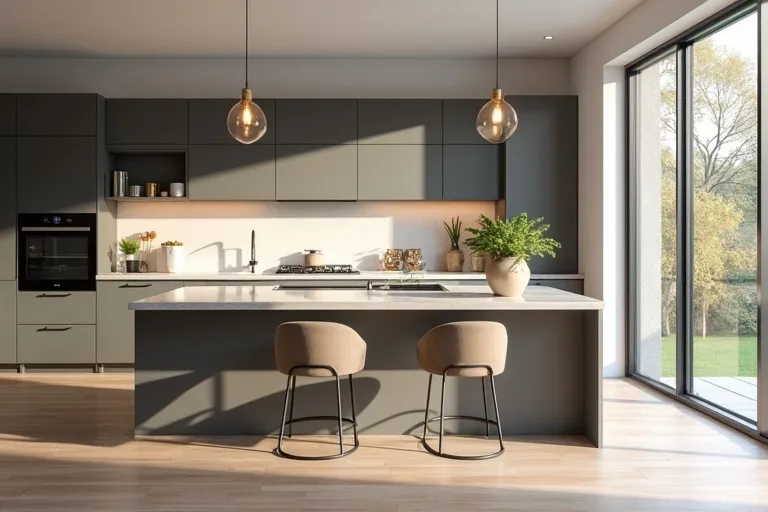
If you are still deciding on dimensions, the easiest next step is to compare the island against the room rather than against a photo online. A well-sized island makes the kitchen feel more settled because it supports circulation instead of competing with it.
The real decision is not whether the island looks nice on its own. It is whether the island, surrounding clearances, and traffic paths work together. If the room feels tight, reduce the island first. If the room feels empty or unbalanced, increase the island only if circulation still stays comfortable.
Choose seating that fits after the island is sized
Island seating should come after the island itself is set. That order matters because stools can only solve so much. The wrong height, spacing, or seat depth can make an otherwise good layout feel awkward, while the right seating quietly helps the island look complete.
For a simple decision process, start here:
- Confirm the island dimensions and edge clearances.
- Decide whether the island needs everyday seating or just occasional perch space.
- Match stool height to the counter height, then check legroom and pull-out space.
- Choose the number of stools the island can comfortably support without crowding.
A set of counter height bar stools set of 2 can be a useful fit for a smaller or medium island when you want two seats without overfilling the room. The best choice is usually the simplest one that leaves breathing room around the base and allows people to sit down without blocking a walkway.
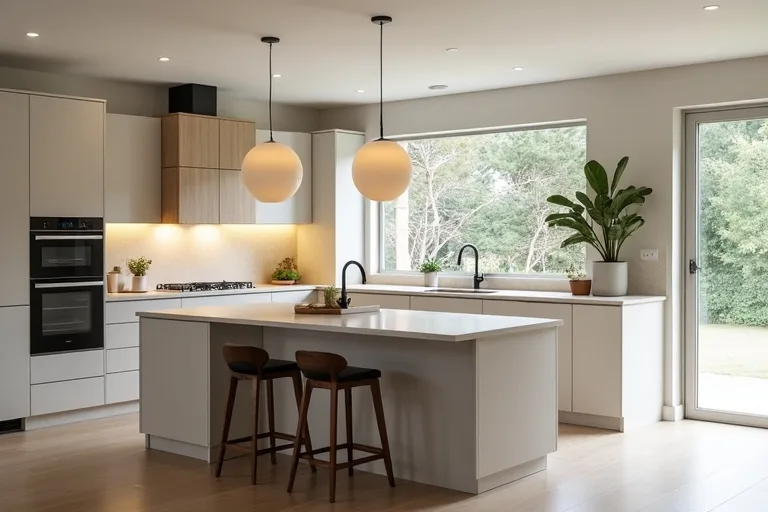
Use lighting to anchor the island visually
Lighting is one of the easiest ways to make an island feel intentionally placed. A pair of pendants can help define the island as the center of activity, especially in an open-plan kitchen where the room otherwise feels visually flat.
The key is not to overdo it. Lighting should support the island’s shape and scale, not add clutter above it. Two well-spaced fixtures often feel calmer and more balanced than one oversized fitting, especially when the island is medium-sized and the rest of the kitchen is fairly restrained.
If you are comparing options, kitchen island pendant lights set of 2 can work well when you want symmetry without making the ceiling feel busy. Aim for a look that visually frames the island and still leaves the room feeling open.
Add the finishing details that make it feel complete
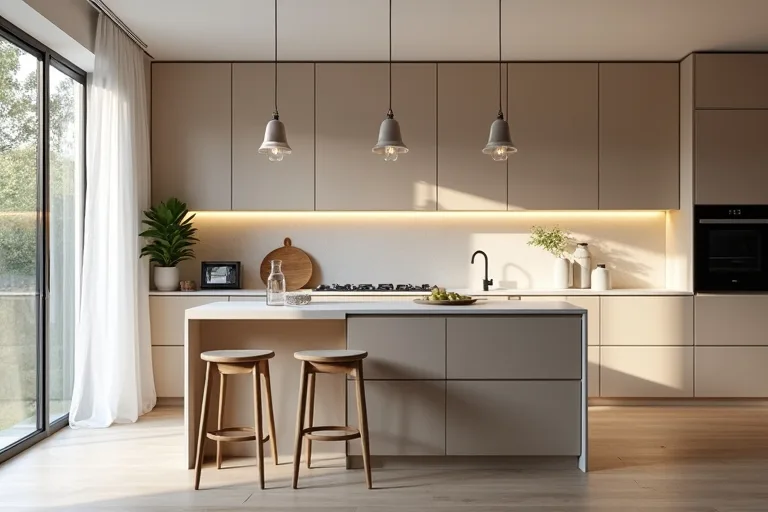
Once the island size, seating, and lighting are settled, the last layer is the part that makes the island feel finished rather than temporary. That usually comes from a few practical details: an overhang that feels useful, storage that suits how the kitchen is used, and surfaces that make sense alongside the rest of the room.
An overhang can help an island feel more purposeful because it gives the seating side a clear job. Storage can do the same by keeping the visible side of the island cleaner and better ordered. Even simple choices like matching hardware or repeating a finish from nearby cabinets can make the island feel more integrated without making it more decorative.
If you are planning a bigger kitchen update, a digital planner can help you keep the layout and budget in the same place. A tool like the Room Makeover Planner, Home Layout Budget Spreadsheet (Digital Download) is most useful when you want to compare layout choices before buying stools, lights, or other extras.
Best next step
If the island still feels off, confirm the dimensions before you buy anything else. A sizing check will usually tell you whether the problem is the island itself, the seating plan, or the space around it.
- Choosing stools before confirming island size and walking clearance.
- Using pendants to fix an island that is already too large or too small for the room.
- Forgetting that drawers, appliance doors, and stools all need space to move comfortably.
- Adding more finishes when the real issue is proportion, not styling.
The calmest kitchen island ideas are the ones that begin with proportion. If the island fits the room, circulation stays easy, and seating and lighting are chosen to support that layout, the whole kitchen feels more balanced and more finished without needing much else.
Helpful next tools and planners
If you want to make the decision easier before you buy
These are the most useful next steps when you are still comparing island size, seating, and the final layout. Start with the sizing tool, then use a simple planner if you want to keep the project organized.
FAQ
How do I know if my kitchen island is the right size?
It should leave comfortable circulation around it, suit the room’s proportions, and not crowd appliance doors or nearby seating. If the kitchen feels harder to move through, the island may be too large.
Should I choose stools before or after the island is sized?
After. Stool height and spacing only make sense once the island dimensions are fixed. Otherwise, you may end up with seating that looks fine online but feels awkward in the room.
Do I need pendant lights over every island?
No. Pendants help define the island, but they are only useful if the layout already works. If the room is tight or visually busy, simpler lighting may be the better choice.
What makes an island feel finished instead of temporary?
A clear proportion, sensible overhang, storage that suits the way the kitchen is used, and finishes that connect naturally with the rest of the room all help the island feel settled.
Three sensible next steps
Some links in this article may be affiliate links. Read more in the Affiliate Disclosure.