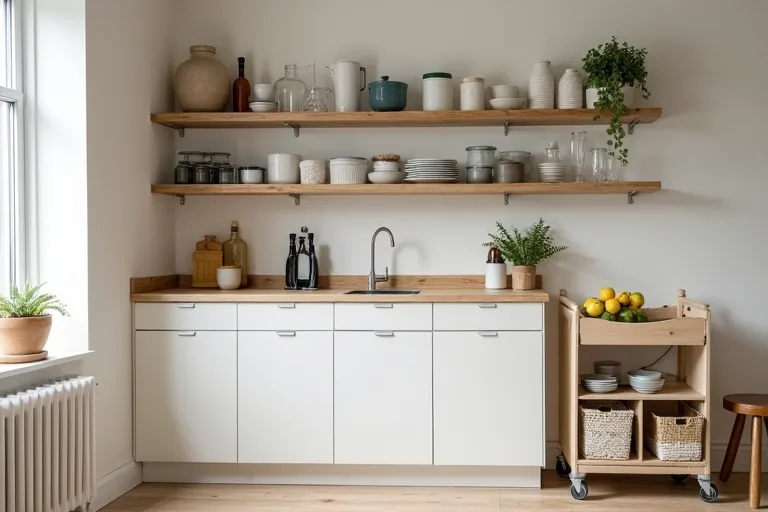
Most kitchen storage problems do not start with a lack of products. They start with buying containers, shelves, or cabinets before the space has been thought through. Once that happens, the kitchen can end up looking busier and working less well than before.
A better approach is to decide what you need to store, how often you use it, and where it can realistically fit. That makes it much easier to choose between bins, open shelves, cabinets, or a flexible piece like a rolling kitchen cart with storage.
Start by measuring what you need to store, then choose the storage type that fits your space, flow, and budget.
Start with what actually needs storing
Before you shop, list the items that are causing the clutter. In most kitchens, that means pantry food, cookware, serving pieces, small appliances, cleaning items, and the everyday things you reach for constantly. These groups usually need different storage solutions.
If you mix everything together, it becomes harder to see what is missing. Pantry items may need clear containers, while cookware may need deeper shelves or cabinets. Daily-use items should stay easy to reach, or they will end up on counters.
It can help to sort the problem by category:
- Dry food and pantry staples
- Pots, pans, and lids
- Small appliances you use often
- Backstock, bulk items, and extras
- Everyday dishes or prep tools
Once the categories are clear, the next choice becomes much simpler.
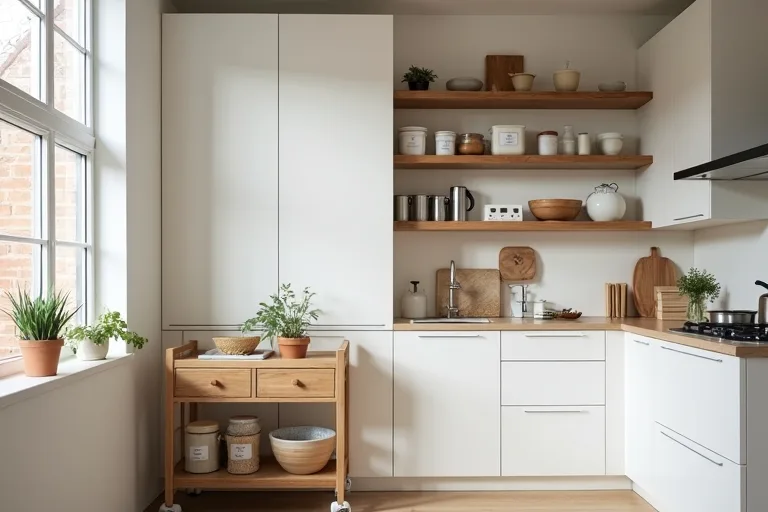
If an item is used daily, it should be easy to see and reach. If it is seasonal, bulky, or rarely used, it can live higher up, deeper back, or in a less convenient spot. That single rule usually prevents the most common storage mistakes.
Measure the space before you shop
Storage products only work when they fit the room you already have. Measure floor space, wall width, cabinet openings, and the clearance needed for doors, drawers, and walking paths. A shelf that looks slim online can still block movement in a narrow kitchen.
For small kitchens, consider the zones that are already under pressure. A cart may work better than a fixed cabinet if you need a movable prep surface or extra pantry space. A wall shelf may be useful if floor space is tight. The right choice depends on where the clutter is happening and how much room is actually available.
If you are unsure where the limits are, a layout-first tool can help you think more clearly about the room as a whole. The room layout planner is a good place to check circulation and placement before you buy anything.
Match the storage type to the way you use the kitchen
Not every kitchen needs the same kind of storage. The best solution depends on whether you want to hide visual clutter, improve access, or make the room more flexible.
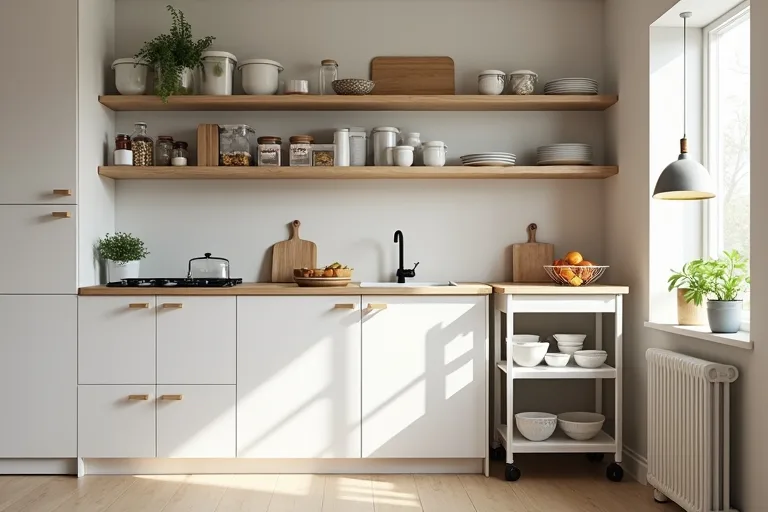
Open shelves work well when you want quick access and only plan to store a few tidy categories. Bins and containers are useful for loose pantry items, snacks, refills, and mixed packs that are hard to stack neatly. Cabinets are better when you want to reduce visual noise and keep mismatched items out of sight.
A rolling kitchen cart with storage is often the most useful middle ground. It can hold extra pantry goods, kitchen tools, or serving items, and it moves when you need more space. That makes it a practical option for renters, small kitchens, and homes where the room has to do more than one job.
If you want to compare the broader storage approach with other small-home decisions, the small spaces storage hub is a helpful next stop.
The best storage solution is not the one with the most compartments. It is the one that fits your routine without creating more steps every time you cook, unload groceries, or clean the counter.
For pantry items, a simple airtight set can reduce clutter and make shelves easier to read. If that is part of your current problem, an airtight pantry food storage containers set may make sense after you have decided what needs decanting and what can stay in its original packaging.
Check budget, assembly, and the real purchase decision
Once you know what you need and where it will go, compare the effort of each option. Some storage pieces look simple but need assembly, wall fixing, or careful measuring. Others are easier to place but may not solve the whole problem.
It helps to compare three things before buying:
- Will it fit the space without blocking movement?
- Will it make the room easier to use every day?
- Will it still be useful if your needs change later?
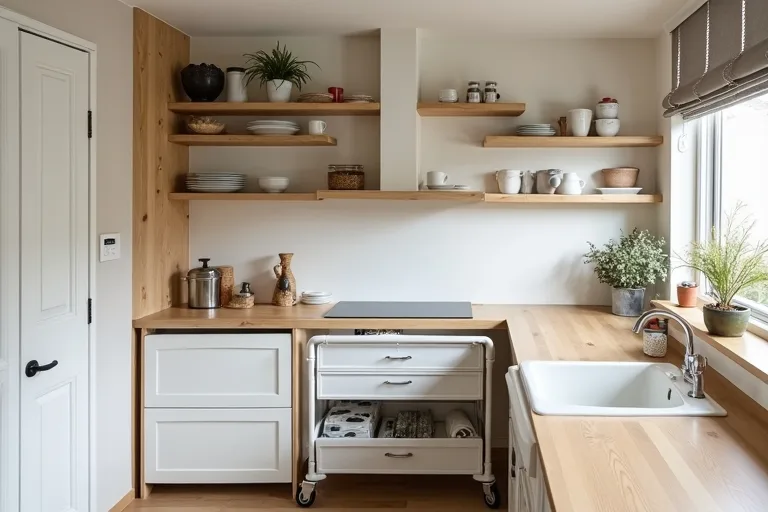
That is where flexible pieces can be especially useful. A rolling kitchen cart with storage gives you extra room without committing to a permanent cabinet, and it can be repositioned if the kitchen layout changes. If you are planning a room update around budget as well as layout, the Room Makeover Planner, Home Layout Budget Spreadsheet (Digital Download) can help keep the project realistic.
For readers who want a simple route into storage planning, a cart is often the easiest first purchase when the kitchen needs breathing room before a larger update. If you want to explore that kind of solution, this rolling kitchen cart with storage is a natural option to review after the layout is clear.
Best next step
If your kitchen still feels crowded after you sort, measure, and compare the options, step back from shopping and look at the room plan first. That usually saves money and makes the storage choice much easier.
- Buying bins before deciding what they are meant to hold
- Choosing shelves without checking wall width or clearance
- Adding cabinets that block movement in a narrow kitchen
- Ignoring how often each item is actually used
- Picking storage that looks tidy but makes daily tasks slower
Good kitchen storage starts with the job, not the product. Measure what needs to be stored, match the solution to the space, and choose the simplest option that improves daily use. In many kitchens, that means a mix of bins, shelves, cabinets, and a flexible rolling cart rather than one big fix.
Helpful next tools and planners
If you want to make the decision easier before you buy
These are the most practical next steps if you are still deciding between fixed storage, flexible storage, and a simple layout update.
FAQ
Should I buy bins or shelves first?
Start with the storage problem, not the product. Bins help with loose pantry items, while shelves help when you need more visible vertical space.
When does a cabinet make more sense than open storage?
Cabinets are usually better when you want to hide visual clutter or store mixed items that do not look tidy on display.
Is a rolling kitchen cart worth it in a small kitchen?
Yes, if you need extra storage or prep space without giving up permanent floor area. It is especially helpful when the layout may change later.
How do I know if my kitchen needs more storage or better organization?
If you already have enough space but things are not grouped well, organization may be the issue. If you are constantly running out of room, you likely need a different storage type or a better layout.
Three sensible next steps
Some links in this article may be affiliate links. Read more in the Affiliate Disclosure.