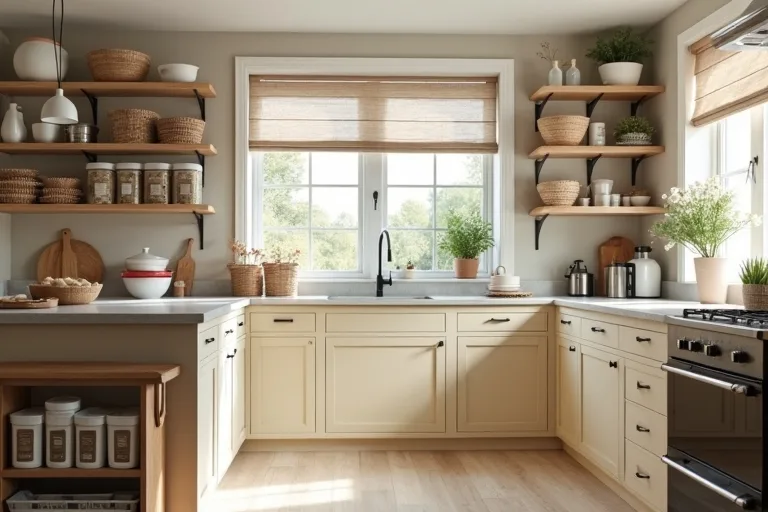
Most kitchen storage problems are not really about having too few containers or organizers. They are usually about the way the kitchen works day to day: where things land, how often you use them, and whether the room makes simple tasks feel crowded.
Good kitchen storage ideas should make cooking easier, not add another layer of decision-making. The best place to start is with the layout you already have, then choose storage that supports your routine instead of fighting it.
The best kitchen storage ideas are the ones that match your layout, routine, and available space. Start by identifying what is causing clutter, then use a mix of fixed storage, pantry organization, and flexible pieces like a rolling kitchen cart with storage where your room needs extra utility.
Start with the real storage problem
Before buying bins or organizers, look at what is actually causing the mess. In many kitchens, the issue is not the amount of storage overall. It is that everyday items have no clear home, or the home they do have is inconvenient to use.
Common examples include cooking tools that spread across the counter, pantry items that get hidden behind deeper shelves, or small appliances that take over working space because there is nowhere practical to keep them. Once you know the main problem, storage decisions become much easier.
If your kitchen feels cluttered but you are not sure why, start by grouping items into three categories: things used daily, things used weekly, and things used occasionally. That simple split usually shows where your storage needs are strongest.

The real decision is not whether you need more storage accessories. It is whether your kitchen needs better fixed storage, better flow, or one flexible piece that fills a gap. If the room works but feels tight, a rolling cart may help. If the room is awkward to use, layout and zone planning matter more than shopping.
Map zones, flow, and fixed storage
A calm kitchen is usually organized around clear zones. Food prep, cooking, washing up, and storage all work better when the items needed for each task stay close to that task. This reduces back-and-forth movement and keeps the worktop clearer.
Think about the routes you take most often. If the pantry is far from the prep area, or if the cooking tools are stored across the room from the stove, the kitchen will feel less efficient even if it is technically tidy. Small changes to placement often make a bigger difference than adding more products.
- Keep daily prep items near the main work surface.
- Store cooking tools close to the hob or main cooking area.
- Place cleaning items near the sink.
- Reserve harder-to-reach storage for occasional items.
If your kitchen layout feels awkward, it can help to think beyond storage alone. A wider planning view, such as the guidance in the Kitchen & Dining hub, can make it easier to understand whether the room needs re-organisation rather than more products.

Use pantry, cabinet, and drawer storage well
Once the layout makes sense, focus on the storage you already have. Cabinets and drawers work best when the most frequently used items are easiest to reach. That sounds obvious, but many kitchens are set up in the opposite way, with daily items pushed behind less useful ones.
Pantry storage benefits from clarity more than anything else. Clear, consistent containers can help you see what you have, reduce duplicate purchases, and make it easier to keep dry goods in order. A set of airtight pantry food storage containers set can be useful if your main issue is visibility and keeping staples grouped together.
Drawers and cabinets are worth sorting by category rather than by whatever happens to fit. For example, baking tools can stay together, lunch items can stay together, and serving pieces can stay together. The goal is not perfect labeling. The goal is to reduce friction when you cook, clean, and put things away.
Choose flexible storage and plan your next step
Flexible storage is most useful when your kitchen needs a little extra support without a full remodel. A rolling cart can hold produce, appliances, meal prep items, or even overflow pantry goods. It is especially helpful when you need storage that can move with the task instead of staying fixed in one place.
If you want to make the next step clearer, compare how much space you have, what you want to store, and how often you use those items. That keeps the decision grounded in function. It also helps you avoid buying pieces that look useful but do not solve the real problem.
For homeowners and renters who are planning carefully, a simple layout tool or budget tracker can be just as useful as a storage product. A structured planner such as the Room Makeover Planner, Home Layout Budget Spreadsheet (Digital Download) can help you sort priorities before you spend.
If you are still deciding whether your kitchen needs a cart, better pantry containers, or a layout review, start with the smallest change that addresses the biggest daily annoyance.

Best next step
If your kitchen feels cluttered, choose the next action that matches the real problem. A flexible storage piece can help when you need more usable space, but a layout check is often the smarter first move if the room feels hard to work in.
- Buying containers before deciding what the storage problem actually is.
- Putting daily items in awkward or hard-to-reach places.
- Adding more organizers when the layout is the real issue.
- Mixing too many storage systems, which makes the kitchen harder to maintain.
- Choosing products that look tidy but do not match how the kitchen is used.
The most effective kitchen storage ideas are practical, not decorative. Start with the main frustration, group items by use, and make sure the room supports the way you cook every day. In many kitchens, a combination of better zoning, clearer pantry storage, and one flexible piece like a rolling cart creates more calm than a full reset.
Helpful next tools and planners
If you want to make the decision easier before you buy
These options are useful when you want to compare storage choices, keep the plan realistic, and avoid buying the wrong thing for your space.
FAQ
What kitchen storage ideas work best in a small kitchen?
The best small-kitchen storage ideas are the ones that improve access and reduce movement. Use wall, drawer, and cabinet space carefully, and add flexible storage only where it solves a real gap.
Should I buy containers before reorganizing the kitchen?
Usually no. It is better to sort what you need to store first, then choose containers that fit the categories and the amount of food or equipment you actually keep.
When is a rolling kitchen cart worth it?
A rolling cart is worth considering when you need extra surface or storage but do not want a fixed piece of furniture. It is especially useful in compact kitchens or rooms that need temporary, flexible support.
How do I know if my kitchen problem is storage or layout?
If items are hard to reach, work zones are far apart, or the room feels awkward to use even when tidy, layout is probably the bigger issue. If the kitchen works well but feels crowded, storage organization may be enough.
Three sensible next steps
Some links in this article may be affiliate links. Read more in the Affiliate Disclosure.