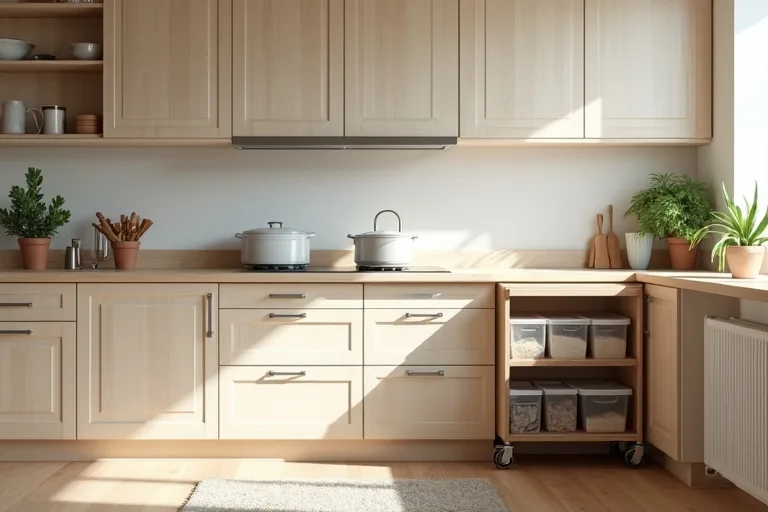
A kitchen can feel busy long before it feels full. Usually the problem is not the amount of storage, but the number of things left visible, the lack of clear zones, and a few awkward choices that keep adding visual noise.
The easiest fix is not to buy more baskets or display solutions. It is to make storage work harder in the background so the room stays calm, easy to use, and simple to clear at the end of the day.
Use a few closed storage zones, clear containers, and one mobile cart to keep essentials handy without visual clutter.
Start with the storage that creates visual clutter
The fastest way to make a kitchen feel calmer is to decide what should stay visible and what should not. If every surface is carrying something, the room reads as busy even when it is technically organized. Open counters work best when they are reserved for the few items you use all the time, such as a kettle, coffee setup, or knife block if you truly reach for it daily.
Everything else should move into a closed system. That usually means storing small appliances, backup packaging, excess utensils, and rarely used serving pieces behind cabinet doors or inside deeper drawers. When the eye has fewer stopping points, the whole kitchen feels larger and easier to clean.
Think in terms of daily reach, not display. The items you use once or twice a day can stay accessible. The rest should disappear into a zone that matches how often you need it.
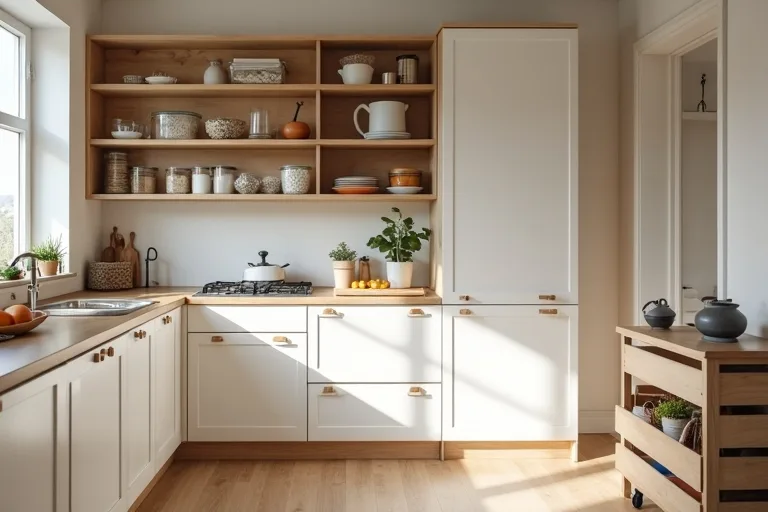
Before buying anything, ask one question: is the real problem a lack of storage, or is it that the wrong things are staying visible? If the kitchen already has enough cabinets, the smarter move may be better zoning, not more furniture.
Use cabinets, drawers, and pantry zones with a clear job
Good kitchen storage is less about volume and more about function. A cabinet packed with mixed items creates more friction than a smaller cabinet that has a clear purpose. The same goes for drawers and pantry shelves. Each zone should handle one broad job so you are not digging through layers of unrelated things.
A simple way to sort the room is this:
- Keep daily-use items closest to prep and cooking areas.
- Move backup stock and overflow items higher or lower.
- Store occasional items together so they do not mix with everyday tools.
- Use clear containers where you want to see supply levels at a glance.
Pantry containers help most when they reduce half-open packaging and visual clutter at the same time. A set of airtight containers can make shelves look calmer, but only if you use them for items you buy repeatedly and can refill easily. If transferring everything becomes a chore, the system will not last.
Add one flexible storage piece instead of crowding the room
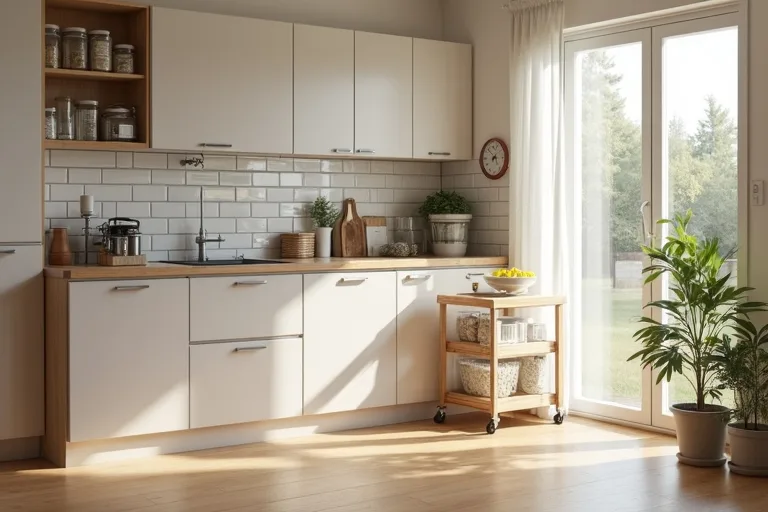
When a kitchen is short on useful landing space, a rolling kitchen cart can do more for the room than another permanent shelf. It gives you extra storage without forcing a full layout change, and it can shift between prep, serving, and overflow storage depending on what the day needs.
This is especially useful in compact kitchens, rental spaces, or kitchens where the fixed cabinetry works but does not quite cover everyday life. A cart can hold baking items, produce, small appliances, or breakfast items, while still feeling lighter than a solid extra unit. Because it is mobile, you can also tuck it away when the room needs to look and function more open.
If you are deciding between a rolling cart and a larger storage purchase, measure the path first. You want enough clearance for doors, drawers, and circulation to stay comfortable. A storage piece that improves convenience but interrupts movement usually creates a new problem.
Make labels and containers do quiet work
Labels are useful when they reduce decision-making, not when they add more visual clutter. In a calm kitchen, the best labels are small, consistent, and easy to read at a glance. The goal is to make it obvious where things belong without turning shelves into a display wall.
Container choice matters too. Clear containers are helpful for dry goods, but too many different shapes can make a pantry look busier than the contents themselves. Keeping to one or two container styles usually creates a more settled look. If you prefer a warmer feel, use closed bins or opaque boxes for items that do not need to be seen at all.
For a planning-minded update, it can help to map the room before shopping. A simple layout planner or budget spreadsheet gives you a place to test what actually needs to change, what can stay, and where a modest upgrade will do the most work.

Best next step
If your kitchen still feels crowded, start by checking the zones you already have. Then choose one practical upgrade that fits the real layout: a rolling cart, better pantry containers, or a clearer storage plan for the room you actually use every day.
- Buying more storage before checking whether the real issue is poor zoning.
- Leaving too many items on the counter because they are used often, even if they are not attractive to see.
- Mixing daily items with backup stock in the same cabinet or drawer.
- Using too many container styles, which can make the pantry look busier instead of calmer.
- Choosing a storage cart or shelf that blocks movement or door swing.
The calmest kitchen storage setups are usually the simplest ones: closed storage for the clutter, clear containers for the things you refill often, and one flexible piece only where the layout truly needs it. Before you buy anything, decide which items should be seen, which should disappear, and which zone each piece of storage is meant to serve.
Helpful next tools and planners
If you want to make the decision easier before you buy
These options fit the planning-first approach: one practical storage piece, one simple pantry upgrade, and one budget-friendly way to map the room before spending.
FAQ
How do I make kitchen storage look less cluttered?
Reduce what stays on show, group the rest into clear zones, and keep container styles consistent. The less the eye has to process, the calmer the room feels.
Are open shelves a good idea in a small kitchen?
Only if you are very selective about what goes on them. Open storage works best for a few attractive, frequently used items, not for everything you own.
Is a rolling kitchen cart worth it?
It can be, especially if your kitchen needs flexible storage or prep space without a permanent layout change. It is most useful when it solves a real gap in the room.
What should I buy first: containers or storage furniture?
Start with the layout problem. If the room needs a better place for overflow or prep items, a cart may help more. If the pantry is visually messy, a small set of containers may be the better first step.
Three sensible next steps
Some links in this article may be affiliate links. Read more in the Affiliate Disclosure.