
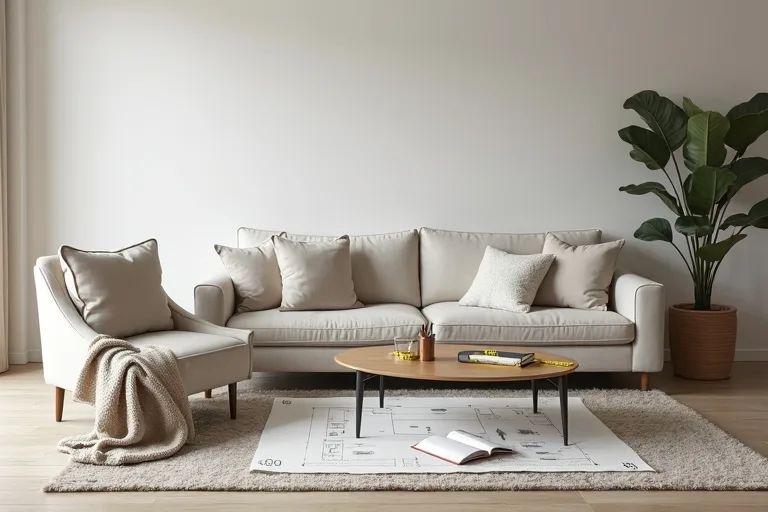
If you are about to rearrange a living room or order new pieces, the smartest first step is not shopping. It is checking whether the room can actually support the layout you want.
A good plan keeps the room easy to move through, comfortable to sit in, and proportioned in a way that makes sense for the furniture you already have. That usually saves more time and money than any styling decision later.
Check the room’s flow, focal point, seating distance, and rug size first.
Start with the room’s real job
Before you move anything, decide how the living room needs to work day to day. A room used for family TV time needs a different layout from one used for reading, conversation, or a mix of both. When the purpose is unclear, it is easy to buy pieces that look fine but do not solve the actual problem.
Write down the main function first, then the secondary ones. For example, your living room may need to hold a sofa, a chair for reading, a surface for drinks, and a clear route to a doorway. That simple list tells you more than a mood board does.
If you want a clearer planning structure before you start moving furniture, the Living Room Ideas hub is a useful place to begin, and the room layout planner can help you map the room before you commit to buying anything.
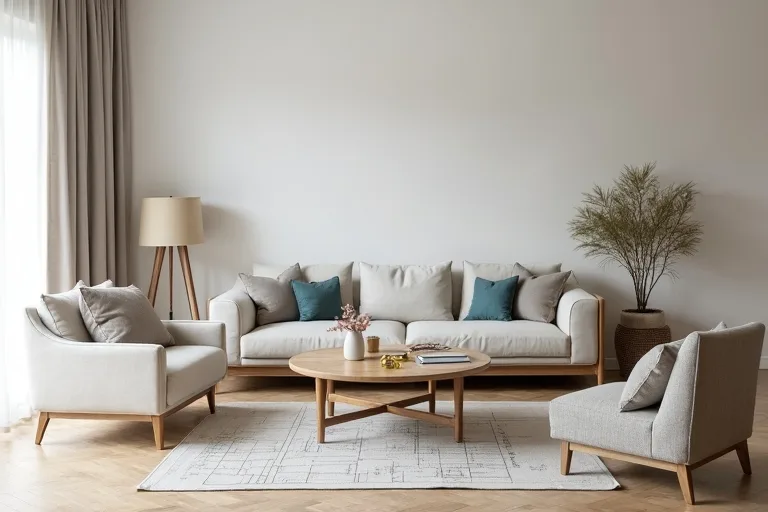
The real decision is not whether a piece looks good on its own. It is whether the full room still feels open, usable, and balanced once that piece is in place.
Measure the room and the path people actually use
Measure the full room, but do not stop at wall-to-wall dimensions. Doors, windows, radiators, fireplace surrounds, and any built-in features affect where furniture can sit. The same is true for walk paths. A layout that blocks the natural route through the room will feel awkward even if every piece technically fits.
Focus on the areas people use most:
- Entry path from the doorway to the main seating area
- Route to windows, balcony doors, or another room
- Space needed to open drawers, cabinets, or side tables
- Clear movement around the coffee table and sofa corners
If you are unsure how much of the room should remain open, the room layout planner is the most sensible next step. It helps you see the room as a whole before you spend on replacements or extras.

Check sofa, chair, and rug spacing before you commit
Once the room flow makes sense, test the main seating zone. The sofa, chairs, and coffee table need enough room to feel usable without leaving the space looking scattered. In most living rooms, the layout works best when the seating group reads as one clear zone rather than a collection of separate items.
Pay special attention to the rug. A rug that is too small can make the room feel unstable, while a rug that is too large may compete with circulation space or furniture placement. If you are deciding whether your current rug works with the new layout, the rug size calculator is worth using before you order a replacement.
This is also where a simple list helps:
1. Confirm the sofa can sit without crowding a wall or doorway.
2. Check that chairs can pull in and out easily.
3. Make sure the coffee table leaves comfortable legroom.
4. See whether the rug anchors the whole seating group cleanly.
If your rug is slipping or shifting when you test the layout, a non slip rug pad 8×10 can be a practical finishing purchase once you know the size and placement are right.
Decide what stays, what changes, and what to buy last
Once the layout is clear, separate the furniture into three groups: keep, move, and replace. This makes the room update calmer and much easier to budget. Many living rooms do not need a full refresh. They need one or two smarter decisions, not a complete reset.
Start with what already works. A sofa with the right scale, a chair that supports the room’s use, or a lamp that fills a dark corner can stay in place. Then identify the pieces that are making the layout harder, such as a table that is too deep, a chair that blocks circulation, or lighting that leaves one side of the room unusable.
After that, think about the items that should be bought last, not first. Lighting, side tables, and rug accessories usually make more sense after the main furniture positions are settled. If you need a simple way to track those choices, the room layout planner and the Room Makeover Planner, Home Layout Budget Spreadsheet (Digital Download) can help keep the room plan and the budget aligned.
Best next step
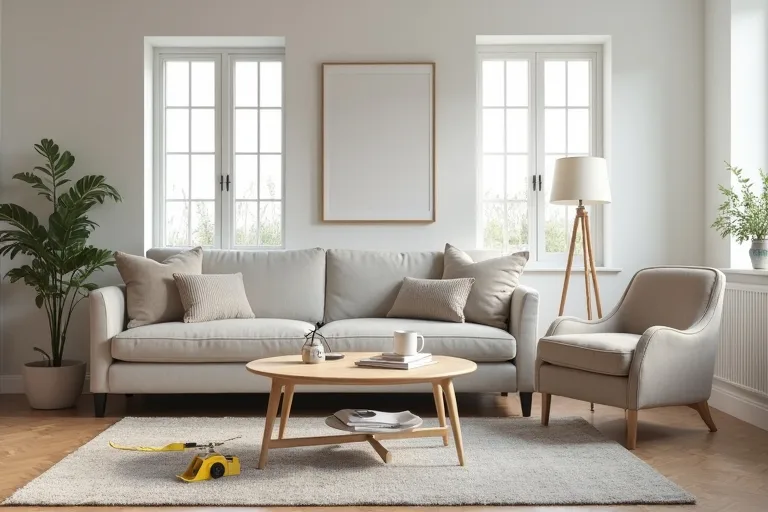
If the room still feels uncertain, map it before you move anything else. A simple layout plan is usually faster than trial and error, and it helps you avoid buying pieces that do not solve the actual spacing problem.
- Buying a rug before checking the seating zone it needs to anchor
- Placing furniture by wall space alone instead of by traffic flow
- Choosing too many small pieces when one stronger layout would work better
- Replacing decor before confirming the sofa, chair, and table spacing
- Forgetting that lamps, side tables, and walk paths affect how the room feels every day
Before you move furniture or order new pieces, check the room’s flow, the main seating zone, and the rug size. Those three decisions do most of the work. Once they are settled, the rest of the room becomes much easier to plan, and you are less likely to spend on items that do not fit.
Helpful next tools and planners
If you want to make the decision easier before you buy
A simple planning tool can save you from ordering the wrong size, the wrong shape, or the wrong number of pieces. These options are most useful after you have checked the room layout.
FAQ
How do I know if my living room layout is working?
You should be able to move through the room easily, use the main seating comfortably, and place the furniture around a clear focal point without blocking doors or windows.
Should I buy a new rug before I plan the furniture layout?
No. It is better to confirm the seating group first, then choose a rug size that anchors that arrangement rather than guessing and hoping it fits.
What should I measure first in a living room?
Start with the room dimensions, then measure doors, windows, and the routes people use most often. Those are the limits that shape the layout.
What is the best next step if I am still unsure?
Use a layout tool to sketch the room before buying anything. That gives you a clearer view of what can stay, what needs moving, and what should be replaced.
Three sensible next steps
Some links in this article may be affiliate links. Read more in the Affiliate Disclosure.